


Global Assets Replay TACO Trade, When Will US-Iran Conflict End?



AI Podcast


Donald Trump's announcement of a potential five-day suspension of military strikes against Iran, contingent on successful talks, spurred a surge in global risk assets. However, Iran's parliamentary speaker denied any U.S. dialogue, contrasting with previous market sentiment driven by Middle East geopolitical conflicts. The market is pricing the "rate of change in geopolitical expectations," suggesting risk assets may recover with de-escalation signals. Equity markets show a "valuation recovery" rather than "earnings re-rating," indicating narrowed risk discounts. Both the U.S. and Iran have motives for de-escalation, with the conflict's end likely between May and June, influenced by Trump's domestic political cycle and diplomatic schedule.
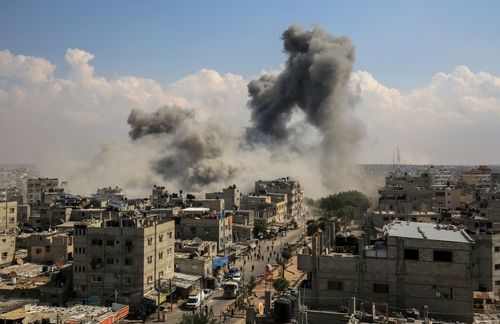
TradingKey - On March 23, Eastern Time, ahead of the U.S. market open, Donald Trump signaled a potential de-escalation.
Trump stated on social media that he has ordered a five-day suspension of all military strikes against Iranian power plants and energy infrastructure, provided that ongoing meetings and discussions are successful. Following this news, most global risk assets surged. However, Mohammad Bagher Ghalibaf, Speaker of the Iranian Parliament, posted on social media denying any dialogue with the U.S.
Previously, global assets underwent a significant correction in March due to geopolitical conflicts in the Middle East, with market sentiment clearly under pressure.
How Is the Market Pricing TACO?
Based on market reactions, an implied pricing of the conflict's tempo has gradually taken shape. Even if a comprehensive agreement remains out of reach in the short term, risk assets could still experience a phased recovery as long as both parties provide expectational support for a "de-escalation path" by signaling, delaying actions, or localized engagement.
The core of market trading remains the "rate of change in geopolitical expectations." Against this backdrop, investors must pay closer attention to marginal changes in policy signals; should remarks akin to Trump's TOMC-style comments surface, the market may swiftly reprice global assets.
In equity markets, the pricing of the TACO trade is more oriented toward "valuation recovery" than "earnings re-rating." This implies the market has not significantly raised growth expectations, but rather that risk discounts have narrowed amid expectations of a de-escalation, driving a rebound in stock indices. Consequently, should signals of escalation reappear, this valuation recovery process could rapidly reverse.
When Will the US-Iran Conflict End?
In fact, both parties to the current conflict possess certain "motives for de-escalation," and the market generally expects that the U.S. and Iran will find it difficult to maintain a prolonged state of confrontation.
On one hand, Iran faces significant pressure throughout the conflict, both in terms of military attrition and internal stability. Against this backdrop, although its official rhetoric remains hardline, its strategy does not rule out the use of "limited confrontation and indirect negotiations" to create space for subsequent de-escalation.
On the other hand, the U.S. also has practical considerations for adjusting its pace. For Donald Trump, geopolitical conflict is not only a foreign policy issue but is also closely tied to the domestic political cycle. If the conflict lasts too long, it could adversely affect his domestic approval ratings and policy implementation.
Trump's diplomatic visit to China, originally scheduled for late March, has been postponed; this adjustment is interpreted by the market as creating a time window for managing the Middle East situation.
Market analysis suggests that, considering Trump's diplomatic schedule for his visit to China, the baseline end period for this round of conflict will likely fall between May and June.
Recommended Articles





Comments (0)
Click the $ button, enter the symbol, and select to link a stock, ETF, or other ticker.