


Is This the Gray Rhino Scarier Than Fed Rate Hikes? What Yen Rate Hikes Mean for Global Liquidity



AI Podcast


Japan faces a policy contradiction: fiscal stimulus via a 21.3 trillion yen package versus monetary normalization signaling potential rate hikes. This "loose fiscal + tight monetary" approach risks a "JGB sell-off — carry trade collapse — global liquidity depletion" spiral. A BOJ rate hike to 0.75% would be the highest since 1995, forcing carry traders to unwind positions, draining global liquidity and pressuring asset prices. Japan's high debt-to-GDP ratio and rising bond yields may compel repatriation of overseas investments, impacting global capital flows and potentially triggering a liquidity earthquake.

TradingKey - Japan, an economy with government debt surpassing 250% of GDP, stands at the precipice where policy contradictions threaten market collapse.
Efforts by the Sanae Takaichi government to revive the economy with fiscal stimulus are creating a fatal tension with the need for monetary normalization. Japan may be sliding into an inescapable "death spiral" via a transmission chain of "JGB sell-off — carry trade collapse — global liquidity depletion."
Bank of Japan Governor Kazuo Ueda indicated in December that the central bank is nearing its inflation target, hinting at multiple rate hikes. This sent a clear signal for a potential policy pivot later this month.Should the BOJ raise rates to 0.75%, it would mark Japan's highest borrowing costs since 1995.
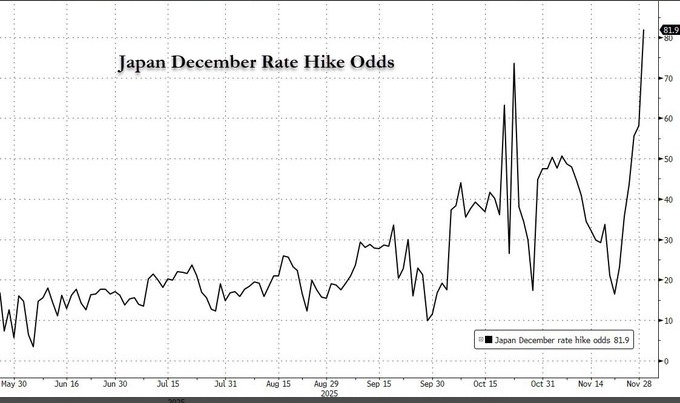
The prospect of a BOJ rate hike this month surprised investors. Previously, market consensus expected newly appointed Prime Minister Sanae Takaichi to pressure the central bank to delay any increase. However, the BOJ's firm stance has since pushedthe probability of a Japanese rate hike above 80%. Morgan Stanley (MS), in its latest report, cited the specifics of Ueda's remarks and declining U.S. economic uncertainty, making a December hike their "base case scenario."
Nevertheless, on November 21, the Sanae Takaichi cabinet approved a comprehensive economic package totaling 21.3 trillion yen (approximately 965.6 billion yuan), marking her administration's first major economic stimulus plan.
The core supplementary budget for fiscal year 2025 featured general account expenditures of 17.7 trillion yen, a new high since the COVID-19 pandemic. This focused on measures to alleviate price pressures, including energy subsidies, childcare support, and tax reductions. When private sector spending is included, the total package reaches 42.8 trillion yen.
This large-scale stimulus implies increased national bond issuance, further burdening an already heavy debt load.As of July this year, Japan's public debt was projected to reach 1,350 trillion yen (approximately $8.8 trillion), accounting for a staggering 263% of GDP. This far exceeds Greece's 142% during its 2009-2010 debt crisis, positioning Japan as the leader among major economies. This "loose fiscal + tight monetary" policy combination has eroded the market's remaining confidence in debt sustainability.
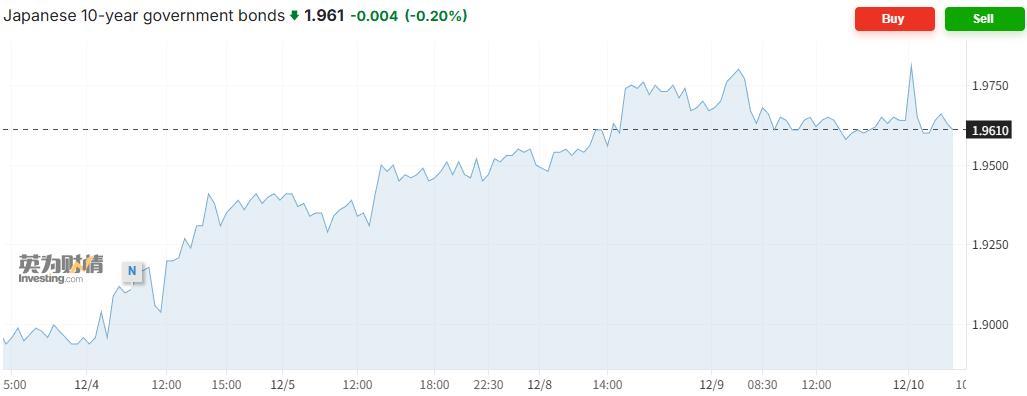
Under the dual pressure of fiscal expansion and anticipated rate hikes, Japanese government bonds faced a "vote with their feet," sending the 10-year JGB yield soaring to near 2%, its highest level since 2006.
This bond market storm quickly crossed borders, affecting bond markets in Australia, New Zealand, France, Italy, Greece, and the United States. The 10-year U.S. Treasury yield touched a high of 4.196%.
As the world's largest exporter of savings, Japan's persistently rising domestic bond yields will alter the landscape of international capital flows.As Japanese bond yields continue their ascent, large domestic institutional investors will find stronger incentives to sell off overseas assets and repatriate funds, chasing more attractive home-market returns.
Carry Trade Collapse
The impact of yen rate hikes has long transcended Japan's borders, leveraging the colossal global yen carry trade.For decades, the yen's near-zero or even negative interest rates made it the world's cheapest "funding fuel," giving rise to a carry trade market estimated from hundreds of billions to trillions of dollars.
This market includes the "Mrs. Watanabe" phenomenon, individual investors — largely homemakers — who manage household finances and and account for nearly a third of Japan's retail forex market. They borrowed yen at near-zero cost, converting it into dollars and Australian dollars to invest in overseas bonds and U.S. equities. International capital giants like Warren Buffett also leveraged the yen's low-interest advantage to heavily invest in Japanese trading house stocks for arbitrage. These funds surged into high-yield assets globally, becoming a significant force underpinning asset bull markets.
However, rate hikes directly increase the cost of borrowing yen while fueling strong expectations for yen appreciation. This forces carry traders to collectively "unwind positions" — selling high-yield assets such as U.S. stocks and cryptocurrencies, then converting funds back to yen to repay debt. This action acts like a massive "pump," directly causing a sudden depletion of global market liquidity and putting immediate pressure on asset prices.
Liquidity Earthquake
The restructuring of capital flows triggered by yen rate hikes could become a "liquidity earthquake" for global markets. Repatriation pressure on Japanese domestic funds will be immediate, with massive capital that flowed overseas during the negative interest rate era facing withdrawal.
As the largest overseas holder of U.S. government debt, Japan held approximately $1.2 trillion in U.S. Treasuries as of September 2025, with private investors pouring hundreds of billions more into foreign bonds.
Ryan Jacobs, founder of Jacobs Investment Management, stated bluntly, "A stronger yen and rising Japanese bond yields will drain capital from U.S. equity and bond markets, tightening global financial conditions across the board."
The inherent conflict between fiscal expansion and monetary tightening is causing the engine of Japan, the world's third-largest economy, to severely falter. The yen rate hike, once a neglected "gray rhino," is now clearly visible on the horizon. The debt crisis, currency volatility, and global liquidity contraction it could trigger may far exceed market expectations.
This content was translated using AI and reviewed for clarity. It is for informational purposes only.
Recommended Articles










Comments (0)
Click the $ button, enter the symbol, and select to link a stock, ETF, or other ticker.