


New Fed Chair Set to Take Office at White House, Will Warsh End Current Rate-Cut Cycle?



AI Podcast


Kevin Warsh is set to be sworn in as the 17th Federal Reserve Chair this Friday, with President Trump attending the White House ceremony. Warsh advocates for a "balance sheet reduction and rate cut" policy, opposing QE normalization and favoring QT to address asset price distortions. While he aims for rate cuts to stimulate the real economy, short-term policy pivots are constrained by the Fed's collective decision-making and the delicate transition from Chair Powell. Warsh's immediate challenge is establishing anti-inflation credibility amid upside risks, with QT potentially serving as a substitute for rate hikes to tighten liquidity and signal a less accommodative Fed.
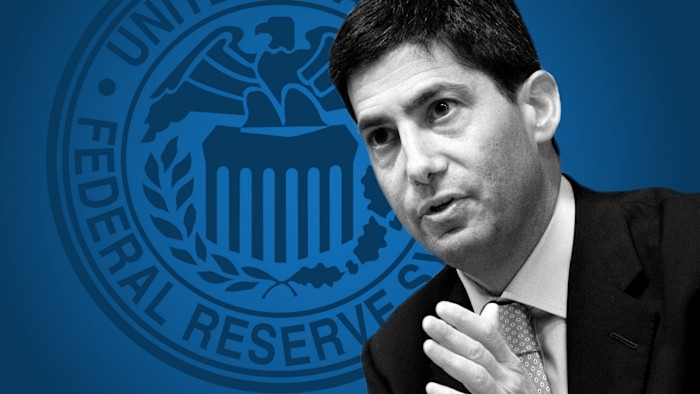
Tradingkey - According to a White House official, Federal Reserve Chair-elect Kevin Warsh will be officially sworn in at the White House this Friday, succeeding Jerome Powell as the 17th Chair of the Federal Reserve. President Donald Trump will make a rare appearance to personally preside over the ceremony.
This inauguration ceremony breaks the decades-long tradition of the Federal Reserve holding internal swearing-in ceremonies. Historical data shows that the last Chair to be sworn in at the White House was Alan Greenspan in 1987; the last President to personally attend such a ceremony was George W. Bush in 2006 for Ben Bernanke's inauguration.
Contrasting Trump's absence from Powell's internal ceremony in 2018, this high-profile White House hosting, combined with Warsh's reputation as the wealthiest Fed Chair in history, underscores the White House's strong personal endorsement of the new Federal Reserve leadership. This rare move may trigger market scrutiny regarding the future independence of the Fed's monetary policy.
Warsh’s Monetary Policy Stance
Recently, at a hearing before the Senate Banking Committee, Warsh outlined his monetary policy framework and views to the market. His core policy can be summarized as a "balance sheet reduction and rate cut" policy mix, aimed at leading the Federal Reserve back toward a traditional monetary standard.
Regarding the balance sheet, Warsh strongly opposes the normalization of quantitative easing (QE), emphasizing that it should be reserved for extreme scenarios at the zero lower bound (ZLB). He noted that balance sheet expansion has primarily driven up financial asset prices, benefiting asset holders while failing to benefit the general public.
He advocates for the Federal Reserve to divest itself of quasi-fiscal functions and gradually reduce its exposure to long-duration assets. He also proposes utilizing the current window of economic resilience to coordinate with the Treasury on an orderly quantitative tightening (QT) process to alleviate the asset price distortions and wealth inequality caused by QE.
On interest rate policy, Warsh first reaffirmed his independence, stating that Trump never asked for a commitment to cut rates. In addition, he aims to inject fresh vitality into the real economy through "rate cuts," emphasizing that interest rate policy and balance sheet policy should work in tandem.
Can the combination of rate cuts and balance sheet reduction be successfully executed?
In the current macroeconomic environment, even if Warsh officially takes office, it will be difficult to push for a pivot in monetary policy toward rate cuts in the short term.
First, this is constrained by the Federal Reserve's collective decision-making mechanism. At the April FOMC meeting, three regional Fed officials already voted against easing guidance; until there is a substantial improvement in inflation (currently bolstered by geopolitically-driven oil prices), these hard-line hawks are unlikely to compromise.
Second, it is relatively rare in Fed history that current Chair Powell has chosen to remain as a governor after stepping down. Warsh will face an extremely delicate power transition period early in his tenure, and the cost of building internal consensus will rise significantly.
Furthermore, the top priority Warsh will face upon taking office is not his stated monetary policy positions, but rather establishing policy credibility in the fight against inflation.
Against the backdrop of intensifying upside risks to inflation, blindly catering to rate-cut expectations would severely overdraw Warsh's subsequent governance credibility; on the other hand, although the market is already pricing in a probability of a Fed rate hike by year-end, given the Trump administration's policy preferences and public resistance to high rates, a rate hike is similarly not a viable option.
That is, the greatest challenge Warsh faces is how to convey a firm anti-inflation signal to the market without upsetting the political balance under the absolute constraint of "no rate hikes."
In this scenario, if inflation continues to rise and market concerns about inflation further manifest, one of the few cards Warsh can play is to reinforce expectations for quantitative tightening (QT) as a substitute for rate hikes. This would both maintain the surface continuity of policy narratives and effectively tighten liquidity.
In short, in the face of inflation, global markets are about to encounter a "less accommodative" Federal Reserve. The marginal tightening of dollar liquidity is an inevitable trend, and assets that previously relied solely on liquidity expansion may remain under pressure.
This content was translated using AI and reviewed for clarity. It is for informational purposes only.
Recommended Articles







Comments (0)
Click the $ button, enter the symbol, and select to link a stock, ETF, or other ticker.