


Should You Be Using Polymarket to Invest in Crypto?



Key Points
- Prediction markets are a newly popular source of information about investments, including cryptocurrencies.
- The quality of the data from prediction markets tends to be mediocre.
- And prediction contracts usually don't answer the most important questions to ask for investing anyway.
- 10 stocks we like better than Bitcoin ›
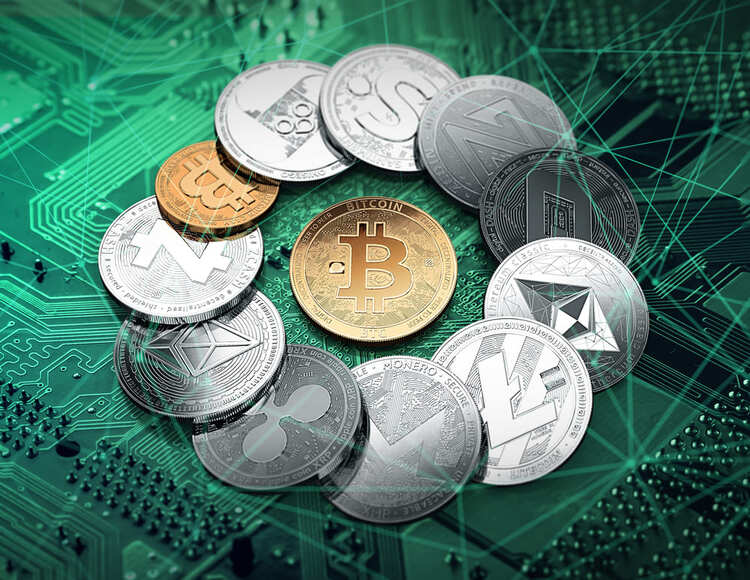
The popular betting market Polymarket now hosts more than 5,400 active crypto markets where participants wager on everything from whether Bitcoin (CRYPTO: BTC) will close above $72,000 this week to whether Ethereum (CRYPTO: ETH) will hit a new all-time high by year-end. And with investors everywhere looking for an edge in turbulent market conditions, it's quite tempting to treat its predictions as a cheat sheet for what coins will do next.
But prediction market odds aren't investment research, even if they could have a role. Let's dig into the insights these platforms can offer and the role they can play in your investment process.
Will AI create the world's first trillionaire? Our team just released a report on the one little-known company, called an "Indispensable Monopoly" providing the critical technology Nvidia and Intel both need. Continue »

Image source: Getty Images.
What Polymarket's odds actually represent
As you may have heard, a prediction market is a system that lets participants buy and sell contracts tied to a yes-or-no outcome of a real-world event.
If you think Bitcoin will surpass $75,000 by the end of the month, you buy a "yes" share at whatever price the market sets, and that price reflects the crowd's implied probability of the event occurring. The unstated assumption here is that the people trading on the prediction markets are, as a group, able to accurately weight those probabilities such that the underlying outcomes actually occur approximately as frequently as they're predicted to.
But it's critical to appreciate that Polymarket's odds measure binary event resolution (did Bitcoin close above $X?) rather than the trajectory of an asset's price over the many years of a long-term investment. A coin's closing price on a given Friday reveals almost nothing about where it's heading over a five-year holding period, which is the time horizon you should probably be focused on if you intend to invest in the crypto majors like Bitcoin, Ethereum, XRP, (CRYPTO: XRP) or Solana (CRYPTO: SOL).
There's a data integrity issue, too. A recent Columbia University study found that nearly 25% of Polymarket's historical trading volume appeared to be the result of wash trading, where participants trade to artificially inflate activity. Therefore, any derived probability carries a serious asterisk, as a large portion of the volume used to create it might be fake.
Furthermore, prediction markets are also extremely susceptible to cognitive and behavioral biases. Participants tend to overvalue low-probability outcomes and undervalue near-certainties, and ill-advised bandwagons form quickly on social media.
Do real diligence before investing
Lastly, many Polymarket participants are short-term speculators. They probably aren't evaluating key factors like tokenomics or competitive dynamics.
It's thus not appropriate to rely heavily on prediction markets for your investment research. Nor is it, for the record, a good way to diversify your portfolio; while some professional investors or traders might be able to intelligently incorporate an allocation to prediction market contracts into a hedged strategy of some sort, it's far too complex an approach for most people to bother with.
So, at the very most, Polymarket data can serve as a minor data point in your broader investment research workflow. But even that may overstate its usefulness for assets like Bitcoin, where long-term value hinges on fundamentals that aren't reducible to a contract resolving tomorrow.
Recommended Articles





Comments (0)
Click the $ button, enter the symbol, and select to link a stock, ETF, or other ticker.