


WTI Crude Oil Rises 2% Intraday, Hits $100 Mark Again



WTI crude oil prices climbed approximately 2% to re-test the $100 per barrel level, driven by escalating geopolitical risks in the Middle East and continued supply-side tightening. Uncertainty surrounding U.S.-Iran negotiations has re-introduced supply disruption premiums, while global inventory drawdowns amplify price sensitivity. Persistent high oil prices may reinforce hawkish monetary policy expectations, pressuring risk assets but benefiting the energy sector. The $100 mark represents a key psychological level, with prices vulnerable to rapid unwinding of risk premiums should geopolitical tensions ease.

TradingKey - During Friday's Asian trading session, WTI crude oil prices continued to climb, with intraday gains expanding to 2% at one point, touching the key psychological level of $100 per barrel once again. This marks another attempt by oil prices to breach the $100 mark following recent high-level volatility, indicating that the market's repricing of supply-demand dynamics and geopolitical risks is accelerating.
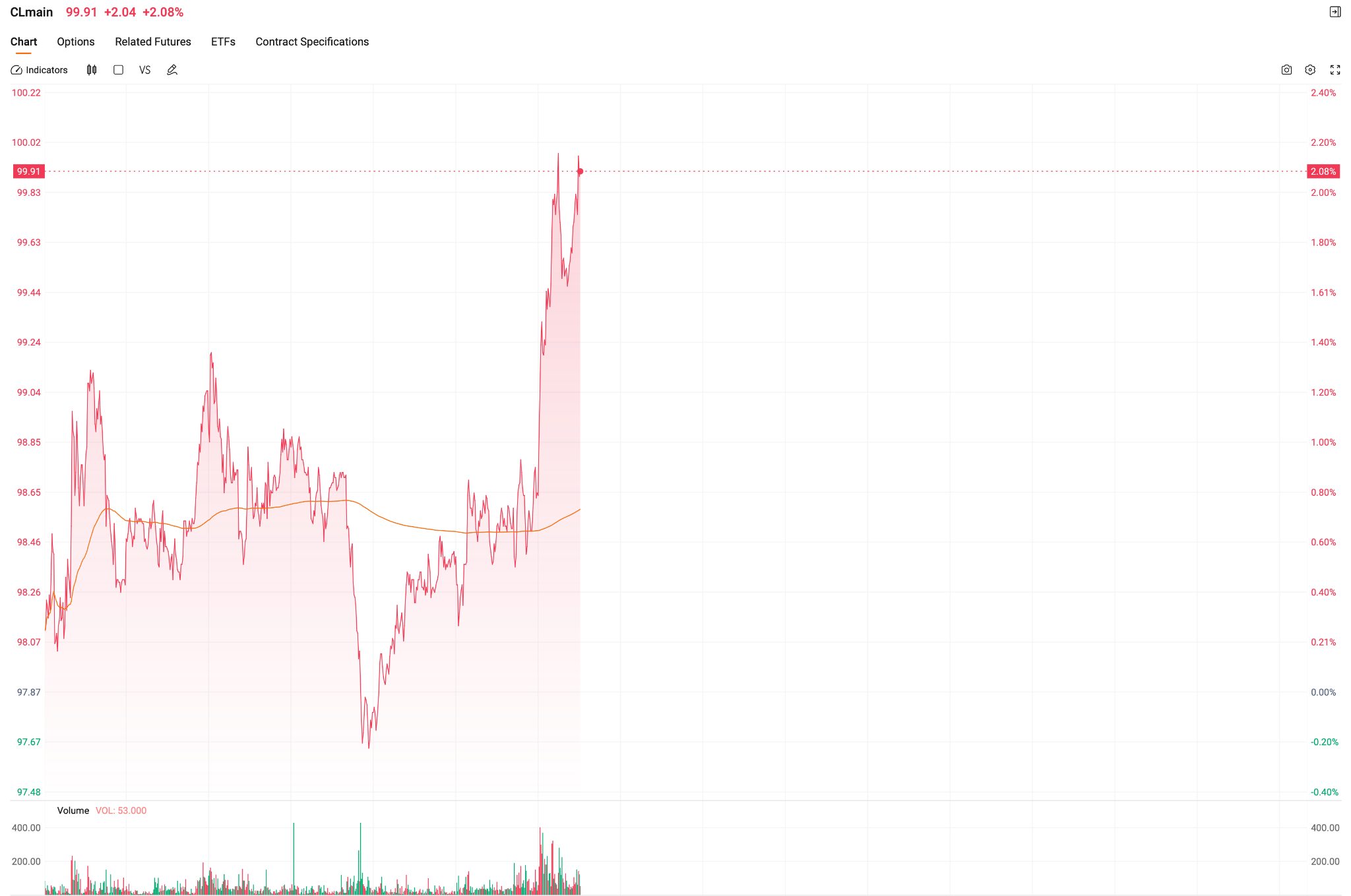
From a driver perspective, the Middle East situation remains the core variable for current oil price fluctuations. Although the market had previously priced in a ceasefire in the U.S.-Iran conflict, recent reports indicate that negotiation progress remains uncertain, and geopolitical risk premiums have not fully dissipated. Some traders are beginning to re-price the risk of potential supply disruptions, driving oil prices higher again.
At the same time, expectations of tightening on the supply side continue to strengthen. On one hand, actual production from some member countries is below their quotas, making the market more cautious in its assessment of short-term supply elasticity; on the other hand, global inventory levels continue to be depleted due to supply shortages, further amplifying price sensitivity to sudden events.
From a capital market perspective, oil prices re-approaching the $100 threshold will have spillover effects on inflation expectations and monetary policy paths.
Should high oil prices persist, it could reinforce market expectations that major central banks will maintain their hawkish stances, thereby suppressing the valuation of global risk assets. Simultaneously, earnings forecasts for the energy sector are likely to be revised upward, and capital may flow back into related assets on a tactical basis.
However, current oil price trends remain highly dependent on the evolution of the geopolitical situation. Should there be substantive progress in ending tensions between the U.S. and Iran, the risk premium would rapidly retreat, and oil prices could face downward pressure. In the short term, the $100 mark has become a critical watershed for the battle between bulls and bears.
This content was translated using AI and reviewed for clarity. It is for informational purposes only.
Recommended Articles







Comments (0)
Click the $ button, enter the symbol, and select to link a stock, ETF, or other ticker.