


70% Probability of Continued Escalation. Strait of Hormuz Crisis, Global Oil Market Faces Life-and-Death Ordeal



AI Podcast


Tensions in the Strait of Hormuz are causing significant oil price volatility, reaching levels not seen since the Russia-Ukraine conflict. While U.S. and Iranian leaders have signaled de-escalation, the Iranian Revolutionary Guard's actions create ongoing uncertainty. This has suppressed global equity markets and led to bond sell-offs. Despite coordinated oil reserve releases, escalating confrontations and warnings of a potential "Iranian killing zone" are prompting shipping companies to prepare for prolonged disruptions. Analysts suggest a negotiated settlement is the only path to restoring safe passage without a broader oil crisis. Goldman Sachs has raised its Q4 crude oil price forecasts due to anticipated flow disruptions.
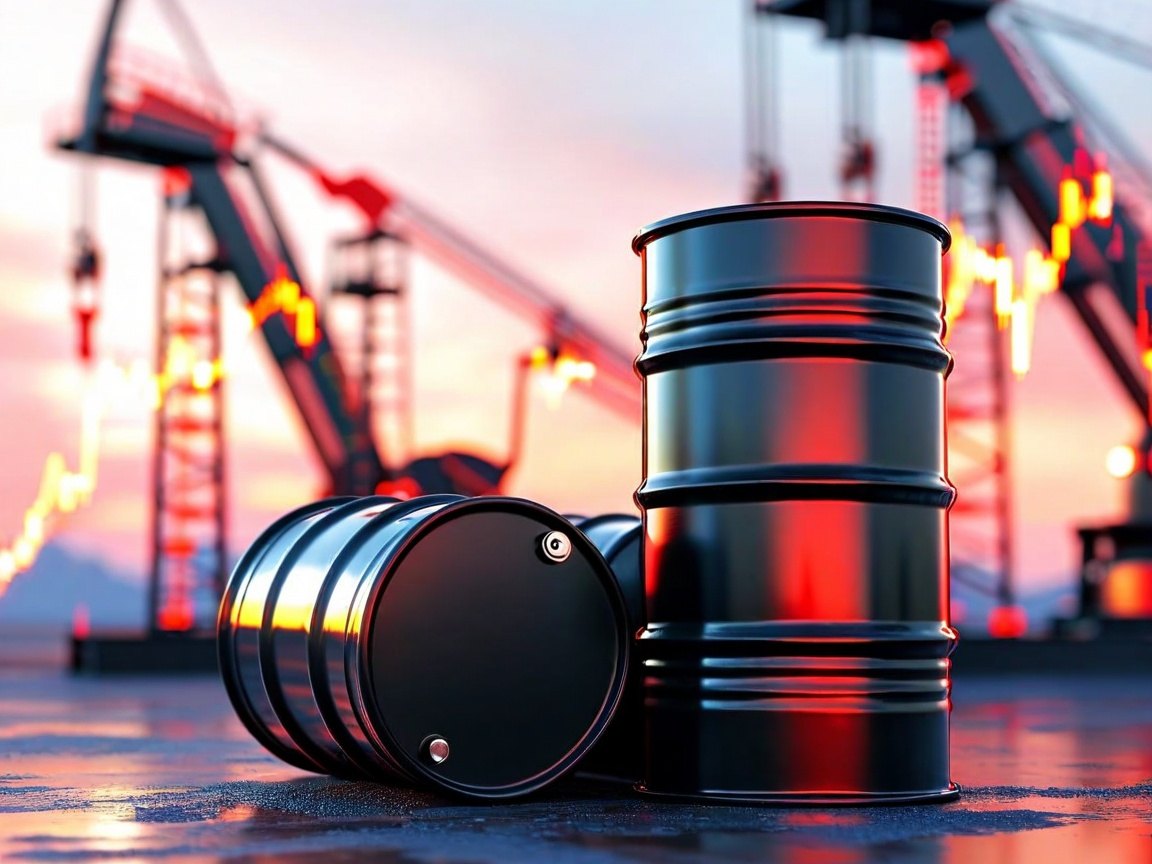
TradingKey - The sound of gunfire in the Strait of Hormuz is striking the sensitive nerves of global capital markets with precision.
As a U.S. aircraft carrier strike group and Iranian missile forces engage in a strategic standoff in the Persian Gulf, oil price volatility on Wall Street trading screens has surged to its highest level since the 2022 Russia-Ukraine conflict.
The market is being torn by two opposing forces: on one side, signals for peace talks from U.S. and Iranian leaders act like a dim lighthouse attempting to illuminate an exit toward "de-escalation"; on the other, the Iranian Revolutionary Guard's missile boats and sea mines are weaving an "impassable" web of death in the Strait of Hormuz.
This uncertainty has pushed oil price volatility back to recent highs; high oil prices ( USOIL) continue to suppress global equity markets, with the S&P 500 closing lower on the day, while the bond market also faced a sell-off, with yields rising across the board by 5 to 8 basis points.
Positive: U.S. and Iran Signal De-escalation
In an interview with U.S. media, Trump stated that the U.S.-Iran conflict would end soon because "there are actually no targets left to hit."
Trump also noted, "When the time is right, the U.S. Navy and its partners will escort tankers through the Strait of Hormuz if necessary. I hope it won’t be necessary."
Meanwhile, Iranian President Pezeshkian spoke out via social media, stating that a ceasefire is predicated on a commitment from the U.S. and Israel to refrain from any further military strikes. J.P. Morgan analysis suggests this is precisely the long-awaited "conflict de-escalation signal" from the Iranian side.
Beyond political rhetoric, International Energy Agency (IEA) member states announced a coordinated release of 400 million barrels of oil reserves. This global action has partially alleviated market concerns over energy supply disruptions. Trump also repeatedly issued conciliatory signals throughout the day in an attempt to stabilize market sentiment.
Escalation of the Strait Crisis
However, on Wednesday, the Iranian Islamic Revolutionary Guard Corps attacked three cargo ships attempting to transit the Strait of Hormuz and warned that any other vessels attempting to cross would also be targeted. Almost simultaneously, two foreign tankers carrying Iraqi fuel oil caught fire in Iraqi waters after being struck by projectiles.
Regarding the President's comments on escorts, U.S. Navy officials stated they have not yet received orders to provide such services, adding that doing so now would pose significant risks to both U.S. warships and commercial vessels. One official even warned that if ships begin attempting to pass through the Strait of Hormuz, it could become an Iranian "killing zone."
U.S. Department of Defense officials stated that until the threat of Iranian fire diminishes, it is too risky to send warships into the narrow waters, which are only about 21 miles wide at their narrowest point.
Although the U.S. military has conducted strikes against the Iranian navy and its drone and missile units to contain the threat, Iran continues to retaliate, with submerged mines and Iranian submarines posing additional risks.
In light of this situation, shipping companies are preparing for a long-term closure of the waterway. Even if the conflict ends, it could take a long time for traffic to return to normal.
Jerry Kalogiratos, CEO of Athens-based LNG carrier company Capital Clean Energy Carriers, stated: "This needs time. We not only need hostilities to stop, but we also need shipowners to feel that the risk to crews and vessels has been significantly reduced.
Think about the situation in the Red Sea: shipping has still not returned to normal six months after the Houthis stopped their attacks. The key is whether people feel safe, and we are still very far from that point."
Analysts believe that the only way to restore shipping without triggering a larger oil crisis is through a negotiated settlement of the dispute.
In theory, the U.S. could choose to clear the Strait of Hormuz to remove Iran's leverage, but doing so could trigger a larger conflict and lead to further oil supply disruptions. Therefore, negotiation remains the only path to restoring shipping without causing a greater shock.
Once negotiations begin, the confrontation between Iran and the U.S. could reach a stalemate. Domestically, Iran's strength will appear unprecedentedly robust; it might refuse to give up its right to enrich uranium, as it has done before, having proven its ability to survive under external pressure.
If Iran does not make concessions, the conflict could flare up again either on the eve of the U.S. midterm elections (when Iran's leverage peaks) or afterward (once Trump is unconstrained). And that is an optimistic estimate. Given the lack of trust between the two sides, negotiations might never restart.
Market Risk-Aversion Intensifies
From a market perspective, the current bias is toward the expectation that the oil crisis will continue to escalate.
If the U.S. goal is to push for regime change in Iran, Iran might close the Strait of Hormuz for a longer duration (24% probability). If the U.S. goal is to resolve the dispute through negotiation, Iran might refuse to make permanent concessions (46% probability).
This means there is a 70% probability that conflict escalation and oil supply disruptions will persist for a longer duration.
There are only two specific scenarios in which the conflict might de-escalate in time to stabilize global financial markets: first, the U.S. successfully destroys all of Iran's nuclear capabilities while avoiding further damage to maritime traffic (16% probability); second, the U.S. persuades Iran to permanently abandon its nuclear program (14% probability). The total probability of these two optimistic scenarios is only 30%.
Based on a reassessment of the duration of crude oil flow disruptions in the Strait of Hormuz, Goldman Sachs ( GS) Group has significantly raised its crude oil price forecasts for the fourth quarter.
The bank adjusted its baseline assumption from "strait flows dropping to 10% of normal levels for 10 days" to "lasting for 21 days, followed by a 30-day gradual recovery phase."
In an extreme scenario, if the strait disruption persists for 60 days, the average Brent crude price in the fourth quarter is expected to climb to $93 per barrel, while the average WTI price could reach $89 per barrel.
The U.S. stock market is shrouded in a heavy bearish atmosphere, with signals of tightening liquidity becoming increasingly clear. Recently, the ratio of ETF trading volume to total market daily turnover has remained above 35% for seven consecutive trading days, a level approaching the historical record of 10 consecutive trading days set during the 2020 COVID-19 pandemic.
Generally, a surge in the proportion of ETF trading volume reflects rising risk aversion among market participants; institutional investors tend to use tools like ETFs to quickly reposition or hedge risk. The sustained high level of this indicator also suggests that overall market liquidity is quietly drying up. Against the backdrop of the unresolved geopolitical conflict in the Middle East and persistently high oil price volatility, insufficient liquidity will undoubtedly amplify the magnitude of U.S. stock market fluctuations in the coming weeks, where even the slightest disturbance could trigger significant market turbulence.
This content was translated using AI and reviewed for clarity. It is for informational purposes only.
Recommended Articles








Comments (0)
Click the $ button, enter the symbol, and select to link a stock, ETF, or other ticker.