


Social Security Could Face Insolvency in 6 Years. These 3 Developments Could Accelerate That Timeline -- and Here's How to Plan Ahead.



Key Points
Population growth is slowing at the same time beneficiaries are living longer and the economy is under an increasing pressure.
Investors need to start planning now for this possibility.
Saving more will be the most helpful measure most households should start with.
Social Security's solvency isn't just on a countdown clock. That clock's picking up speed. Previously expected to last until 2033, this year's updated calculation from the Congressional Budget Office suggests Social Security's Old-Age and Survivors Insurance (OASI) trust fund will now be out of money by 2032, legally requiring what's likely to be a 28% reduction in the program's payments.
The matter isn't necessarily etched in stone. Legislative action could shore up the shortfall. The projection is also based on current data that could change -- for better or worse – in the meantime.
Will AI create the world's first trillionaire? Our team just released a report on the one little-known company, called an "Indispensable Monopoly" providing the critical technology Nvidia and Intel both need. Continue »
A trio of risks
Three specific possibilities pose a risk of forcing the Social Security Administration to reduce its payouts even sooner than the current estimate suggests.
1. Prolonged economic weakness
Like income tax, the amount of money put into Social Security's funding pool is a percentage of workers' taxable pay. If they're earning less, less money is contributed to the trust fund. The program's payments to its beneficiaries, however, remain the same (adjusted for inflation) regardless of how much money is collected in payroll taxes. That's why a prolonged period of economic weakness is a significant risk; it will mean the Social Security Administration will have even less funding to work with than it was anticipating.
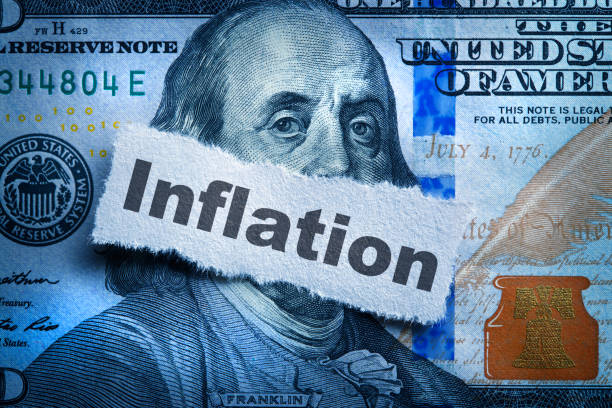
2. Sustained inflation
Even if the program's receipts remain healthy, however, it's still possible the Social Security could be forced to pay out more in benefits in the foreseeable future than it takes in, hastening the aforementioned benefits cuts
See, Social Security's annual cost-of-living payment increases implemented at the beginning of the year aren't pulled out of a hat. This yearly adjustment is based on the Bureau of Labor Statistics' calculation of the U.S. annualized inflation rate during the third quarter of every calendar year, regardless of how much the program collects in payroll taxes during that same year. Higher inflation rates not matched with equally bigger payrolls will mean money's going out faster than it's coming in.
3. Shrinking labor force
Finally, even if inflation remains in check and taxpayers' paychecks remain healthy, the program could still struggle simply because there aren't enough people paying into it.
Contrary to a common assumption, the money that Social Security's beneficiaries are currently receiving isn't what they paid into the program. Rather, the program's current benefits are largely funded by workers paying into the program right now, just as current beneficiaries' contributions in their working years were passed along to Social Security's past beneficiaries.

Image source: Getty Images.
It's a potential stumbling block for the obvious reason. That is, there's no guarantee there will be enough taxpayers to support the program's beneficiaries when they start collecting.
It's become a very real problem, in fact. The World Bank reports that 18% of the U.S. population is now aged 65 or older versus only 12% in 1996. Conversely, nearly 44% of the U.S. population was between the ages of 25 and 54 back in 1996, according to the Center for Disease Control, the Census Bureau now puts this number closer 39%. Meanwhile, the nation's average life expectancy is rising again, reaching a record high 79 years in 2024. This ultimately means even more people are soon going to be receiving benefits for longer from an already-underfunded Social Security pool, supported by a smaller number of workers.
Your action plan
There are a handful of things you can do to better prepare yourself for the possibility of a cut to benefits payments.
1. Save more
It's an obvious, clichéd suggestion. It needs to be said all the same though -- find a way to save more. Most people will only need a few hundred bucks' worth of extra income to offset the 28% reduction in benefits payments that's brewing. That isn't chump-change, but it's certainly not out of reach either. For every $100,000 saved, you can count on as much as $4,000 worth of annual investment income.
2. Invest now for dividend income then
It seems like a reiteration of the first suggestion, but this one stands on its own: You may want to go ahead and establish a dividend-paying position now for when you'll need it then.
It's pretty typical for newly retired investors to shift their portfolio from growth to income generation, opting for dividend stocks with above-average yields. There's a potential trade-off with these higher-yielding stocks, specifically dividend growth that doesn't keep pace with inflation.
As uncomfortable -- even counterintuitive -- as it may seem, you could be better served by establishing a position in a dividend stock with a lower yield, but with a faster pace of dividend growth. When you finally need that income, the effective yield on your initial investment ends up being pretty strong.
3. Establish other income streams
Traditional investment income isn't your only option for combatting the threat to future Social Security payments though. Although it's certainly easier said than done, consider other forms of income to supplement your future investment income. This may mean a part-time job or your own mini-business, but it could also mean something a little less mainstream like a blog with an online store, rental real estate, or creative work that pays you recurring royalties.
4. Start collecting benefits sooner than you intended
Last but not least, although this won't be the right solution for everyone, the possibility of payment cuts bolsters the argument for taking your Social Security benefits sooner than you may have intended. This will permanently lower your monthly payment, but at least you'll receive 100% of these smaller payments -- up to 30% less -- for a while. If you wait to file until any mandated payment reductions are imposed, though, you may never get 100% of what you're supposed to receive for waiting to claim.
Just keep in mind you don't have to spend these early benefits payments. You arguably shouldn't, in fact. You'd be wise to invest them in something safe but productive so you've got something that can reliably generate a little income in the event of a sweeping reduction in Social Security's benefits payments.
The $23,760 Social Security bonus most retirees completely overlook
If you're like most Americans, you're a few years (or more) behind on your retirement savings. But a handful of little-known "Social Security secrets" could help ensure a boost in your retirement income.
One easy trick could pay you as much as $23,760 more... each year! Once you learn how to maximize your Social Security benefits, we think you could retire confidently with the peace of mind we're all after. Join Stock Advisor to learn more about these strategies.
The Motley Fool has a disclosure policy.
Recommended Articles









Comments (0)
Click the $ button, enter the symbol, and select to link a stock, ETF, or other ticker.