


A Hot Jobs Report and 3.8% Inflation Just Backed Up Billionaire Ken Griffin's Warning -- Is Your Portfolio Ready?



Key Points
Griffin warned last week that a strong labor market and continued high inflation could force the Fed to raise rates.
Two economic reports released since he spoke seem to increase the likelihood of rate cuts this year.
Investors can take several steps to ensure their portfolios are prepare for potential higher rates.
The most successful investors are those who can read between the lines of the economy and the stock market. Ken Griffin is certainly in that group, with his net worth of over $50 billion.
What is Griffin's take on the current economic and market dynamics? In an interview with CNBC's Sara Eisen last week, he warned that the Federal Reserve could be forced to raise interest rates rather than lower them as President Trump wants.
Will AI create the world's first trillionaire? Our team just released a report on the one little-known company, called an "Indispensable Monopoly" providing the critical technology Nvidia and Intel both need. Continue »
The billionaire hedge fund manager identified two factors that could lead to rate hikes later this year: a strong labor market and persistently high inflation above the Fed's target level. Two recent economic reports just backed up Griffin's warning.
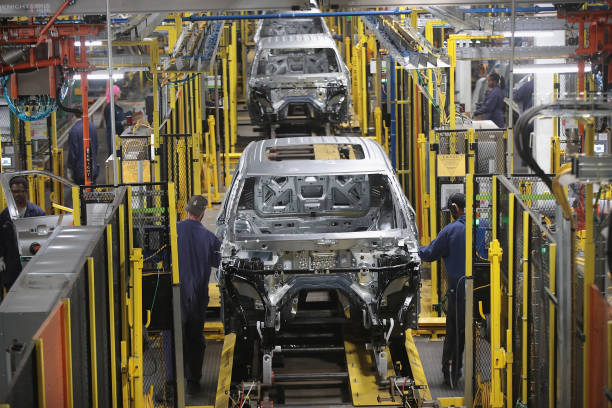
Image source: Getty Images.
Why rate hikes could be coming
Griffin said in the CNBC interview that there were "signs that the labor market weakness that we worried about just three or four months ago is largely dissipating." He cautioned that signs the labor market is strengthening could make it more likely the Fed will have to raise interest rates. Three days after his comments, the U.S. Bureau of Labor Statistics (BLS) released an employment report showing that the U.S. added 115,000 jobs in April -- much more than anticipated.
The hedge fund manager also acknowledged that while inflation was higher than the Fed wants, the "good news" was that it isn't "accelerating in a meaningful way at this point in time." Griffin may have spoken too soon. BLS released its April inflation report on May 12, 2026. This report revealed that the Consumer Price Index (CPI) rose faster than economists anticipated to 3.8%, the highest level since May 2023.
These two recent reports serve as a double-whammy for hopes that the Fed would cut interest rates further. The Federal Reserve has two mandates: maximize employment and keep prices stable. Its challenge is balancing those two goals. Reducing interest rates boosts employment but can cause prices to soar. Raising interest rates can control inflation but weaken employment.
Had the jobs report looked dismal or had the CPI grown more slowly, the Fed could have more easily justified another round of rate cuts. Neither happened. Even worse, the Iran war that President Trump claimed a month ago was "very close to over" continues to drive energy prices higher. The longer this situation persists, the more likely it is that inflation will rise further -- putting more pressure on the Fed to raise interest rates.
Your portfolio readiness checklist
How can investors ensure their portfolios are prepared for possible interest rate hikes? Here are four things to check.
1. Evaluate your portfolio's exposure to rate-sensitive stocks
Some stocks are much more sensitive to higher interest rates than others. For example, growth stocks tend to be especially rate-sensitive because their valuations are based on the present value of projected future cash flow. The present value is calculated using a discount rate. When interest rates rise, the discount rate rises, lowering the present value of future cash flows and the valuation of stocks.
Also, companies with high debt loads tend to perform worse when interest rates rise. Small-cap stocks often have greater debt than large-cap stocks do. Real estate investment trusts (REITs) typically use debt to fund property purchases. When interest rates are higher, companies' bottom lines can suffer from higher interest expenses.
2. Assess the overall level of diversification in your portfolio
Diversifying your portfolio is always important. However, diversification is even more critical during periods of rising interest rates. Look at the percentages of your holdings by sector to avoid excessive concentration in one sector. Balance growth-oriented stocks with defensive holdings, such as stable dividend stocks.
3. Review your bond duration risk
If you own bonds or bond funds in your portfolio, you'll definitely want to review their durations. Rising interest rates translate into higher bond yields, which correspond to falling bond prices. Short-duration bonds are likely to outperform long-duration bonds if rate hikes are indeed on the way.
4. Examine your cash position
An environment of rising interest rates could make markets highly volatile. Examine your cash position to ensure you have ample dry powder to take advantage of market sell-offs and buy great stocks at attractive prices.
Complacency is the real risk
Does ensuring your portfolio is ready for higher rates mean a drastic overhaul? Probably not. However, complacency is the real risk. Investors don't need to panic about the prospects of the Fed hiking rates. But they do need to be prepared.
Where to invest $1,000 right now
When our analyst team has a stock tip, it can pay to listen. After all, Stock Advisor’s total average return is 983%* — a market-crushing outperformance compared to 207% for the S&P 500.
They just revealed what they believe are the 10 best stocks for investors to buy right now, available when you join Stock Advisor.
*Stock Advisor returns as of May 13, 2026.
The Motley Fool has a disclosure policy.
Recommended Articles






Comments (0)
Click the $ button, enter the symbol, and select to link a stock, ETF, or other ticker.