US STOCKS-Wall St inches lower as investors assess Middle East developments

By Twesha Dikshit and Purvi Agarwal
April 2 (Reuters) - Wall Street's main indexes pared some early declines on Thursday, in the last session of a holiday-truncated week, as investors assessed indications that shipping through the crucial Strait of Hormuz could be restored.
Iran's foreign ministry said that it was drafting a protocol with Oman for traffic through the Strait. Britain also said that about 40 countries are discussing joint action to reopen the Strait of Hormuz to stop Iran from holding "the global economy hostage".
"Traders want the Strait of Hormuz to open and the UK may be leading an effort ... that is softening today's selloff," said Kim Forrest, chief investment officer at Bokeh Capital Partners.
Oil prices, which had surged as much as 7% in the session, pared some gains but oil stocks were still higher. The S&P 500 energy index .SPNY added 0.2%.
The elevated prices pressured airlines, with United Airlines UAL.O, Delta Air Lines DAL.O and American Airlines AAL.O losing between 2% and 4%.
Wall Street had opened sharply lower on Thursday after President Donald Trump signaled more aggressive attacks on Iran, in a sharp reversal from his earlier comments that the U.S. will be "out of Iran pretty quickly".
Michael Matousek, head trader at U.S. Global Investors, said investors were optimistic about the global economy not being in a recession and a gradual fall in oil prices heading into the long weekend, prompting an improvement in risk appetite.
The three indexes are on track for their biggest weekly rise in four months and the first week of gains in six, as signs earlier this week that the conflict could end soon lifted sentiment.
At 12:05 p.m. ET, the Dow Jones Industrial Average .DJI fell 140.30 points, or 0.30%, to 46,425.44, the S&P 500 .SPX lost 11.64 points, or 0.18%, to 6,563.58 and the Nasdaq Composite .IXIC lost 50.56 points, or 0.23%, to 21,790.38.
Wall Street's fear gauge, the CBOE VIX index .VIX rose to 25.77 points after falling to an over one-week low on Wednesday.
Separately, private credit jitters resurfaced after Blue Owl OWL.N capped the amount investors can withdraw from two of its retail-focused funds, sending its shares down 1.7%.
Peers Apollo Global APO.N and Ares Management ARES.N also inched 2.2% and 1.2% lower, respectively.
On the S&P 500, consumer discretionary shares .SPLRCD weighed the most, led by a 4% drop in Tesla TSLA.O after its first-quarter deliveries figures. Gains in financials .SPSY and consumer staples .SPLRCS helped cap declines.
Further developments on Elon Musk's SpaceX will be in focus after it confidentially filed for a U.S. initial public offering on Wednesday, and is expected to target a $1.75 trillion valuation.
Friday's nonfarm payroll numbers will be in the spotlight after weekly jobless claims fell last week, but U.S. markets will remain closed for the Good Friday holiday.
Money market participants are no longer pricing in any easing from the Federal Reserve, per CME Group's FedWatch Tool. They were anticipating two cuts before the conflict.
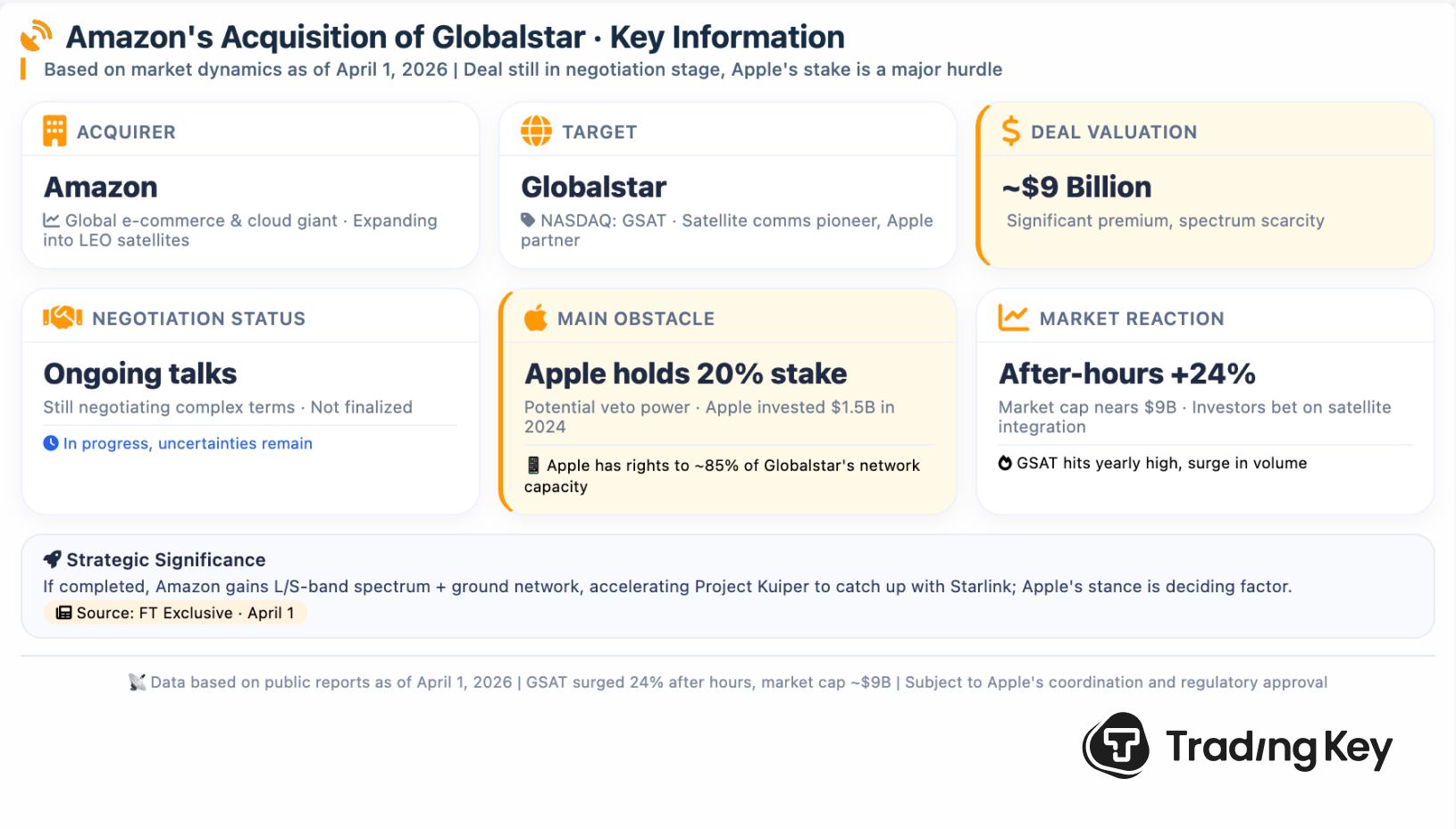
Globalstar's shares GSAT.O jumped 7.8% after a report said Amazon is in talks to buy the low-earth-orbit communication satellites company.
Advancing issues outnumbered decliners by a 1.02-to-1 ratio on the NYSE and by a 1.07-to-1 ratio on the Nasdaq.
The S&P 500 posted eight new 52-week highs and 12 new lows, while the Nasdaq Composite recorded 43 new highs and 115 new lows.