The Oil Market Is in Backwardation. That Could Be Very Good News.

Key Points
Spot prices for oil are currently higher than those for delivery later this year.
That implies the market may see an end to the Middle East conflict soon.
The global oil market is telling investors something interesting right now. Essentially, oil prices on global markets are inverted.
In ordinary times, a barrel of oil for delivery sometime in the future -- say, in a month or six months from now -- costs more than a barrel right now. An oil market like that is said to be in contango. And it makes sense. There are costs to storing and insuring oil supplies, and the future is always uncertain, so you have to pay a premium to guarantee you'll get oil sometime in the future that you're locking in a price for today.
Will AI create the world's first trillionaire? Our team just released a report on the one little-known company, called an "Indispensable Monopoly" providing the critical technology Nvidia and Intel both need. Continue »
But right now, the oil market is in backwardation. That is, current or "spot" prices are higher than future prices. For example, right now (on March 26), a barrel of Brent crude, the international benchmark, costs about $107. That's the spot price. But a barrel of oil for delivery in June costs about $101, falling to $89 for a barrel in September, and about $84 for a barrel delivered in December.
Futures traders see the price of oil declining in the coming months
Among other things, that tells us the futures market expects oil prices to fall in the coming months. That is, the collective wisdom of the market says that the current spike in oil prices is a temporary situation that will not last long.
That also implies that the market sees an end to the war in the Middle East, which is driving soaring oil prices, in the near future, which would be good for everyone.
It would certainly be a good thing for drivers and, more broadly, for the U.S. economy. Because a gallon of gasoline in the U.S. has spiked from about $2.92 (the national average, according to AAA) before the war began to almost $4 today.

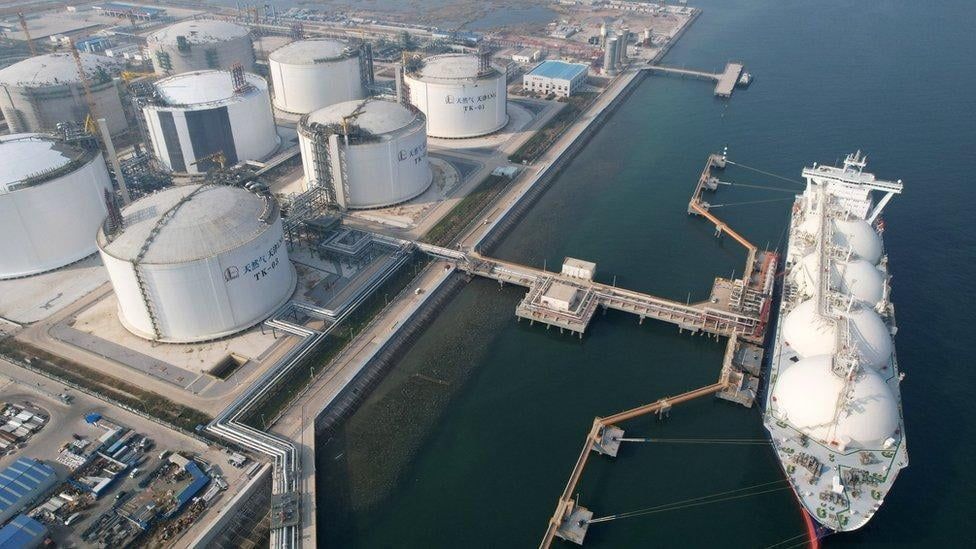
Image source: Getty Images.
It's also good for investors, as sharply higher fuel prices negatively impact consumer spending -- which accounts for about two-thirds of GDP -- on other goods and services, and corporate revenues and profits outside the energy sector.
Higher fuel prices also drive up prices elsewhere in the economy, especially for food. Trucking and shipping costs are higher and will bleed into prices at the supermarket. And the price of fertilizer, which is heavily reliant on fossil fuels such as natural gas and petroleum, can also push food prices higher across the board.
Right now, the futures market says that all of this won't last long. Let's hope it's right.
Where to invest $1,000 right now
When our analyst team has a stock tip, it can pay to listen. After all, Stock Advisor’s total average return is 884%* — a market-crushing outperformance compared to 179% for the S&P 500.
They just revealed what they believe are the 10 best stocks for investors to buy right now, available when you join Stock Advisor.
*Stock Advisor returns as of March 29, 2026.
The Motley Fool has a disclosure policy.