The Strait of Hormuz Blockade Is Affecting More Than Just Oil Prices. Here Are 4 Stocks That Could Get Hit in 2026.

Key Points
The closure of the Strait of Hormuz creates a broad supply chain shock for companies reliant on Asian manufacturing.
Apparel-heavy retailers like Carter's, Oxford Industries, Kontoor Brands, and Gap Inc. already face margin pressure due to existing tariffs. The Hormuz blockade only adds to the stress.
When the Strait of Hormuz effectively closed on Feb. 28, most of the financial coverage focused on oil. That's understandable, as roughly 20% of the world's oil and natural gas supplies transit that waterway every day. But fixating on oil prices misses the bigger supply chain story, and for investors in consumer goods, that story is more immediately threatening. It's threatening for things as commonplace as your favorite blue jeans or baby products.
The countries most responsible for manufacturing the clothes, shoes, and household goods sold in American retail stores -- Vietnam, India, Bangladesh, Cambodia, Sri Lanka -- sit either directly within the affected shipping corridors or in adjacent routes that are now severely congested and expensive. Within hours of the closure, four of the world's largest container shipping lines suspended transits. War risk premiums on hull insurance surged to as high as 1.5% of hull value.
Will AI create the world's first trillionaire? Our team just released a report on the one little-known company, called an "Indispensable Monopoly" providing the critical technology Nvidia and Intel both need. Continue »
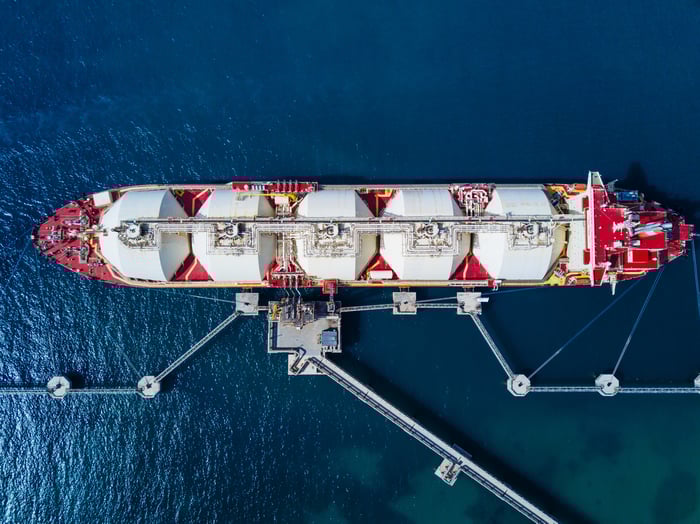
Image source: Getty Images.
Rerouting costs that occurred from trucking goods overland, using smaller alternative ports, and rerouting around the African continent entirely are adding high costs at every node.
Even with the possibility of the conflict ending sooner rather than later, plenty of companies from multiple industries will be adversely affected, possibly for the full year. Here are four consumer goods stocks with clear, measurable exposure to these current events.
1. Carter's
Carter's (NYSE: CRI) is the largest branded baby and young children's apparel company in North America, and it sources predominantly from contract manufacturers in Vietnam, Cambodia, Bangladesh, India, and China. The company already estimated that tariff-related costs would amount to $200 million to $250 million on an annualized basis, even before the Hormuz closure. The tariff impact will result in the closing of 150 stores and the cutting 15% of its workforce.
Any sustained supply disruption from the corridor on which Carter's manufacturing base depends would compound an already-stressed cost structure.
2. Oxford Industries
Oxford Industries (NYSE: OXM) is the parent company of Tommy Bahama, Lilly Pulitzer, and Johnny Was. In fiscal 2025, tariffs alone reduced earnings by $1.25 to $1.50 per share, forcing inventory cuts and deeper discounts. The company has been scrambling to shift sourcing away from China, but its alternatives -- India, Vietnam, Bangladesh -- are precisely the countries most affected by the Hormuz shipping disruption and the resulting rerouting costs.
A company already carrying $81 million in debt and cutting earnings guidance cannot easily absorb another spike in freight and insurance costs.
3. Kontoor Brands
Kontoor Brands (NYSE: KTB) owns Wrangler and Lee, two of the most recognizable denim brands in the world. Kontoor sources more than 60% of its total apparel output from Asia, primarily Bangladesh, Vietnam, China, India, and Pakistan.
Cotton sourcing and specialty denim materials from India and Pakistan, in particular, face disruption as vessels reroute or shelter in place. Freight surcharges and war risk premiums will be reflected directly in Kontoor's cost of goods.
4. Gap Inc.
Gap (NYSE: GAP) has done the work of diversifying away from China; Vietnam is now its largest supplier at about 29% of sourcing, followed by Indonesia and India. That's exactly the problem: Vietnam and India are the two countries most exposed to rising shipping costs and route disruption from the Hormuz closure.
Vogue magazine reported that the Port of Salalah in Oman -- a key transshipment hub for Gap, Banana Republic, and Old Navy garments -- is directly entangled in the conflict zone. CEO Richard Dickson has been making all the right moves on supply chain diversification, but the diversification landed the company's sourcing base in precisely the wrong place for this crisis.
Global supply chain issues are the new norm
It's important to note that, right now (in late March 2026), some tankers and shipping vessels are starting to make their way through the Strait, and just this week, President Donald Trump said he's going to pause strikes after "very good" talks with Iran. The public comments coming from Iran aren't nearly as positive. Who is to be believed? In the world of politics and global commerce, things can change with a simple social media post.
That being said, the global supply chain is a complicated thing, and issues of all sorts are always being dealt with. The best companies are the ones that can manage the complications well. With regard to this particular complication, it is still to be seen how much harm will come to these companies and others. But I'd be wary of touching the above tickers until there is some clearer guidance on what's actually going on in the Middle East.
Should you buy stock in Carter's right now?
Before you buy stock in Carter's, consider this:
The Motley Fool Stock Advisor analyst team just identified what they believe are the 10 best stocks for investors to buy now… and Carter's wasn’t one of them. The 10 stocks that made the cut could produce monster returns in the coming years.
Consider when Netflix made this list on December 17, 2004... if you invested $1,000 at the time of our recommendation, you’d have $490,325!* Or when Nvidia made this list on April 15, 2005... if you invested $1,000 at the time of our recommendation, you’d have $1,074,070!*
Now, it’s worth noting Stock Advisor’s total average return is 900% — a market-crushing outperformance compared to 184% for the S&P 500. Don't miss the latest top 10 list, available with Stock Advisor, and join an investing community built by individual investors for individual investors.
*Stock Advisor returns as of March 25, 2026.
Micah Zimmerman has no position in any of the stocks mentioned. The Motley Fool recommends Carter's, Kontoor Brands, and Oxford Industries. The Motley Fool has a disclosure policy.