


Asia-Pacific Markets Fall Collectively, Middle East Geopolitical Conflict and Fed Policy Roil Markets



TradingKey - The ongoing escalation of geopolitical tensions in the Middle East, compounded by interest rate policy signals from the Federal Reserve, is bringing multiple uncertainties to the global inflation outlook and capital markets. Consequently, Asia-Pacific equity and bond markets collectively came under pressure on the 19th, while international crude oil prices continued their strong upward trend.
Following Thursday's opening, major Asia-Pacific stock indices weakened across the board, with the MSCI Asia Pacific Index dropping 1.1% at the open. South Korea's KOSPI led the regional decline, opening 2.8% lower; Australia's S&P/ASX 200 index opened down 1.6%; Japan's Nikkei 225 index opened 1.7% lower in early trading, with the decline later widening to 2.82%.

Data released by the Australian Bureau of Statistics on the 19th showed that the unemployment rate unexpectedly rose to 4.3% in February, higher than the market expectation of 4.1%.
Federal Reserve Chair Jerome Powell stated on the 18th that geopolitical conflicts in the Middle East have added new uncertainty to the U.S. inflation outlook, making the Fed's interest rate path more difficult to predict. Powell's remarks were interpreted by the market as a signal that the Fed will maintain high interest rates for a longer period, and traders subsequently slashed rate cut expectations for this year.
On March 18 local time, regional tensions escalated further as the U.S. considered deploying thousands of additional troops to the Middle East. On the same day, the Abu Dhabi Government Media Office confirmed that the country's Habshan gas facility and Bab oil field were slightly affected by debris falling from intercepted incoming missiles.
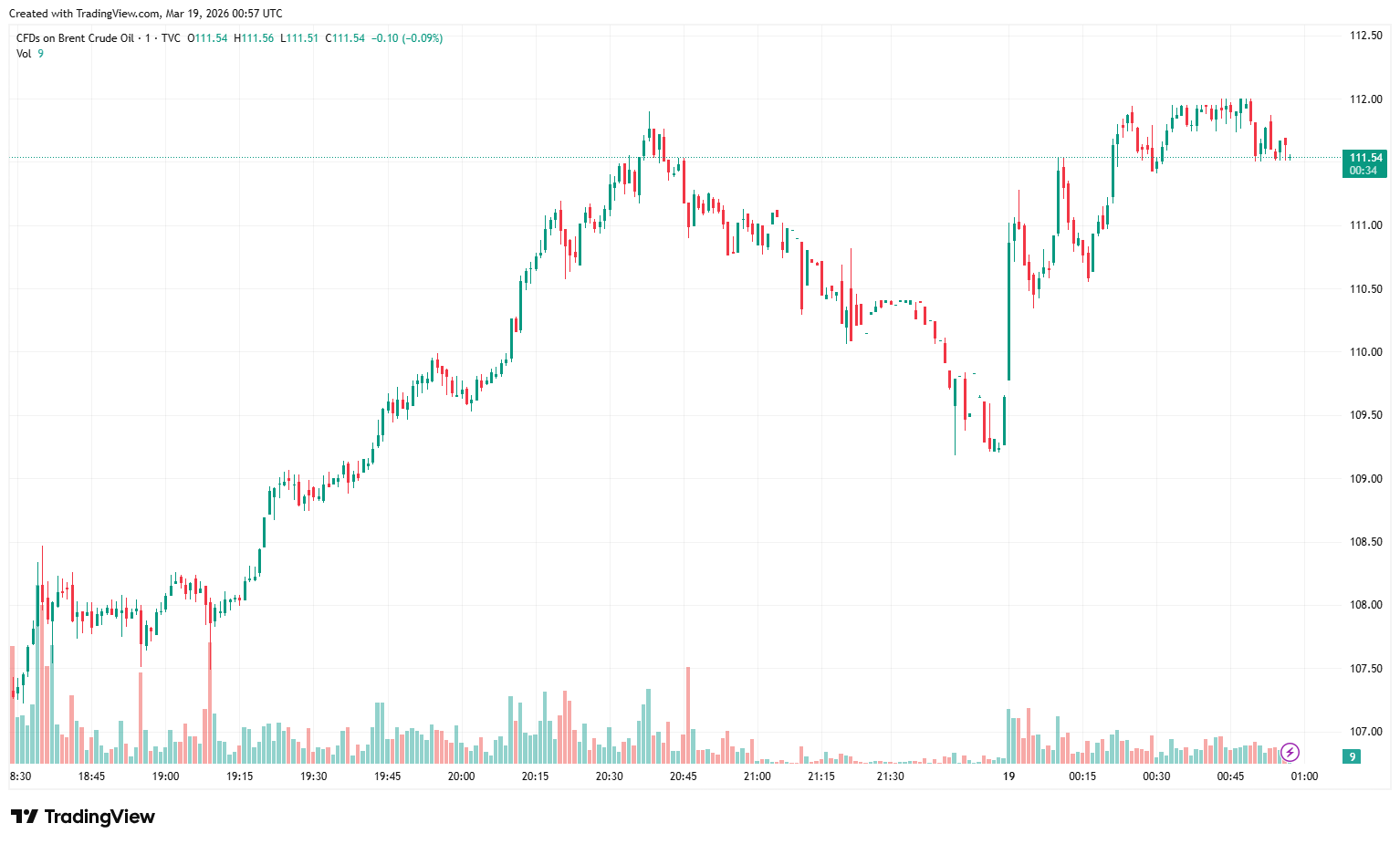
International oil prices rose sharply on the 18th, with Brent crude futures breaking the $110 per barrel mark, reaching a new high since 2023.
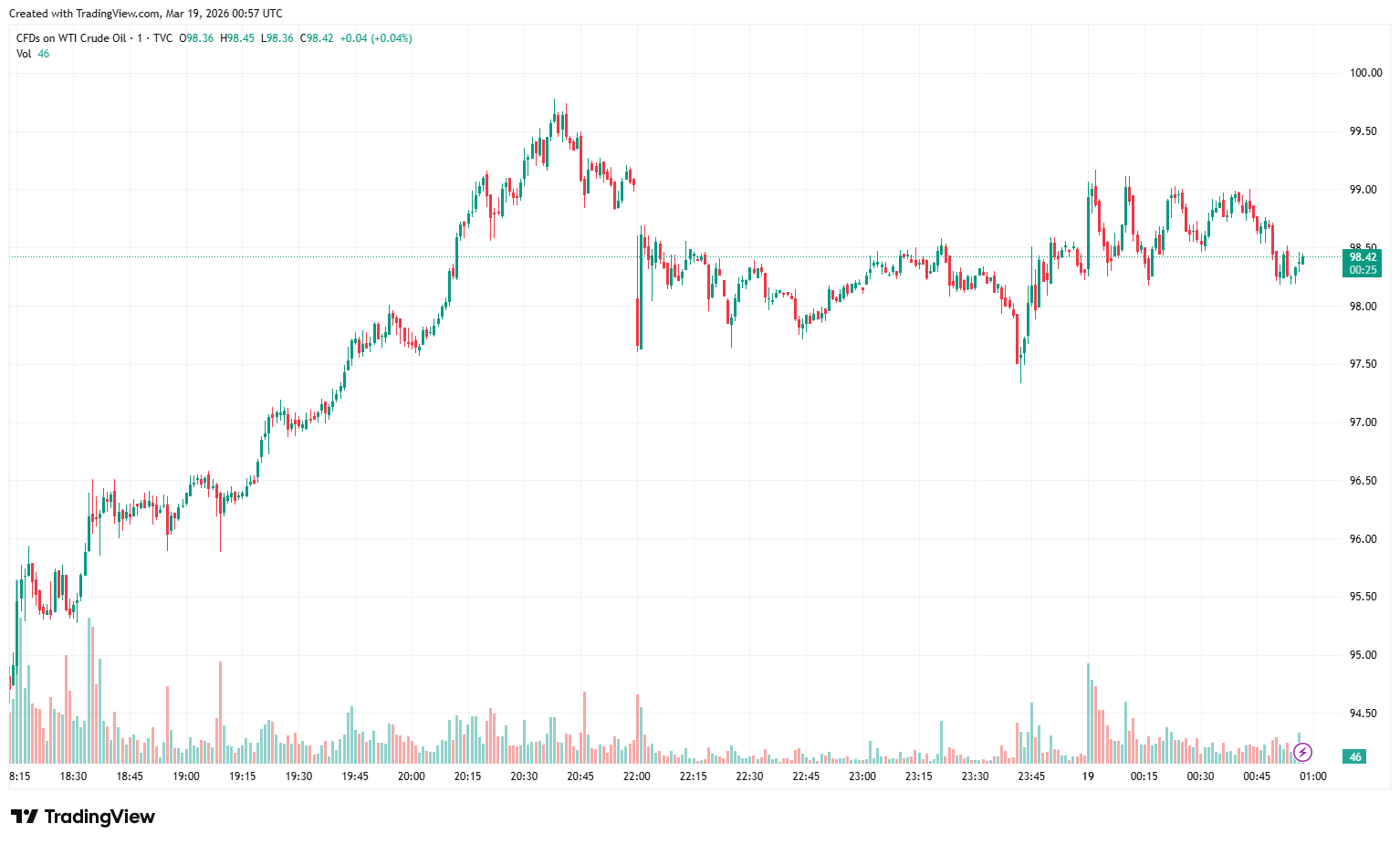
During the Asia-Pacific session on the 19th, WTI crude futures hovered around $98 per barrel, just a step away from the $100 psychological threshold.
This content was translated using AI and reviewed for clarity. It is for informational purposes only.
Recommended Articles








Comments (0)
Click the $ button, enter the symbol, and select to link a stock, ETF, or other ticker.