


Tencent: Time to shed the old-school vibe and hit its stride in AI



After HK market close on Mar 18 (Beijing time), $TENCENT(00700.HK) reported Q3 2025 results. Overall, the print held few surprises, with some minor variances vs. expectations. In the current AI transition window, management’s guidance on investment and growth for this year matters more for mid-term valuation than the quarter itself.
Specifically:
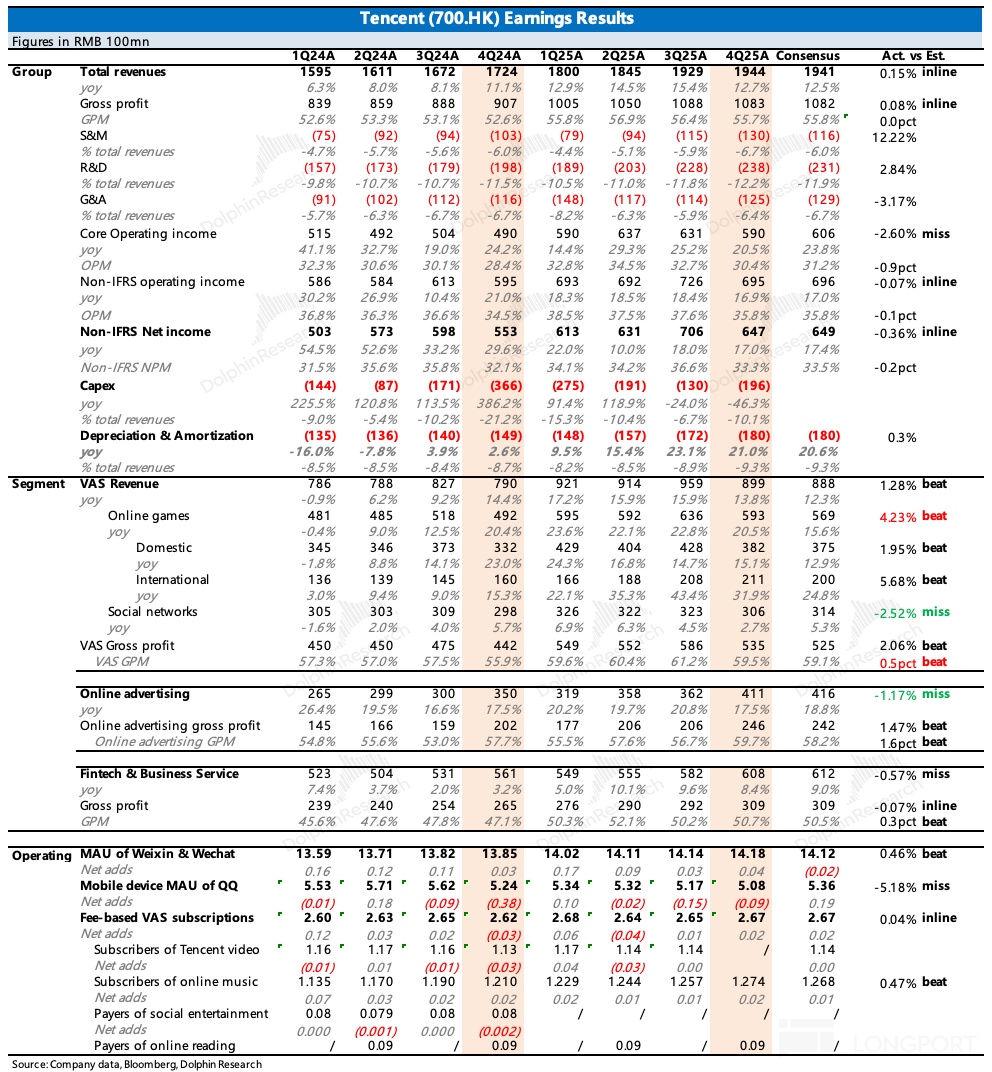
1. Games delivered and should remain the growth core in 2025: The product cycle is strong, with new titles performing and evergreen franchises sustaining momentum. Q4 revenue grew 21% YoY, with domestic +15% and overseas +32%.
With no major new launches in Q4, domestic growth mainly came from recent titles such as '三角洲行动' and the '无畏契约' series, alongside evergreen hits like '和平精英'. Overseas performance continued to lean on Supercell and 'PUBG MOBILE'.
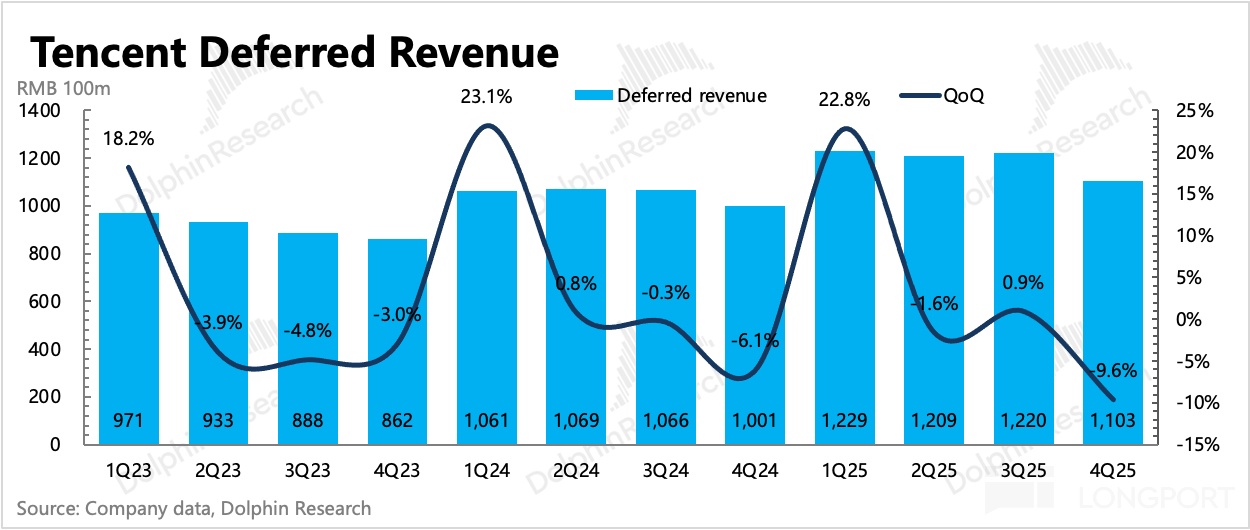
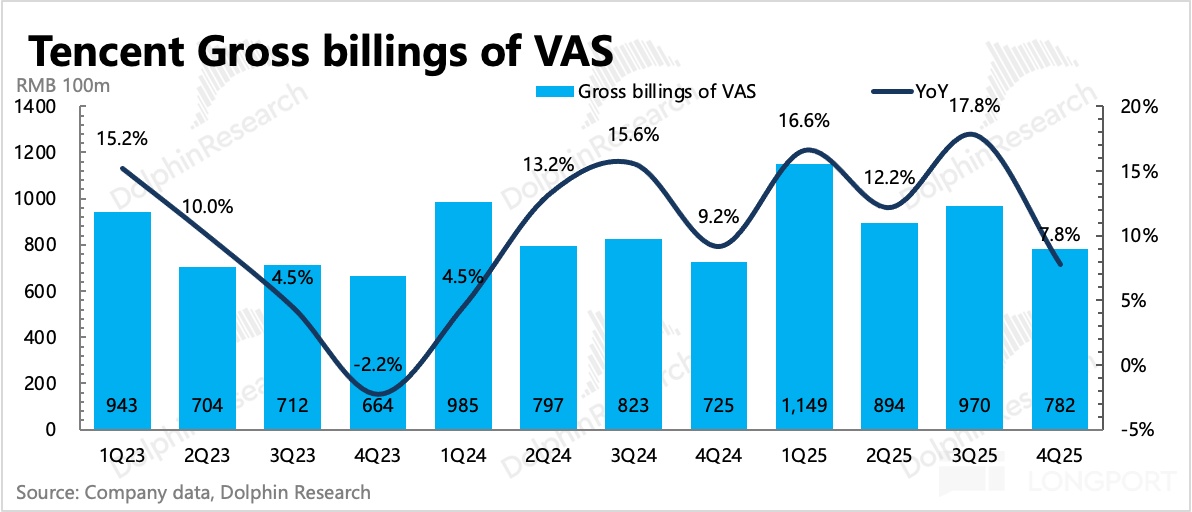
On deferred revenue, Q4 value-added services (VAS) billings fell 10% QoQ, a larger decline than typical seasonality. Beyond slower music pay growth and video pay headwinds, game billings look normal.
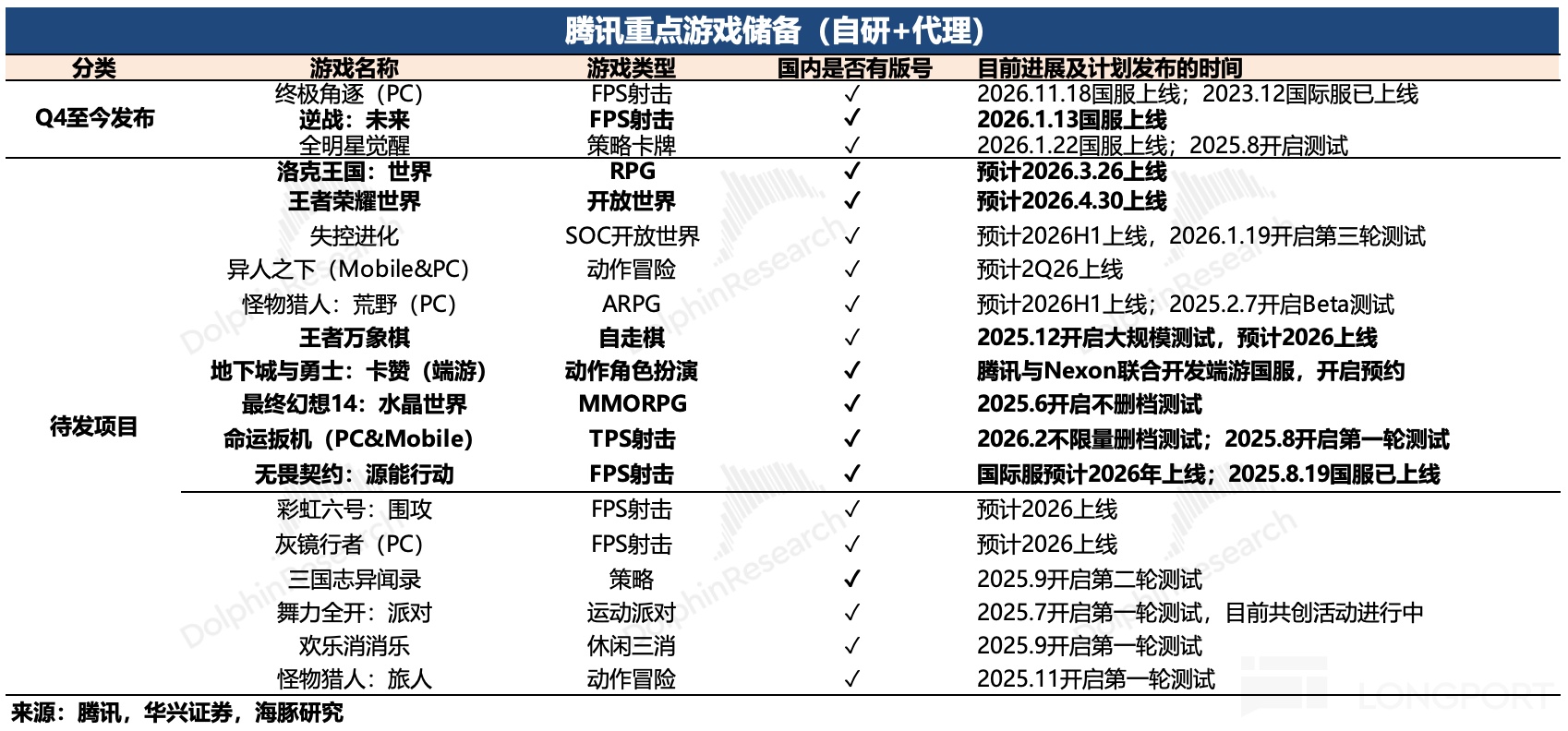
During the CNY holiday, Tencent’s games held up. '和平精英' was soft in Q4 but rebounded over CNY. Two heavyweight titles, '洛克王国' and '王者荣耀世界', are slated for H1 and should backfill quickly.
2. Ads slowed somewhat; inventory still has room to release: Q4 ads grew 18% YoY, with QoQ growth decelerating by ~3pct. Besides a small high-base effect, softer consumer demand weighed on growth.
Dolphin Research’s checks suggest Video Accounts, mini-games, search, and TME ads performed fine, while WeChat Official Accounts declined; media ads across QQ, Sogou, and Tencent News continued to drag. Ad load on Video Accounts remains low at ~4–5%, with a deliberately measured ramp.
Near-term ad growth hinges on AI boosting recommendation efficiency. Medium to long term, more growth can come from releasing additional inventory.
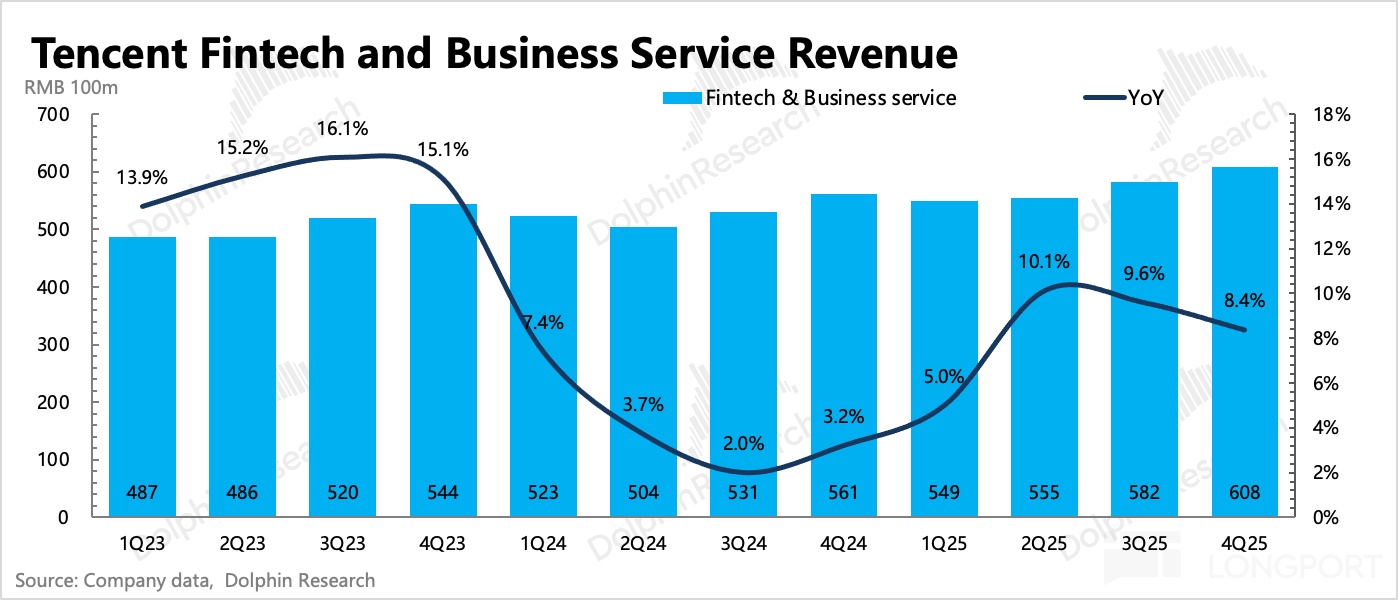
3. Fintech recovery is slow; pure compute rentals are not preferred: Fintech plus enterprise services combined grew 8% YoY, broadly in line. Within that, enterprise services rose 22% YoY (incl. WeChat Shops commissions), while fintech likely grew at a mid-to-low single-digit rate.
Unlike the current boom in compute demand, Tencent Cloud revenue likely stayed in the 10–20% growth range. With limited compute supply, Tencent prioritizes internal needs and is not keen on pure GPU rentals unless Agent customers have explicit requests.
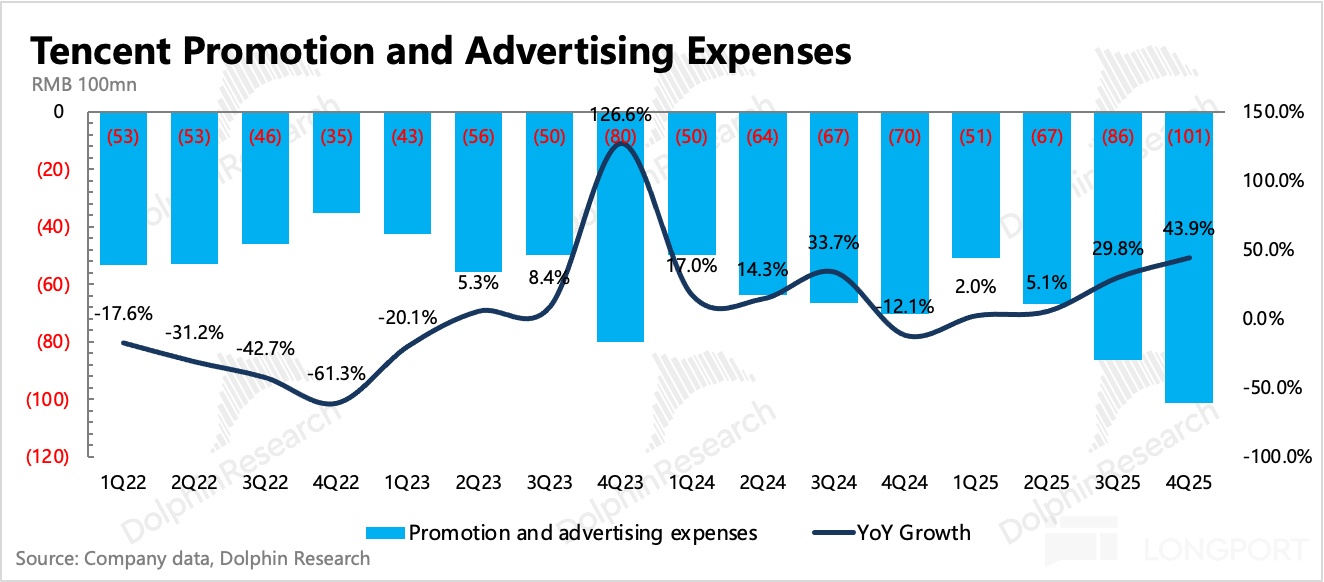
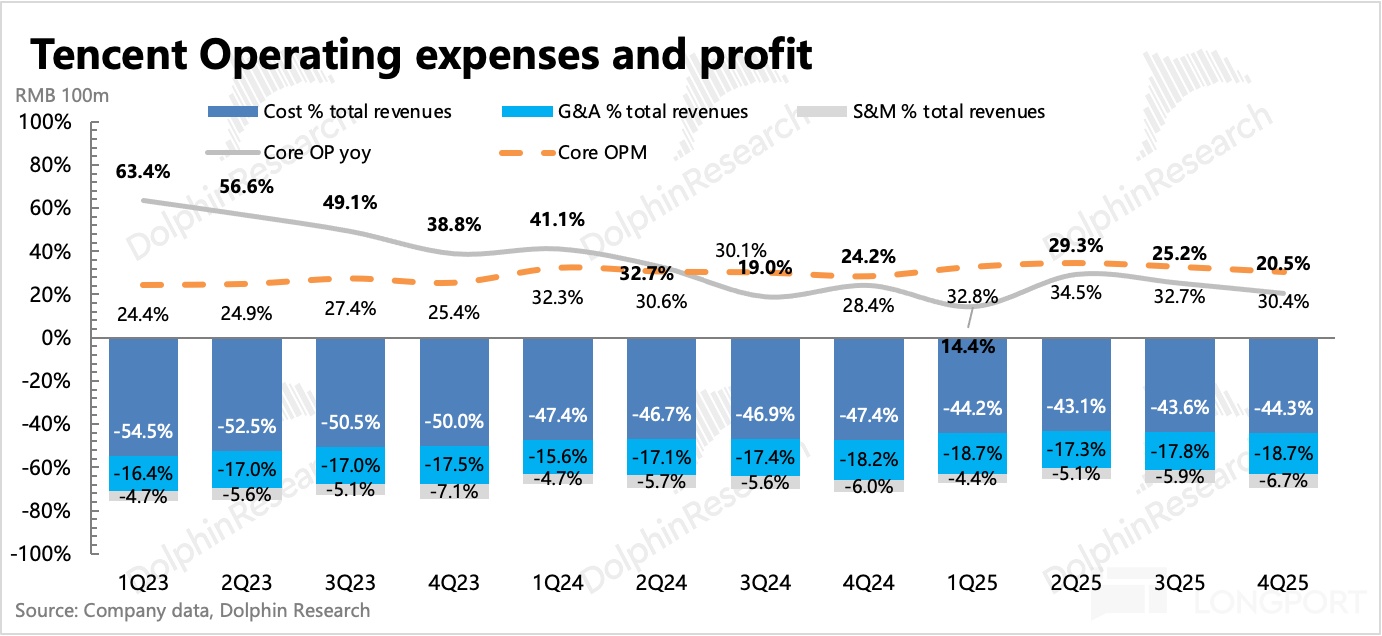
4. Cost optimized, but expenses rose: The margin uptrend remains intact, with OP margin up 2pct YoY. However, marketing around AI products like '元宝' was visible, with promo expenses up 44% YoY and +RMB 1.5bn QoQ.
Beyond some new game launches, spending was mainly user acquisition for '元宝', and Q1 S&M will be higher. Other cost increases were tied to AI servers and R&D personnel.
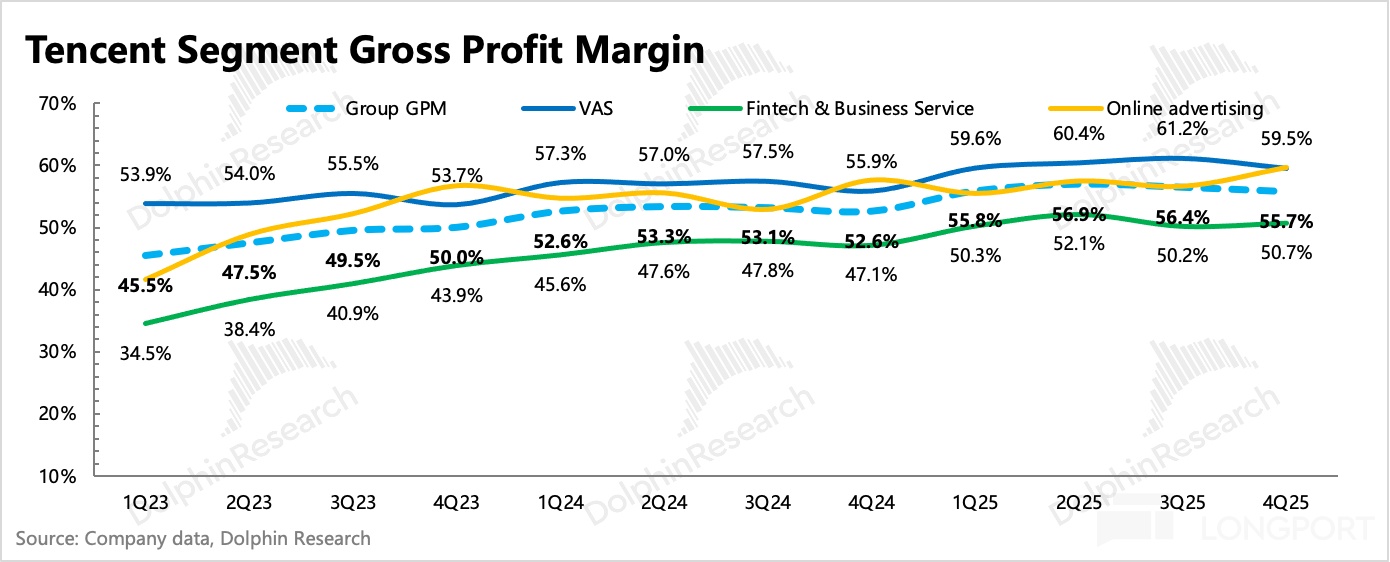
Overall Opex ratio rose 0.5pct YoY but was offset by better GPM. All three major segments saw margin improvement, driven by a higher mix of self-developed games (lower revenue sharing) and more Video Accounts ads.
6. More investment may compress shareholder return expectations: On cash flow and allocation, Dolphin Research focuses on capex and buybacks. Q4 net cash was RMB 107.1bn (cash + short-term investments net of short-term borrowings and notes), up ~RMB 5bn QoQ.
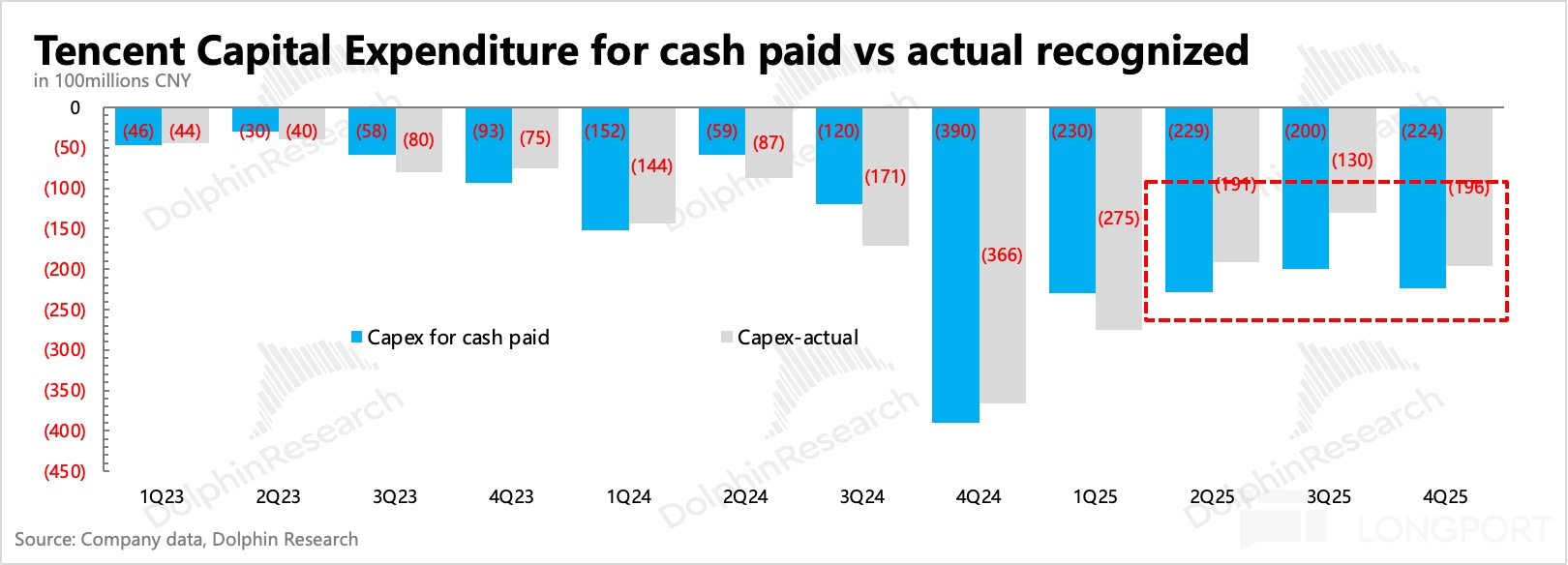
Capex was RMB 19.6bn, up QoQ, while actual cash outflow was RMB 22.4bn due to prepayments. Even on cash outflow, FY2025 capex would be under RMB 90bn; this implies a notably higher budget this year.
Q4 buybacks totaled HKD 19.6bn and FY totaled HKD 77.2bn. The company also declared a dividend of HKD 5.3 per share, implying ~HKD 48bn in payouts, +18% YoY.
If excess cash is deployed into AI (compute capacity at home and abroad, more product/model development), buybacks may remain contained, and potential shareholder yield could fall below ~2.5%.
7. Detailed financials
Dolphin Research View
Tencent’s stock has corrected sharply and now trades near a historical bottom at ~13–14x P/E. The drawdown is less about the quarter and more about fears that AI or competition could weaken growth.
An unexciting report alone is unlikely to lift the shares. In a tight AI race window, capital will focus on management’s strategic roadmap and how Tencent can catch up in AI.
Earlier this month, Tencent pushed out a slew of '龙虾' products, showing urgency after '元宝' underperformed over CNY. These were rushed and not yet refined.
But the shift toward urgency is both key and necessary. The WeChat entry still looks hard to dislodge even amid a wave of AI-native apps, yet rapid industry change reminds us no one can be 100% certain of holding the fort.
From this lens, Dolphin Research prefers Tencent to ramp capex rather than boost shareholder returns, and management’s style suggests Tencent won’t splurge indiscriminately like Meta. Capex at ~10% of revenue is below global tech leaders.
Meanwhile, supply looks set to improve, helped by policy easing, domestic capacity, and overseas data center deployment. These trends should support execution.
Near to mid term, the game product cycle and ad inventory release remain two key drivers. Both growth momentum and the scale effects of the business model leave room for efficiency gains, supporting AI and expansion investments while keeping cash flow steady.
Detailed Analysis Below
I. WeChat ecosystem remains stable
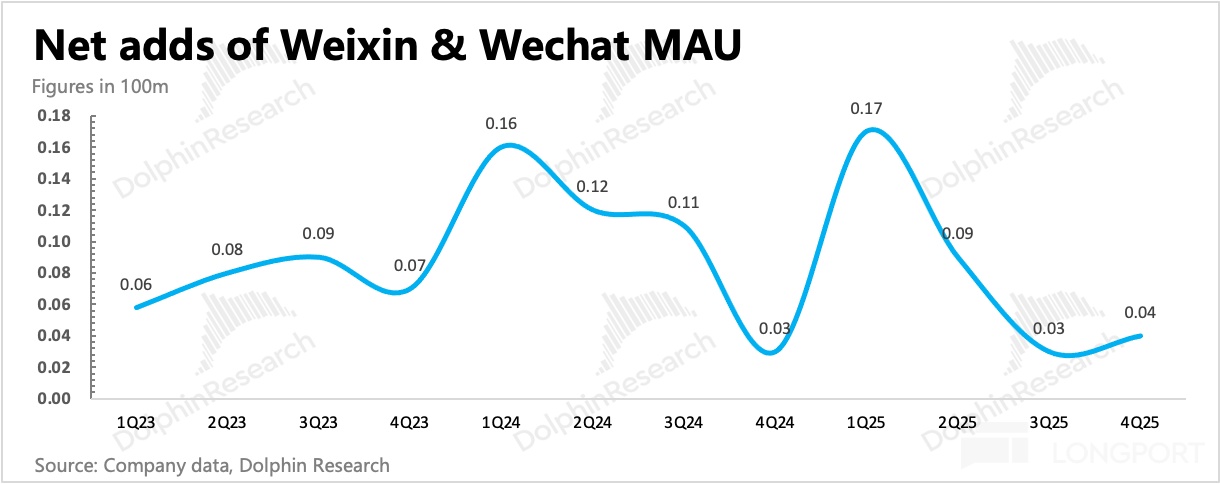
WeChat MAUs reached 1.418bn in Q4, with a net add of 4mn QoQ. Expansion remains steady but is slowing.
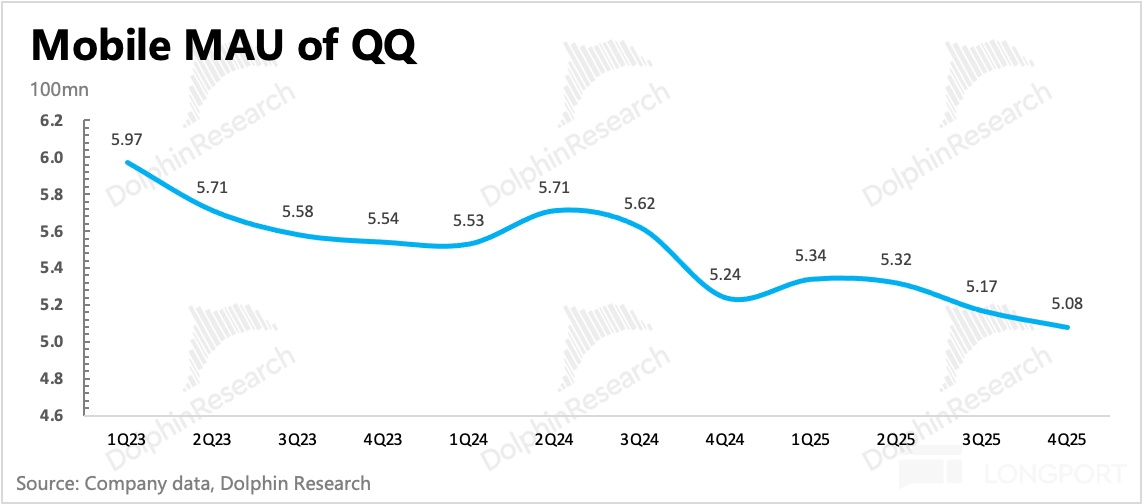
QQ continues to decline. Trends there remain weak.
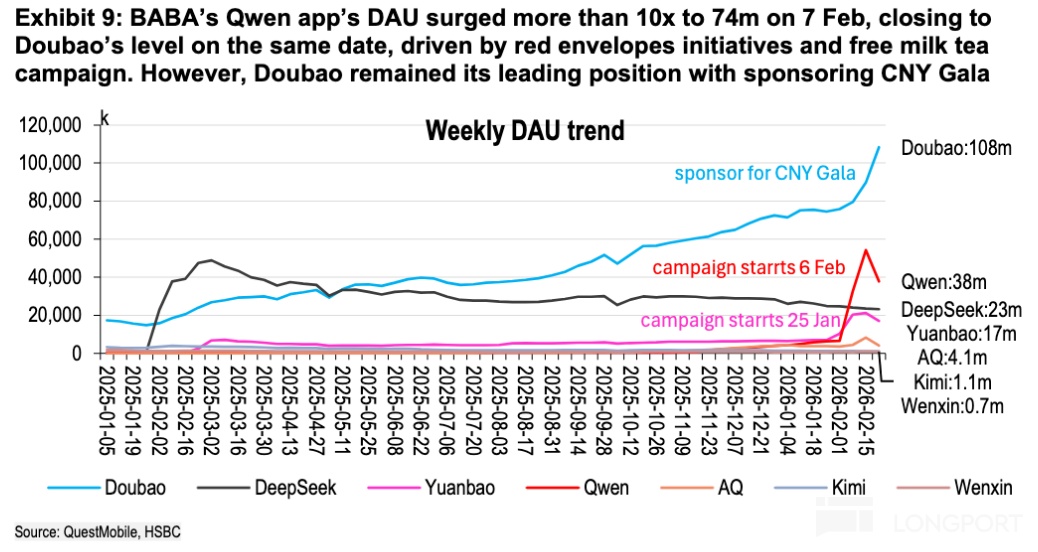
On AI chatbots, '元宝' downloads rebounded early in the year on marketing. '千问' surged with services such as food-delivery red packets, and post-CNY its user base has exceeded '元宝'.
'豆包' remains the leader and drew another wave of traffic via sponsorship of the Spring Festival Gala. Momentum there is strong.
Tencent’s current approach is to build more Agent and OpenClaw products around the WeChat/QQ entry points. This aligns with our prior view that while '元宝' remains a centerpiece of Tencent’s AI strategy, medium term it functions more as a testing ground.
Once mature and refined, products will inevitably integrate into the WeChat/QQ entry. A core tenet of Tencent’s AI strategy is to embed AI across the existing ecosystem so users can invoke AI services on demand.
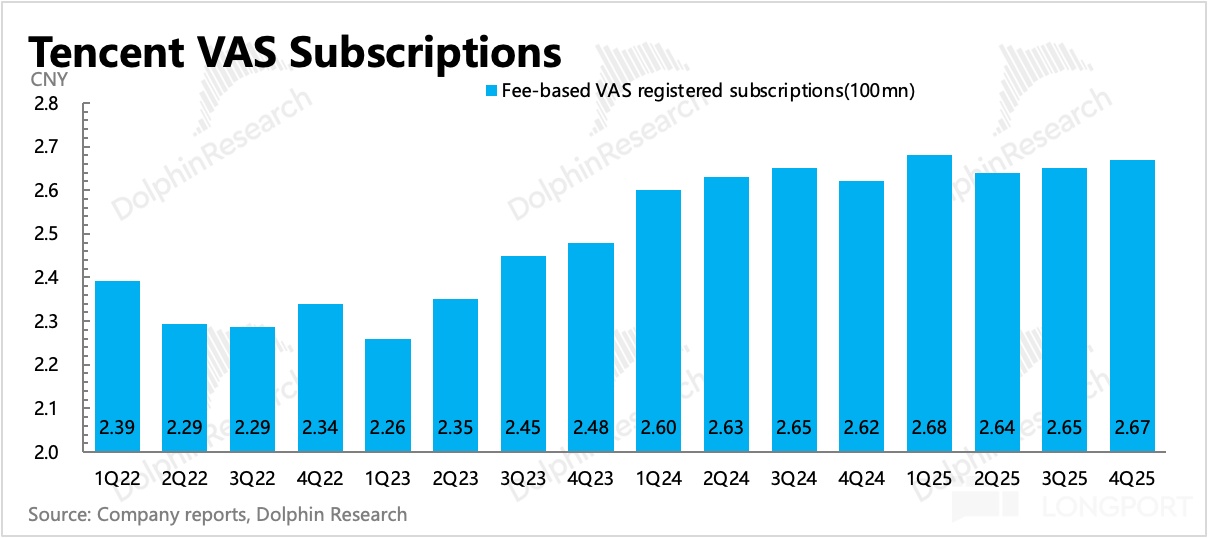
Q4 VAS paying users rose by a net 2mn to 267mn. The increment mainly came from TME (+1.7mn).
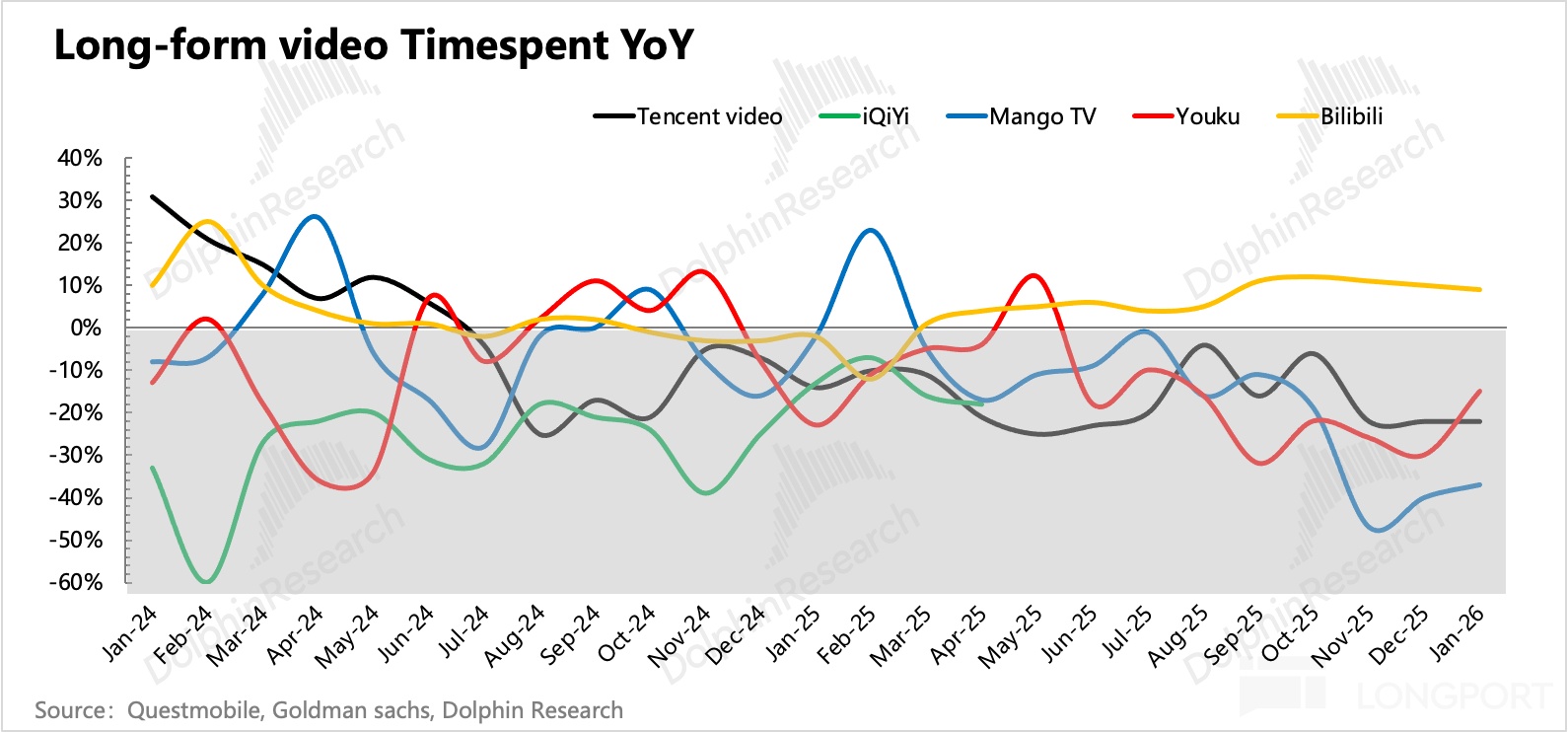
Tencent Video did not disclose member counts, but QM data show long-form video engagement is now painfully weak. The downtrend is evident.
II. Games meet expectations and will remain a growth pillar this year
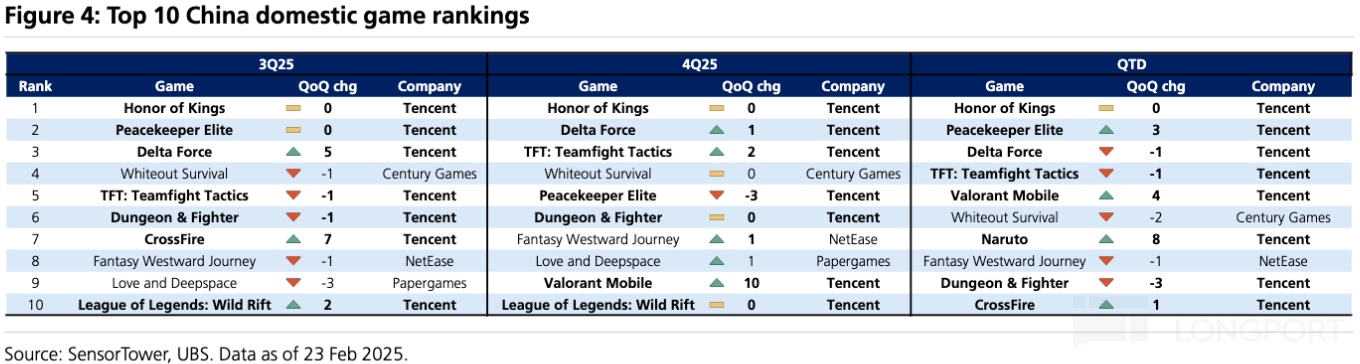
Q4 online game revenue was RMB 59.3bn, +21% YoY. Domestic grew 15%, while overseas grew 32% (FX tailwind ~1pct).
With no major launches in the quarter, domestic growth mainly came from titles released within the past year, including '无畏契约手游', '三角洲行动', and '鸣潮'. These newer titles sustained momentum.
For a leader like Tencent, new-game reserves no longer fully dictate revenue volatility. Incremental gains from live ops and content updates in legacy titles can rival a mid-sized new launch.
For example, '金铲铲之战' returned to the iOS billings top-3 in Nov and Dec. '和平精英' weakened in Q4 (ranking down three spots) but rebounded after the Dunhuang map update, with record peak DAU over CNY.
Billings derived from deferred revenue offer a more forward look at real demand. Q4 VAS billings fell 10% QoQ, more than typical seasonality.
Besides slower music pay and video pay drag, game billings were normal. We do not see unusual weakness there.
On pipeline, Tencent still has depth. After '逆战:未来' launched early in the year with average performance, '洛克王国:世界' and '王者荣耀世界' are scheduled and should drive meaningful Q2 billings.
Other reserves for 2026 include '异人之下', '失控进化', and '王者万象棋'. The slate looks rich.
III. Ads slightly decelerated but still have room to release
The consumer backdrop remained weak in Q4. Tencent’s ads still grew ~18% YoY, slightly below BBG consensus.
Since early this year, some institutions have trimmed ad forecasts modestly given muted consumption. Caution has risen.
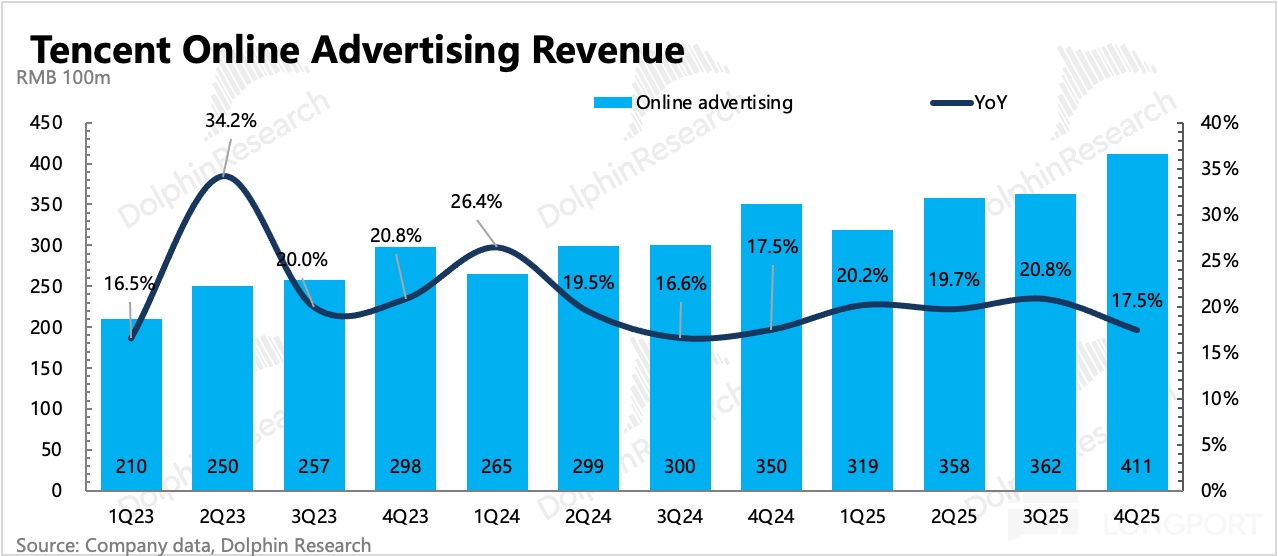
In the short term, AI-driven improvements in recommendation and conversion allow Video Accounts and Search ads to sustain high growth at low ad loads. To keep high growth longer term, inventory release will be needed.
IV. Weak consumption; fintech recovery is slow
Q4 fintech and enterprise services grew ~8% YoY, with QoQ growth slowing. Enterprise services rose 22% YoY (incl. WeChat Shops commissions).
Fintech likely grew in the mid-to-low single digits. Unlike prior quarters, there is no clear trend of sustained recovery.
V. Investment gains: fair value uplift on investment assets
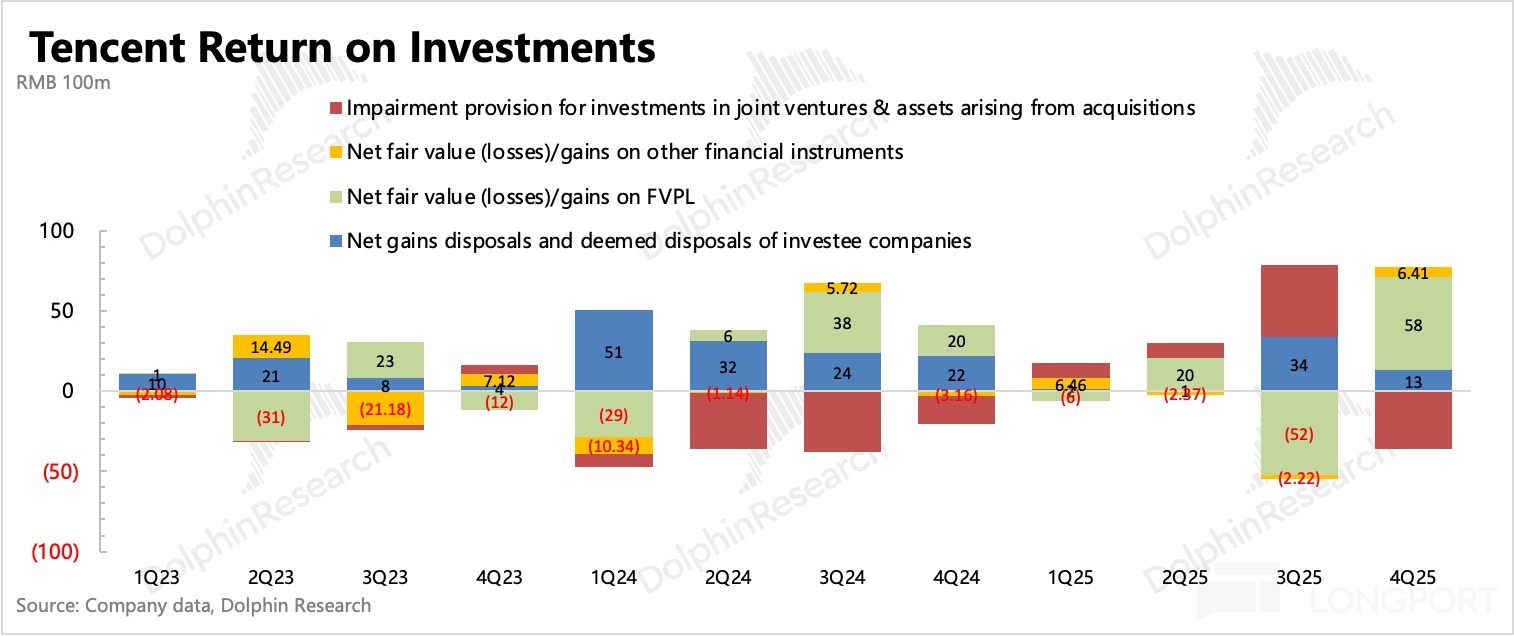
For investment gains, Dolphin Research uses pre-2025 definitions, focusing on other gains, net (incl. investment income) and share of profit of associates/JVs. Q4 total investment gains rose QoQ, mainly due to financial fair value gains offsetting impairments of investees’ intangible assets.
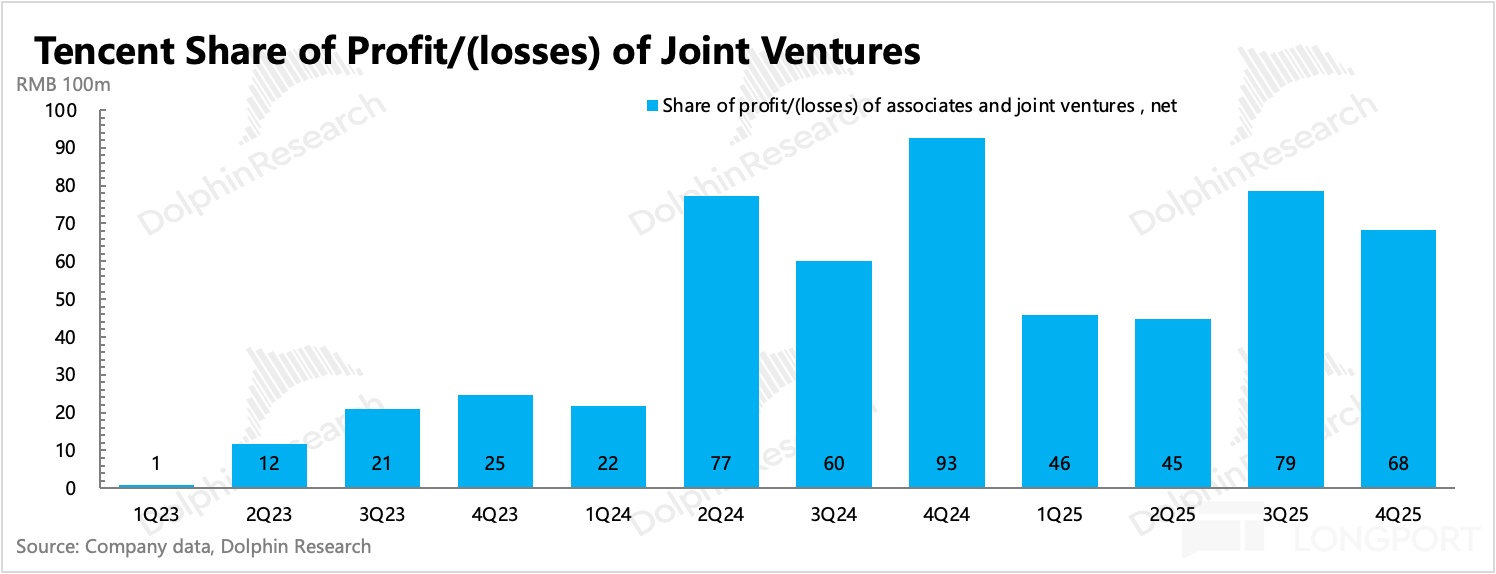
Share of profit recognized was ~RMB 6.8bn in Q4, down YoY due to last year’s large non-recurring gains at associates creating a high base. The normalization is expected.
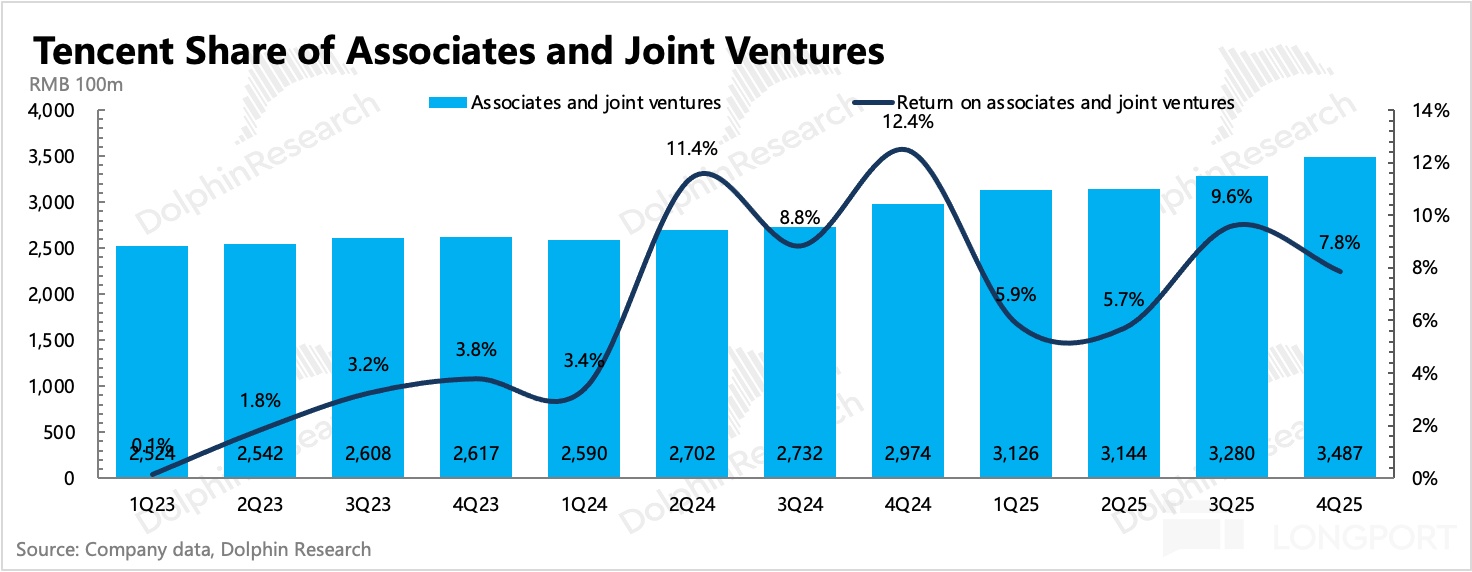
By Q4-end, combined associates/JVs assets stood at RMB 348.7bn. That implies an annualized investment return of 7.8%, down vs. Q3.
VI. Profit steadily improving, but growth investments will still have an impact
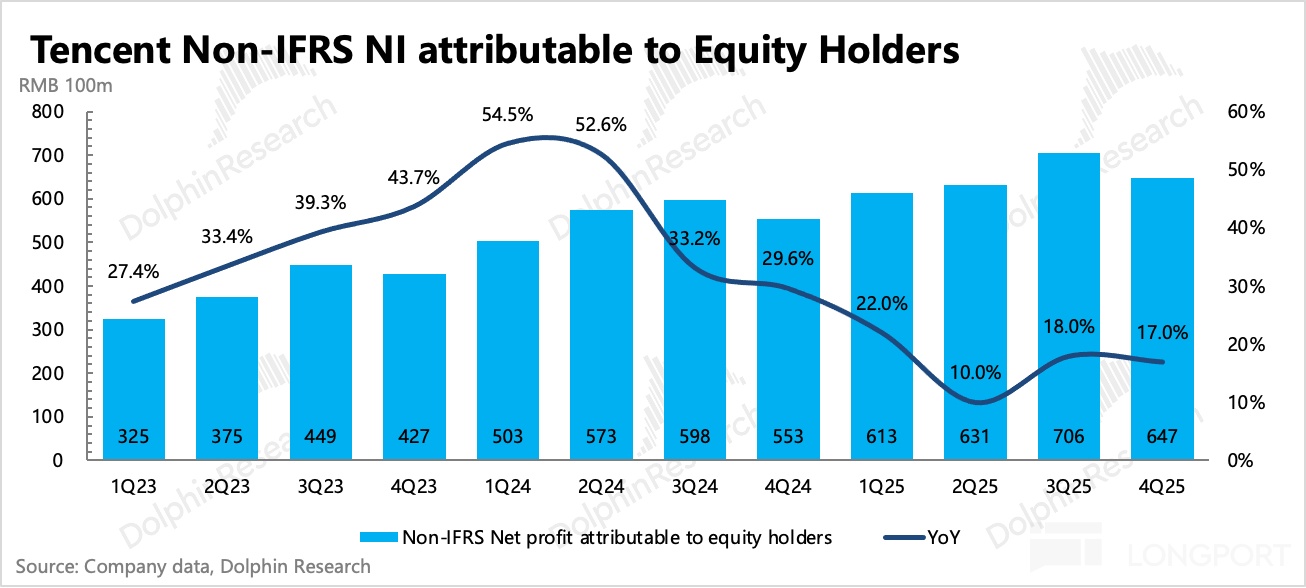
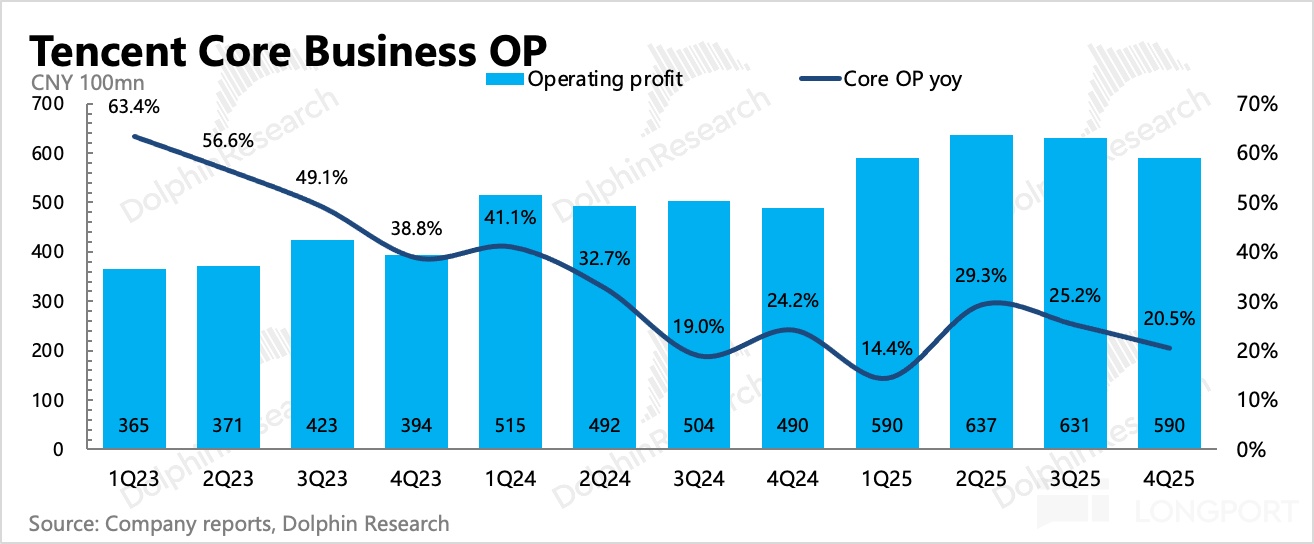
Q4 adj. net profit was RMB 64.7bn, +17% YoY, in line. Core OP (= GP − Opex), stripping out share of associates and some miscellaneous swings, rose 21% YoY but was slightly below expectations.
The shortfall was mainly from heavier marketing. Core OPM was 30.4%, up 2pct YoY, keeping the margin improvement trend intact.
Promo expenses climbed 44% YoY, +RMB 1.5bn QoQ, largely for '元宝' UA besides a few game launches. Q1 S&M will likely be higher.
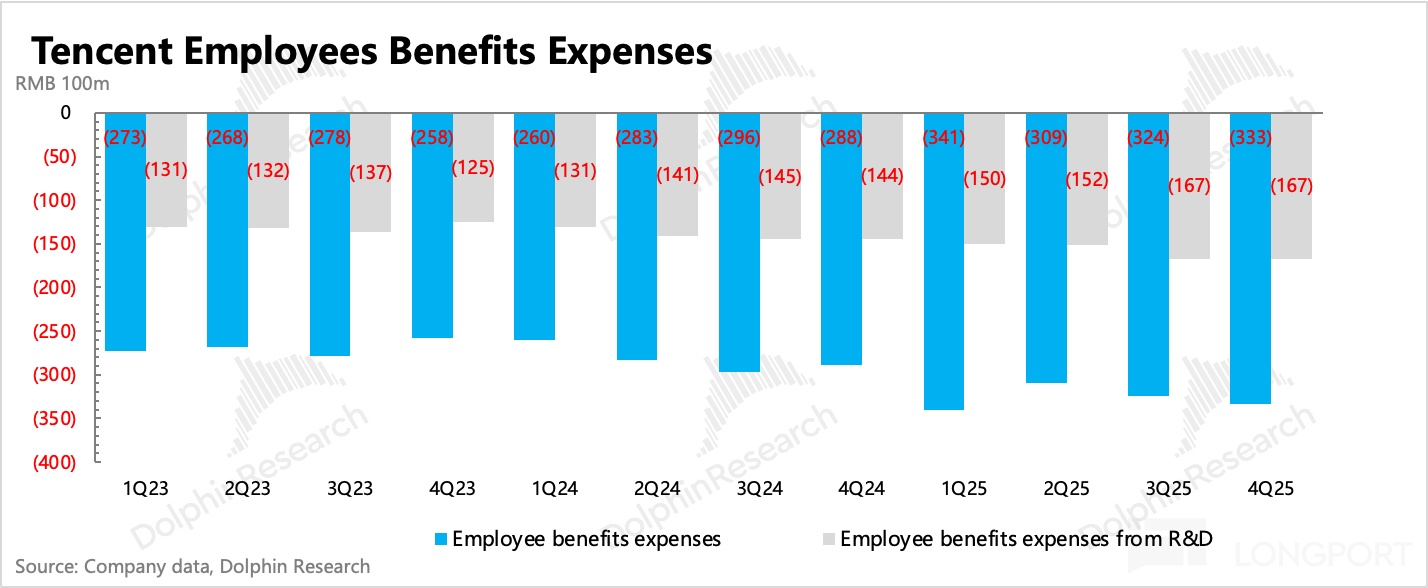
Other cost increases mostly stem from AI-related server costs and R&D personnel. These will be watch items in coming quarters.
Overall Opex ratio rose 0.5pct YoY but was offset by GPM improvement. Margins improved across the three major businesses, helped by more self-developed games and a higher mix of Video Accounts ads.
Near to mid term, margins may be affected by ongoing investments. Apple tax changes help VAS GPM, but AI spending will show up in depreciation, compute rentals, and near-term R&D personnel costs.
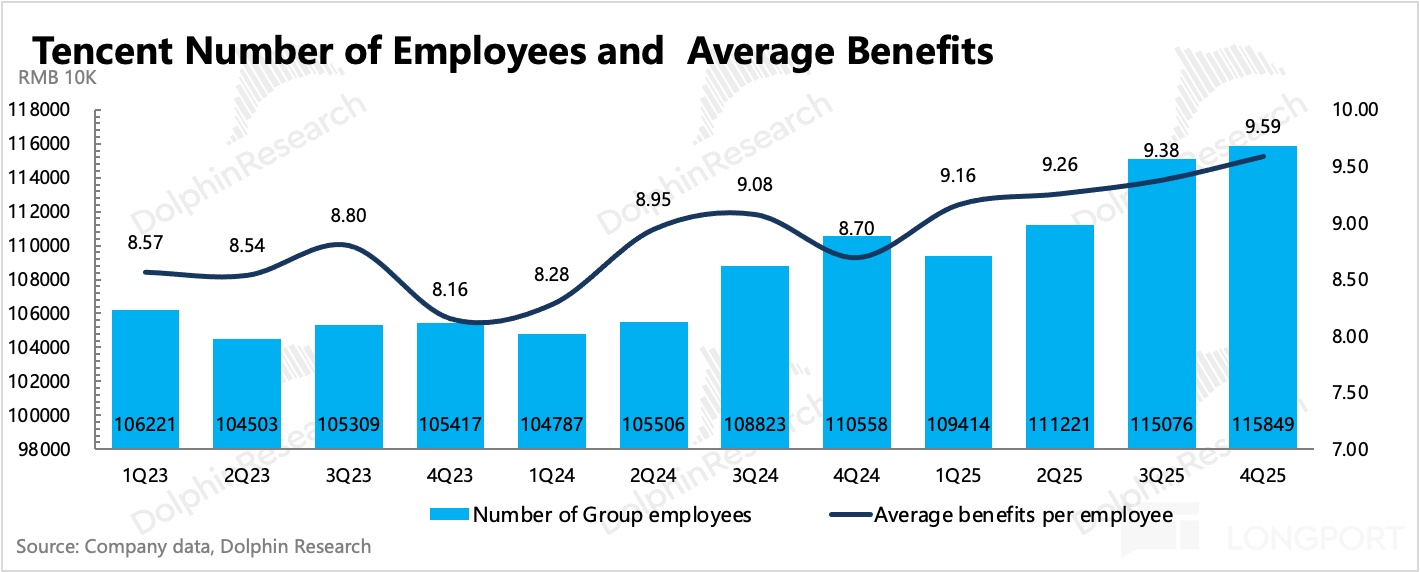
Management indicated it prefers AI-led productivity and revenue growth over layoffs, so large-scale cuts are unlikely; instead, headcount growth will be controlled, with Q4 net adds of 773 well below Q3. Over the medium to long term, higher operating efficiency should lift margins.
On the other hand, Tencent’s diversified businesses and models allow resource reuse and centralized allocation to reduce waste. This should help keep overall profitability steady.
Q4 capex was RMB 19.6bn, up QoQ, but prepayments led to cash outflows exceeding deliveries. Despite Tencent’s ROI-focused discipline, three consecutive quarters of prepayments suggest the bottleneck lies more on the compute supply side.
VII. Major shareholder selling has slowed
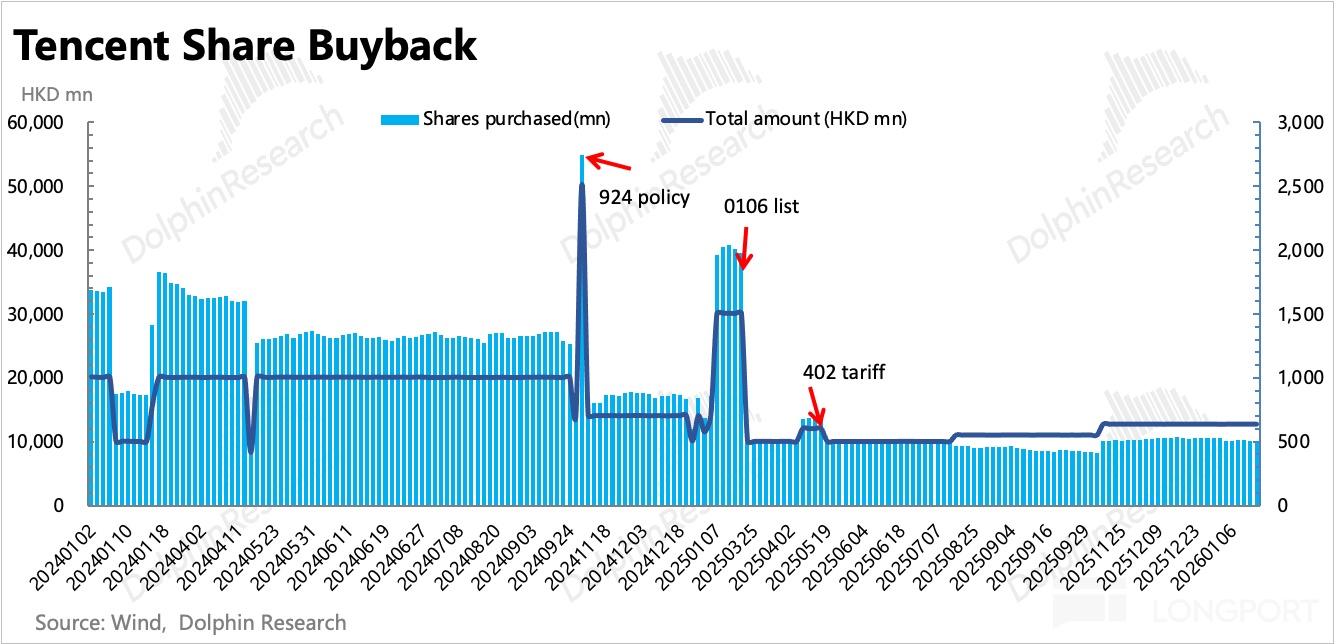
Quick look at buybacks and sales. Since the last earnings release, over the past four months Tencent’s total share count fell by a net 39mn.
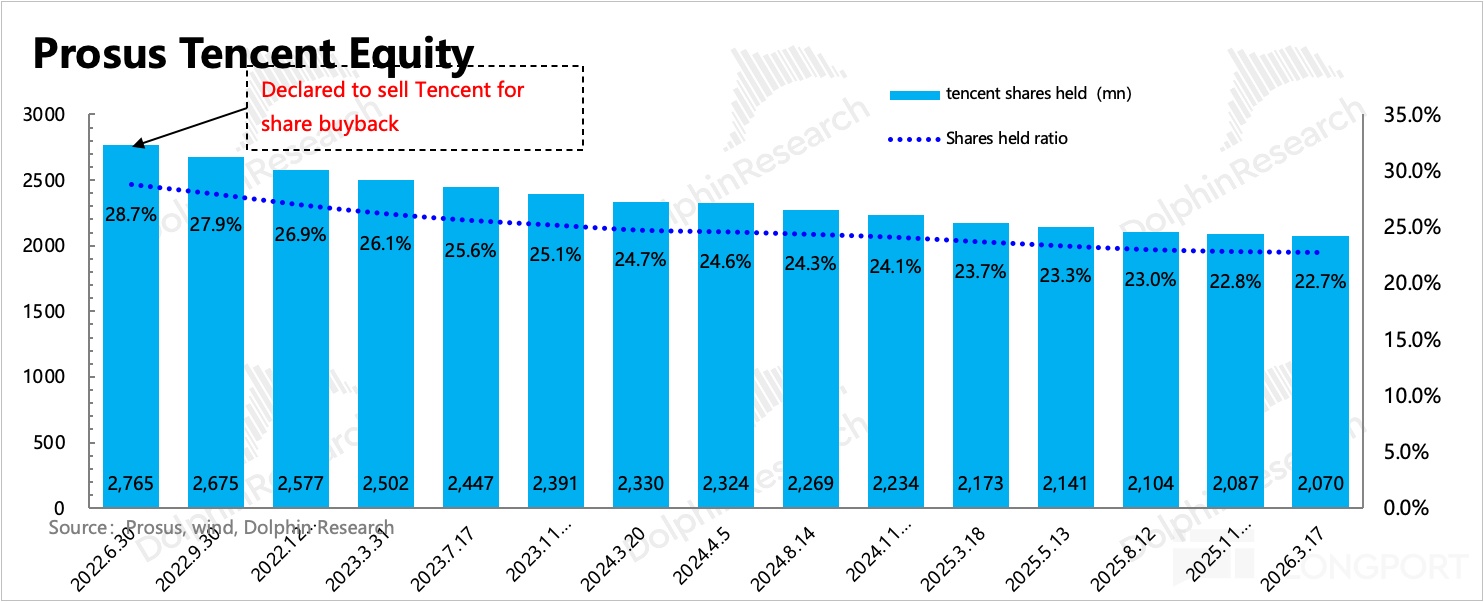
Over the same period, major shareholder selling stayed flat vs. last quarter but slowed vs. historical pace, with avg. monthly sales lower; total sales were 16mn shares. As of yesterday, Prosus’s stake in Tencent fell to 22.74%, down 0.08pct vs. the last earnings day.
The company’s own buybacks were nearly HKD 20bn in Q4, down slightly QoQ. Post the last earnings and before the current blackout, daily buybacks rose to ~HKD 635mn vs. ~HKD 550mn previously.
Given the recent sell-off, even with AI-driven capex prioritized, buybacks will likely resume at high intensity after the print. Short-term support should remain solid.
Dolphin Research articles on 'Tencent Holdings'
Earnings season (past year)
Nov 13, 2025 Call Transcripts: 'Tencent Holdings (Trans): Focuses on AI, but lowers full-year Capex guide'
Nov 13, 2025 Earnings Take: 'Tencent Holdings: Not playing chicken like Meta, preferring steady returns'
Risk disclosure and statement: Dolphin Research disclaimer and general disclosure
Recommended Articles








Comments (0)
Click the $ button, enter the symbol, and select to link a stock, ETF, or other ticker.