GLOBAL MARKETS-Stocks steady, investors uneasy about AI disruption

By Gregor Stuart Hunter and Amanda Cooper
SINGAPORE/LONDON, Feb 24 (Reuters) - Global shares stabilised on Tuesday, after a tumble driven by a range of factors, from uncertainty over U.S. President Donald Trump's tariff policy and geopolitical tensions to renewed worries about the upheaval to the economy from AI.
After the Supreme Court ruled Trump's emergency tariffs were unlawful on Friday, the president announced a 10% across-the-board levy, which came into effect on Tuesday. Trump later said the tariff would be 15%, but it was unclear when, or if, this would apply.
Importers could be in line for billions of dollars in refunds, while trade partners and investors alike are in the dark about where many existing tariff agreements stand.
MSCI's All-World index .MIWD000000PUS was unchanged, while in Europe, the STOXX 600 .STOXX edged up 0.2%, in sight of record highs, while U.S. stock futures ESc1, NQc1 were up 0.4%.
BEARISH ANALYSIS ON EFFECTS OF AI GETS ATTENTION
On Monday, the S&P 500 .SPX slid 1%, erasing the past week of gains, as fears over the displacement effects of AI on software and other industries pushed the Nasdaq Composite .IXIC 1.1% lower. A bearish analysis from Citrini Research on the possible risks to the global economy took a further toll on jittery investor sentiment.
The report was "getting a lot of airplay", said Tony Sycamore, market analyst at IG in Sydney. "It does align with quite a few fears which are out there."
The article, which circulated at the weekend, is one of a number of recent "think pieces" on the long-term consequences of artificial intelligence - on employment, global growth and even human existence - that have rattled investors.
In a note discussing a similar piece, Deutsche Bank strategist Jim Reid wrote: "The argument leans heavily on narrative and emotion rather than hard evidence. That doesn’t mean it will ultimately be wrong, but ... the vibes-to-substance ratio is undeniably high."
A range of software and payment stocks dropped on Wall Street on Monday. Shares of International Business Machines IBM.N plunged by more than 13% - their biggest one-day fall since late 2000 - after AI startup Anthropic said its Claude Code tool could be used to modernize a programming language run on the company's systems. IBM stock was up 0.5% in premarket trading.
The sheer scale of corporate borrowing and spending on AI has been enough to make many nervous, not least because of the outsized market weight of companies at the heart of the boom. Yet, for all the recent volatility, the S&P itself is only around 2.5% below record highs.
"None of this, so far, has delivered the knock-out blow to equity markets, where the S&P 500 has gyrated in a narrow 6,775-7,000 range since the start of the year," said ING strategist Chris Turner. "Tomorrow evening's Nvidia release might be the next big story, however."
AI chipmaker Nvidia NVDA.O, which reports earnings after the bell on Wednesday, accounts for around 8% of the entire S&P 500.
FEDEX SUES FOR REFUNDS AFTER U.S. TARIFF RULING
On Monday, Trump warned countries against backing away from recently negotiated trade deals with the U.S. after the Supreme Court tariffs ruling, saying that he would impose much higher duties on them under different trade laws.
The new tariffs are based on Section 122 of the Trade Act of 1974, causing further confusion in markets trying to come to grips with U.S. protectionist policies. Global transportation company FedEx FDX.N on Monday sued for a refund.
In currencies, the dollar was last up 0.8% at 155.89 yen and steady against the euro EUR= at $1.178.
In commodities markets, Brent crude LCOc1 traded at $71.43 per barrel, little changed on the day, while tensions continued to simmer between the U.S. and Iran. Safe-haven gold XAU= remained volatile, down 1.25% at $5,166 an ounce.
Related Articles
Nvidia Q4 Earnings Preview: AI-Driven Growth Versus Market Expectations
TradingKey - NVIDIA (NVDA) is set to release its fourth quarter fiscal year 2026 earnings report after the market close on February 25, ET. As the world undergoes a period of rapid AI technological advancement, market debates over a capital expenditure bubble have intensified. In this context, NVIDIA’s results serve not only as a test of its business performance but also as a core bellwether for the sustainability of the global AI boom.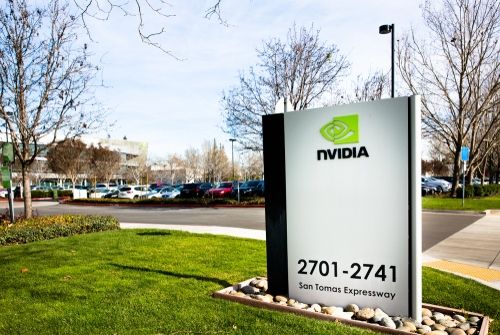
Tesla Stock Outlook: Why 2026 Could Be the Year of the Tesla Robotaxi
TradingKey - The concept of autonomous mobility for Tesla(TSLA) has gone from a projection of the far away future to a vital part of its overall long-term growth strategy.
International Copper Prices Rise for 7 Straight Months; Will Bull Market Continue in 2026?
TradingKey - As the "king of industrial metals," every fluctuation in international copper prices impacts the nerves of global investors. In early 2026, international copper prices continued to rise, extending the upward trend from 2025 and reaching a new high above $14,500, marking seven consecutive months of gains. Meanwhile, London Metal Exchange (LME) copper prices have climbed from $7,800 per tonne in July 2025 to over $9,000 per tonne today.
Is SaaS Dead? The Truth Behind the Software Meltdown, the Missing Floor, and the Peak That’s Not Coming Back
TradingKey - A trillion dollars just vanished from software stocks—this piece breaks down who AI is really killing, who quietly benefits, and why cheap SaaS may be the biggest value trap of this cycle.