SpaceX IPO Poses Existential Threat to AST SpaceMobile, Verizon, and AT&T

Key Points
SpaceX plans to IPO in 2026.
SpaceX's Starlink DTC business alone is many times larger than AST SpaceMobile.
SpaceX may have begun competing directly with AST partners AT&T and Verizon in internet backhaul.
Sometime in 2026, Elon Musk will hold an initial public offering (IPO) for SpaceX.
We don't know precisely when the IPO will happen. But it's becoming increasingly clear that when SpaceX does IPO, it's going to be bad news for basically everyone with whom SpaceX competes.
Where to invest $1,000 right now? Our analyst team just revealed what they believe are the 10 best stocks to buy right now, when you join Stock Advisor. See the stocks »
Who will become the next victims of Elon Musk? Rival rocket companies United Launch Alliance (ULA) and Rocket Lab in the U.S., and Arianespace in Europe, are all obvious targets. The biggest name in space launch already, SpaceX will become even more formidable once it has a $1.5 trillion IPO valuation to work with. Just the $50 billion in new cash that SpaceX is rumored to be raising would be 30% more than Rocket Lab's entire market capitalization -- and 4 times all the revenue that ULA co-owner Lockheed Martin generates from its space business in a year.
So you can see why other space companies might be a bit nervous.
Less obvious is the threat Musk poses to the telecom industry, though -- to rising star AST SpaceMobile (NASDAQ: ASTS), and to two of AST's biggest business partners, AT&T (NYSE: T) and Verizon Communications (NYSE: VZ).

Image source: Getty Images.
Starlink DTC
Last month, SpaceX published its most recent Starlink Progress Report, detailing the growing size and influence of its satellite internet business, Starlink.
Among the other revelations from this report -- such as the fact that SpaceX now has more than 9,000 Starlink satellites in orbit, 9.2 million paying customers down here on Earth, and more than $10 billion in annual revenue from Starlink alone -- SpaceX also gave important insight into Starlink's newest venture: direct-to-cell (DTC) telephony.
After just two years in the DTC business, SpaceX has now put 650 Starlink DTC satellites in orbit -- about 7% of the total. Already, Starlink DTC covers 22 countries on six continents, making Starlink "the largest 4G coverage provider on planet Earth, connecting over 12 million users and counting."
The number of Starlink DTC satellites nearly doubled in 2025, by the way, so it's growing rapidly -- not just in terms of subscribers, but also in terms of capability. Initially good only for sending Wireless Emergency Alerts and short texts, Starlink DTC can now support email and even video calls.
Ultimately, SpaceX sees the total addressable market for Starlink DTC at 400 million users -- room for at least 33 times growth from where Starlink DTC is today.
In contrast, AST SpaceMobile has just six BlueBird DTC satellites in orbit. It has not yet begun beta service -- and you have to imagine this is frustrating for its two biggest U.S. partners, telecoms AT&T and Verizon.
Allow me to make an observation
Starlink DTC isn't the only thing AST, AT&T, and Verizon have to worry about, either. Reading through the Starlink Progress Report last month, the space analysts at Quilty Space struck upon a second fact that bears mentioning.
Starlink has "activated" 20 total "Community gateways," of which 13 came online in 2025 alone (so more than 100% growth -- this part of Starlink's business is growing even faster than DTC). And as Quilty observes, setting up gateways to distribute satellite internet on the ground means Starlink "in some regions ... is no longer just the last-mile ISP, but the backhaul itself, a shift that nudges the system toward infrastructure-style regulation that SpaceX appears intent on normalizing before it is contested."
(To help visualize this, the "last mile" of the internet is how you connect to your internet service provider via fiber, a cell tower, or a satellite. "Backhaul" further connects your ISP to central data centers and major internet hubs and from there to transnational and international internet backbones. Backhaul also happens to be an important part of the businesses at both AT&T and Verizon.)
What does this mean for investors?
Starlink DTC already puts SpaceX in competition with AT&T and Verizon in wireless -- initially just in areas with limited cellphone coverage, but increasingly everywhere. If Starlink is starting an infrastructure-style internet backhaul business, too, then that's a second area of the telecom business where the companies are in competition. And again, at present, Starlink is growing this part of its business faster even than it's growing its satellite fleet, and even faster than it's growing its number of Starlink DTC satellites.
It will be hard to quantify the size of the business or the potential profits SpaceX might earn from it until we see the company's IPO prospectus. When the prospectus does come out, though, make sure to pay attention to this nascent backhaul business.
Because SpaceX already is.
Should you buy stock in AST SpaceMobile right now?
Before you buy stock in AST SpaceMobile, consider this:
The Motley Fool Stock Advisor analyst team just identified what they believe are the 10 best stocks for investors to buy now… and AST SpaceMobile wasn’t one of them. The 10 stocks that made the cut could produce monster returns in the coming years.
Consider when Netflix made this list on December 17, 2004... if you invested $1,000 at the time of our recommendation, you’d have $409,108!* Or when Nvidia made this list on April 15, 2005... if you invested $1,000 at the time of our recommendation, you’d have $1,145,980!*
Now, it’s worth noting Stock Advisor’s total average return is 886% — a market-crushing outperformance compared to 193% for the S&P 500. Don't miss the latest top 10 list, available with Stock Advisor, and join an investing community built by individual investors for individual investors.
*Stock Advisor returns as of February 14, 2026.
Rich Smith has positions in Rocket Lab. The Motley Fool has positions in and recommends Rocket Lab. The Motley Fool recommends AST SpaceMobile, Lockheed Martin, and Verizon Communications. The Motley Fool has a disclosure policy.
Related Articles
SpaceX IPO with Dual-Class Shares: Will Musk Secure the 25% Voting Control Denied by Tesla?
TradingKey - SpaceX is preparing for an IPO this year. According to foreign media reports, SpaceX is considering a dual-class share structure for its IPO, which would grant specific shareholders extra voting rights. In other words, Elon Musk could maintain absolute control over the company even if h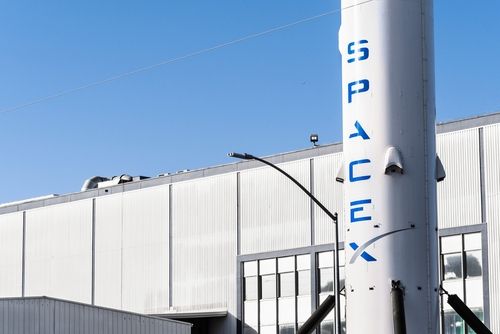
Silver Plunges 10%, Gold Tests $4,900: Is the Bull Market Over Ahead of CPI?
TradingKey - Ahead of the release of the U.S. January CPI report, financial markets experienced a sudden broad sell-off on Thursday. Alongside a sharp decline in U.S. equities, prices for commodities such as gold (XAUUSD) also plummeted. Gold dropped nearly $200 within a 30-minute window, a decline
Bitcoin Price Prediction 2029-2035: Institutional Accumulation and the U.S. Treasury’s Strategic Reserve Pivot
Explore the 2026 Bitcoin landscape: From the U.S. Strategic Reserve and Michael Saylor’s $75B war chest to Cathie Wood’s 2030 forecast. Is BTC the new Digital Gold?
Is SaaS Dead? The Truth Behind the Software Meltdown, the Missing Floor, and the Peak That’s Not Coming Back
TradingKey - A trillion dollars just vanished from software stocks—this piece breaks down who AI is really killing, who quietly benefits, and why cheap SaaS may be the biggest value trap of this cycle.