US STOCKS-Wall St rallies after bruising tech slump, Amazon down on AI capex lift

By Pranav Kashyap and Twesha Dikshit
Feb 6 (Reuters) - Wall Street bounced back on Friday following a heavy tech rout earlier in the week, though Amazon slid sharply after it flagged an even bigger investment into AI infrastructure.
Amazon AMZN.O dropped 8% after it forecast a more than 50% jump in capital expenditures this year, intensifying the AI-driven spending spree already underway among its "Magnificent Seven" peers.
The S&P 500 and the Nasdaq snapped three straight losing sessions, while the Dow briefly scaled a peak as some bargain-hunters stepped in to buy the dip.
Chip stocks, caught in the crosshairs of the tech selloff, were the main drivers of the day's rally. Broadcom AVGO.O rose 5.6% and AMD AMD.O jumped 7.5%. Super Micro SMCI.O gained nearly 10%.
Nine of the 11 sub-indexes posted gains. The PHLX semiconductor index .SOX rose 4.6%, while the S&P 500 tech index .SPLRCT added 2.8%.
Even so, sentiment stayed fragile as markets tried to square the near-term hit from soaring AI capital outlays with their longer-term payoff, and as fears persisted that advanced AI tools could eat into demand for traditional software businesses.
"We're going to continue to see these ebbs and flows because the concerns that were are driving markets weren't short term," said Ben Falcone, managing director at Kayne Anderson Rudnick.
"These issues are more longer term in nature and don't see them going away anytime soon."
Investors have been zeroing in on AI budgets of mega-cap companies following Microsoft's MSFT.O outsized capex plans late last month, pressure that only intensified after Alphabet's ramp up of its spending plans exacerbated Thursday's selloff.
The "Magnificent Seven" were a mixed bag on the day, with Alphabet GOOGL.O down 3%, while Tesla TSLA.O gained 3%. Nvidia NVDA.O, the last of the group yet to report its results, jumped 7%.
Software and data-services shares also gained footing after a week-long slide.
CrowdStrike CRWD.O and Palantir PLTR.O were up 3.6% and 4.8%, respectively. The S&P 500 Software & Services index posted its first gain after seven straight declines, though it was set for a weekly drop of more than 8% — its weakest performance since March 2020.
At 11:26 a.m. ET, the Dow Jones Industrial Average .DJI rose 874.32 points, or 1.79%, to 49,783.04. The S&P 500 .SPX gained 94.49 points, or 1.39%, to 6,892.89, while the Nasdaq Composite .IXIC advanced 326.80 points, or 1.45%, to 22,867.38.
The CBOE volatility index .VIX, Wall Street's fear gauge, dropped for the first time in three days, down 3.19 points at 18.258.
Friday's gains, however, could only reverse part of the declines seen during the week. The S&P 500 was headed for its worst week since late-December, while the Nasdaq was set to post its steepest weekly loss since November.
The AI trade, one of the biggest engines of last year's rally, is also facing a substantial stress test as money flows into defensive havens such as consumer staples and telecoms. That rotation is unfolding just as risky assets are scaling back, with bitcoin BTC= down 50% from its October peak.
The Russell 2000 index .RUT added 2.8% and was headed for its best week since late-November. The S&P 600 small-cap index .SPCY and the S&P 400 mid-cap index .SP400 were headed for gains of over 1% this week.
This week also hit the halfway mark of one of the busiest earnings stretches of the season. As of Thursday, about 270 S&P 500 companies had reported, with roughly 80% topping analysts' expectations, according to LSEG data, well above the typical beat rate of about 67%.
Molina Healthcare MOH.N slumped 27% after the health insurer forecast 2026 profit at less than half of Wall Street expectations.
Roblox RBLX.N gained 11% after the video game platform projected fiscal 2026 bookings above estimates.
Related Articles
Tesla Stock Outlook: Competing With Rivian, Robotaxi Potential, and 2026 Prospects
There is much conversation about the prospect of investing in Tesla (TSLA) as we move closer to 2026. The volatility of its share price in 2025 is leading many investors to consider if they should purchase shares of Tesla given the alternatives available in terms of electric vehicles (Rivian, etc.).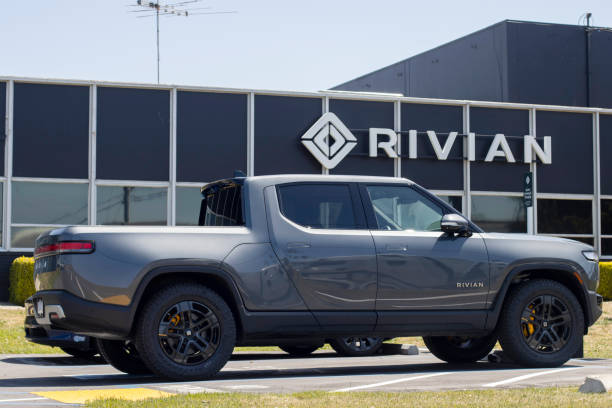
Amazon Stock Predictions for 2026 to 2030: Will They Exceed Expectations and Achieve Major Long-Term Goals?
TradingKey - As we head into 2026, many investors are questioning where Amazon (AMZN) fits into the technology world.
A Crash After a Surge: Why Silver Lost 40% in a Week?
TradingKey - Spot silver (XAGUSD) prices continue to decline. Silver plunged 20% on Thursday, breaking below $71 per ounce, with the sell-off intensifying on Friday as prices fell further below $64. Compared to the all-time high set on January 29, silver prices have retraced more than 40%, wiping out nearly all gains accumulated over the previous month.
Is Bitcoin’s Four-Year Cycle Dead in 2026?
Is the Bitcoin 4-year cycle dead? After 2025 broke historical records with a red post-halving year, institutional analysts explore if the Bitcoin price has decoupled from the halving countdown. Analyze the impact of spot ETFs, global liquidity, and the roadmap to the 2028 halving in this 2026 market