



BREAKINGVIEWS-Nvidia’s $100 bln pivot disturbs AI money-go-round

By Karen Kwok
LONDON, Feb 4 (Reuters Breakingviews) - The vast sums flowing around the artificial intelligence industry at times recall the ouroboros - the ancient symbol depicting a dragon eating its own tail. Tech giants and startups like OpenAI are snapping up Nvidia's NVDA.O advanced processors, while the chip group has poured cash into its biggest customers. Now CEO Jensen Huang has hinted at a disturbance in the money-go-round. Any slowdown will have far-reaching consequences.
Back in September, Huang talked up the $4 trillion chip giant's plan to invest $100 billion in OpenAI. At the time, Huang framed it as the biggest AI infrastructure bet in history. These bold promises, and other AI-related bets, helped spark a broader capital surge. However, Nvidia's plan appears to have stalled, the Wall Street Journal reported, citing people familiar with the matter.
To be fair, the fine print always left room to maneuvre. OpenAI suggested that the money would come progressively as the company built each gigawatt of data-centre capacity. In a November filing Nvidia added there was "no assurance" the investment would happen "on expected terms, if at all." Huang on Tuesday said there was "no question" Nvidia would participate in OpenAI's next round of fundraising; media reports suggest it is nearing a $20 billion investment.
The back-and-forth shows how much is at stake for Nvidia, the dominant supplier of shovels for the AI gold rush. HSBC estimates OpenAI could ultimately require 36 gigawatts of power and $1.8 trillion of capital spending. The company led by Sam Altman is not yet buying Nvidia chips at full scale directly, but about 80% of that capex flows through the cloud computing hyperscalers like Microsoft MSFT.O, Amazon AMZN.O and Oracle ORCL.N which are among Nvidia's biggest customers. Microsoft has its own reasons to keep OpenAI humming: the ChatGPT maker accounts for 45% of the software maker's $625 billion cloud revenue backlog. Despite OpenAI's progress - annualised revenue was running at about $20 billion in December - most of that capital will have to come from external sources.
There's a wider potential spillover too. Huang has deployed $24 billion across various AI startups, according to Rothschild & Co Redburn, and put $2 billion into the cloud firm CoreWeave CRWV.O in January. Yet in three months to September, about 67% of CoreWeave's revenue came from Microsoft, which rents capacity to OpenAI, while OpenAI is also a direct customer. Newer cloud firms lack tech giants' diversified revenue streams, making them more vulnerable to clients slowing spending. If OpenAI stalls, that ecosystem could catch a chill quickly.
Many big AI players therefore have an incentive to keep the money flowing. OpenAI's relationship with Microsoft, Nvidia, Amazon and SoftBank 9984.T is deepening as it seeks to raise $100 billion at a reported $830 billion valuation. Yet Alphabet's GOOGL.O Gemini and Anthropic's Claude are rapidly closing the gap in customer takeup, and Altman on Tuesday acknowledged that AI adoption is happening more slowly than he expected. Unlike ancient symbols, the AI industry cannot eternally devour its own tail.
Follow Karen Kwok on LinkedIn and X.
CONTEXT NEWS
Nvidia is nearing a deal to invest roughly $20 billion in OpenAI as part of its latest funding round, Reuters reported on February 3 citing a person familiar with the matter.
ChatGPT maker OpenAI is looking to raise up to $100 billion in its latest funding round, valuing it at about $830 billion, Reuters had reported.
The Wall Street Journal reported on January 31 that Nvidia's September plan to invest $100 billion in OpenAI and supply it with data center chips had stalled after the chipmaker expressed doubts about the deal.
Nvidia CEO Jensen Huang denied claims he was unhappy with the ChatGPT maker and said on January 31 that the company plans to make a "huge" investment in OpenAI, probably its largest ever.
Huang told CNBC on February 3 that Nvidia would consider investing in OpenAI's next fundraising round and the startup's eventual initial public offering.
Reuters reported on February 2 that OpenAI is unsatisfied with some of Nvidia’s latest AI chips, and it has sought alternatives since last year, potentially complicating their relationship.
OpenAI Chief Executive Sam Altman said after the Reuters report that Nvidia makes "the best AI chips in the world" and that the company hopes to remain a "gigantic customer for a very long time".
OpenAI could spend almost $800 bln on chips and data centers up to 2030 
Related Articles
Tesla Stock Outlook: Competing With Rivian, Robotaxi Potential, and 2026 Prospects
There is much conversation about the prospect of investing in Tesla (TSLA) as we move closer to 2026. The volatility of its share price in 2025 is leading many investors to consider if they should purchase shares of Tesla given the alternatives available in terms of electric vehicles (Rivian, etc.).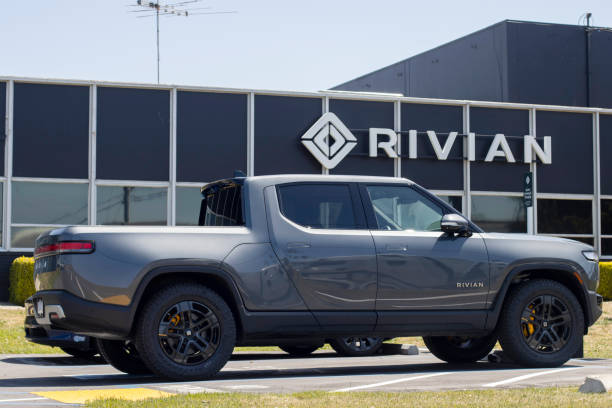
Why Sanae Takaichi Winning Japan’s Diet Election Led to a Surge in Japanese Stock Indices?
TradingKey - Reports indicate that the ruling coalition led by Japanese Prime Minister Sanae Takaichi has secured a single-party majority in the parliamentary elections held on Sunday (February 8). Following the news, the yen weakened slightly, while the Nikkei Index surpassed 57,000 for the first t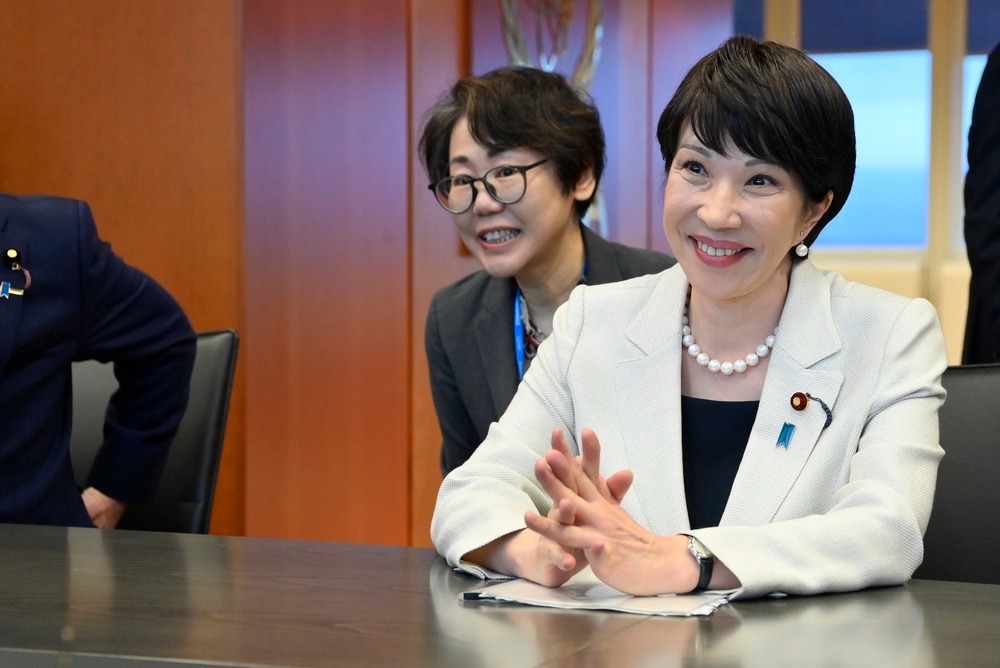
A Crash After a Surge: Why Silver Lost 40% in a Week?
TradingKey - Spot silver (XAGUSD) prices continue to decline. Silver plunged 20% on Thursday, breaking below $71 per ounce, with the sell-off intensifying on Friday as prices fell further below $64. Compared to the all-time high set on January 29, silver prices have retraced more than 40%, wiping out nearly all gains accumulated over the previous month.
Is Bitcoin’s Four-Year Cycle Dead in 2026?
Is the Bitcoin 4-year cycle dead? After 2025 broke historical records with a red post-halving year, institutional analysts explore if the Bitcoin price has decoupled from the halving countdown. Analyze the impact of spot ETFs, global liquidity, and the roadmap to the 2028 halving in this 2026 market

