


Musk’s Reasons for Creating Musk Inc. Look Banal



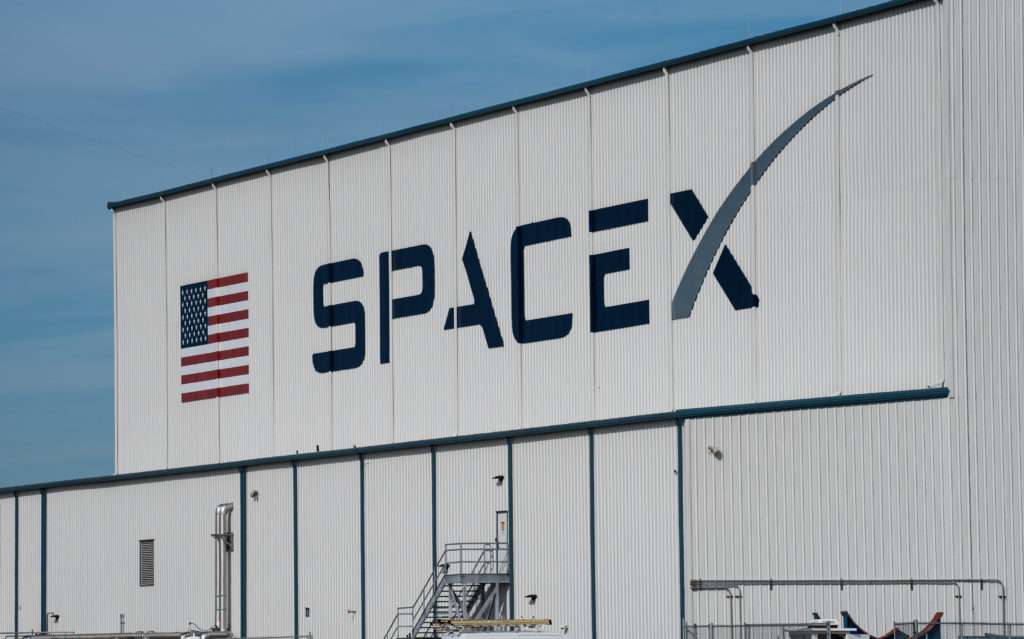
Owning Tesla actually amounts to a bet on what Elon Musk will do next. According to Bloomberg News, one of the things he might do next is to merge Tesla with his unlisted rocket company, SpaceX. Or perhaps Tesla will acquire Musk's unlisted artificial intelligence business, xAI. Maybe all three will merge, or perhaps they won't. Everything depends on the decision.
Musk once mentioned a seemingly industrial logic-based integration model, which involves launching the solar-powered (Tesla) data center for artificial intelligence (xAI) of (Space Exploration Technologies Corporation) into space. The synergy formed around autonomy, such as using the Glock chatbot in cars and transforming these cars into edge computing devices, was also mentioned. The investors of Tesla pushed up the company's stock by more than 3% on Friday, which clearly indicates their confidence in any direction chosen by Musk.
To be clear, if there are services and goods to be sold between these related parties, they could just transact — as they do already. It is difficult to see a compelling strategic reason to house Cybertrucks, Starships and whatever Grok happens to be doing under the same hood. This is all speculative, of course, but more banal reasons than orbiting datacenters could push Musk to consider this: Control, fundraising and subsidies.
As Tesla’s core electric vehicle business has stalled, the company has pivoted hard toward autonomy and AI. Last week, we learned that this will require a more than doubling of the company’s investment budget. In parallel, Musk has warned that he needs to raise his stake in the company to 25%, lest bad actors end up controlling this technology. Today, he owns about half that but also has large slugs of restricted stock and options coming his way.
Merging Tesla with SpaceX would offer a short-cut. Based on Tesla’s current valuation, and the latest reported SpaceX valuation of $800 billion, an all-stock deal at no premium would leave Musk owning about 22% of the combined entity.1Throw in the interim award of restricted Tesla stock granted to Musk and that rises to just under 25%. Merge in xAI, too, at an assumed valuation of $230 billion and Musk’s reported stake of 51%, and you get a pro forma entity valued at almost $2.7 trillion, with Musk owning 26%.
Some hefty wrinkles would need to be ironed out. SpaceX is planning a potential initial public offering as soon as this year, with talk of a $1.5 trillion valuation. On that number, Tesla’s current shareholders would be diluted down to about half in the resulting company, and less than half if xAI was thrown in, too. Moreover, an IPO, unlike a stock-based merger, brings in new money; SpaceX is reportedly seeking as much as $50 billion.
Which brings us to financing. For pure cash, a SpaceX IPO is the obvious choice. While profitability is unclear, revenue hit about $15 billion last year, according to Musk. Would the market swallow a trailing-revenue multiple of 100 times? Quite possibly when that same market already pays about 260 times (falling) earnings for Tesla. Then again, $50 billion would be a leap up from the biggest IPO ever, Saudi Arabian Oil Co.’s $29 billion haul. And there are other unicorns potentially coming to the IPO window soon with big asks, including OpenAI LLC.
Merging SpaceX with Tesla instead would give Musk a free hand to direct some of the EV maker’s $44 billion cash balance toward rocket launches. And there would be nothing to stop a combined entity then attempting a follow-on equity raise, as Tesla has done before — and seems to be preparing for again already. In its latest annual 10K filing with the Securities and Exchange Commission, the company noted that an expected massive increase in capital expenditure would “necessitate additional funding beyond our operating cash flow.” Musk’s knack for crafting narratives that draw billions from investors would get a space-sized assist. An added bonus: He would avoid having to host two quarterly earnings calls instead of one.
Tesla’s huge new spending plans are essential context, effectively rebuilding the company to make robots, Cybercabs, and maybe even solar cells and advanced microchips. Building factories for the latter two alone could cost north of $100 billion.2Musk’s new vision for Tesla spans energy — including lithium refining for batteries — autonomous transport, robotics, AI and the chips behind it all. A conglomerate like that can justify merging with SpaceX, xAI, or pretty much anything else.
Chamath Palihapitiya, the former SPAC-king, gushed on X that a Tesla-SpaceX tie-up would “instantly create the Berkshire Hathaway of the modern century.” The comparison ends at the hodge-podge portfolio, however.
Warren Buffett never pretended there were industrial synergies between car insurance, railroads and power grids, and he was in the business of building up more cash than he knew what to do with rather than raising it from investors and spending like a startup. If Tesla, SpaceX and xAI were to end up as Musk Inc., the closer comparator might be Howard Hughes. He had a similarly sprawling, and intertwined, set of businesses, a penchant for moonshots and tangling with regulators, and a reputation for eccentric behavior.
Hughes also secured massive government contracts for aircraft and defense systems during and after World War II. For SpaceX, contracts from NASA and other government entities, including foreign ones, are an important source of revenue. Meanwhile, the Pentagon just announced it will integrate Grok with its internal networks.
Taking a step back, Musk Inc.’s spread of businesses, both actual and touted, would align strongly with areas of US strategic interest and the priorities of the Trump administration: AI (including robots), energy, critical minerals, aerospace, communications, chips and social media. Most of these areas are also eligible for generous federal subsidies or contracts. Musk notably raised the topic of geopolitical risk several times on Tesla’s latest earnings call as justification for investing in domestic manufacturing capacity.
Whether such consolidation of key sectors into a too-big-to-fail Musk empire would help folks sleep at night is another question. As for Tesla’s shareholders, the inherent conflicts of interest, cash burn and dilution should be deterrents but probably aren’t. The stock, hardly cheap anyway, rose on the merger speculation.
Furthermore, this group of tolerant people also accepted Tesla's previous acquisition of another company related to Musk (and it was even a poorly-performing company). Tesla announced that it would invest 2 billion dollars in xAI, despite opposition during a non-binding shareholder vote in November. This decision was also approved. Additionally, its extensive and costly "amazing abundance" mission plan was also accepted. Although legal and conventional requirements state that any new merger must be approved by a shareholder vote, this decision actually depends on one person.
Recommended Articles




Comments (0)
Click the $ button, enter the symbol, and select to link a stock, ETF, or other ticker.