RPT-BREAKINGVIEWS-VCs whistle past AI unicorn reality check

By Sebastian Pellejero
NEW YORK, Jan 28 (Reuters Breakingviews) - Silicon Valley has accelerated from warp speed to humbling. SambaNova, once a poster child for bespoke AI, is a cautionary tale of engineering prowess crashing against cheaper and easier to deploy rivals. It’s also a warning for inflated hardware startup valuations.
SambaNova builds custom systems for training and running large AI models. By 2021, the company raised over $1 billion at a $5 billion valuation. Now, a possible sale to Intel INTC.O for only $1.6 billion, including debt, fell through, and it’s seeking up to $500 million of funds according to Bloomberg.
The whiplash illustrates that even perfect looking VC investments can falter. SambaNova’s pedigree and timing were exquisite. Stanford professors and an Oracle veteran founded it in 2017. Early backers included Google Ventures and Walden International, the venture firm founded by Chairman Lip-Bu Tan, who is now Intel’s CEO. And SambaNova hopped atop its board in time to ride the current AI tsunami.
Yet recent investors face potential losses. The problem isn't the technology — independent benchmarks rank SambaNova among the fastest systems for running AI models — but the market rapidly shifting focus toward the unglamorous work of running models cheaply and reliably. That has lifted specialists such as Groq, which was acquired last month by Nvidia NVDA.O for $20 billion, and Cerebras, now raising money at a $22 billion valuation, according to The Information. Both sell chips designed either for speed or scale. SambaNova’s complete systems tackle more tasks, but that comes with higher upfront costs and no ability to swap components.
Most AI costs now come from inference, where trained systems answer questions and respond to users millions of times daily. That’s projected to account for roughly two-thirds of all AI compute spend in 2026, up from a third in 2023, according to Deloitte. The market for inference-optimized chips alone is expected to reach over $50 billion this year.
Even model mavens are feeling the squeeze: Anthropic recently lowered its 2025 gross profit margin projections, due to higher-than expected inference costs from Google and Amazon, The Information reports.
That squeeze rewards hardware makers who can deliver inference cheaply and at scale. Sure, SambaNova CEO Rodrigo Liang recently told employees he's seeing renewed investor interest, and funding would buy SambaNova time to adapt. But even catching a monster wave offers no guarantee of reaching shore.
Follow Sebastian Pellejero on LinkedIn.
CONTEXT NEWS
Artificial intelligence startup SambaNova Systems is now seeking $300 million to $500 million from other tech companies and semiconductor makers, among other investors, after talks to sell to Intel stalled, Bloomberg reported on January 21.
The company has attracted the attention of "additional large investors," along with continued interest from Intel, and topped sales plans for its fiscal year ending this month, according to an email its chief executive sent to staff, Bloomberg reported on January 22.
SambaNova is among the fastest, but that's not everything 
Capital floods into AI infrastructure 
Related Articles
Tesla Stock Outlook: Competing With Rivian, Robotaxi Potential, and 2026 Prospects
There is much conversation about the prospect of investing in Tesla (TSLA) as we move closer to 2026. The volatility of its share price in 2025 is leading many investors to consider if they should purchase shares of Tesla given the alternatives available in terms of electric vehicles (Rivian, etc.).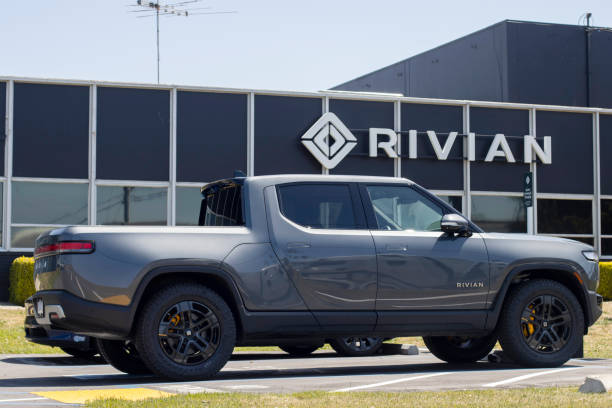
Amazon Stock Predictions for 2026 to 2030: Will They Exceed Expectations and Achieve Major Long-Term Goals?
TradingKey - As we head into 2026, many investors are questioning where Amazon (AMZN) fits into the technology world.
A Crash After a Surge: Why Silver Lost 40% in a Week?
TradingKey - Spot silver (XAGUSD) prices continue to decline. Silver plunged 20% on Thursday, breaking below $71 per ounce, with the sell-off intensifying on Friday as prices fell further below $64. Compared to the all-time high set on January 29, silver prices have retraced more than 40%, wiping out nearly all gains accumulated over the previous month.
Is Bitcoin’s Four-Year Cycle Dead in 2026?
Is the Bitcoin 4-year cycle dead? After 2025 broke historical records with a red post-halving year, institutional analysts explore if the Bitcoin price has decoupled from the halving countdown. Analyze the impact of spot ETFs, global liquidity, and the roadmap to the 2028 halving in this 2026 market