



BREAKINGVIEWS-The Week in Breakingviews: Darkness and light

By Peter Thal Larsen
LONDON, Jan 18 (Reuters Breakingviews) - Welcome back! I’m dusting off my snow boots as I prepare to head to the World Economic Forum in Davos. Let me know what - if anything - you’re interested in hearing about. If you’re going to be in the Swiss mountains next week, get in touch. Was this newsletter forwarded to you? Sign up here to receive it free every Saturday.
OPENING LINE
“Jerome Powell, a devotee of the Grateful Dead, knows it costs a lot to win and even more to lose. One day after the passing of guitarist Bob Weir, the Federal Reserve head put this ethos into practice.”
Read more: Trump’s imperial Fed push meets its Waterloo.
FIVE THINGS I LEARNED FROM BREAKINGVIEWS THIS WEEK
Taiwanese chipmaker TSMC plans to increase capital spending by 37% this year to $56 billion.
Local-currency debt issued by so-called frontier markets has tripled to $1 trillion in a decade.
Eli Lilly shares trade at twice the multiple of forward earnings of obesity rival Novo Nordisk.
Production delays have pushed the average age of commercial aircraft above 15 years.
Black-market cigarettes account for more than a quarter of Indian tobacco sales.
RISK AND RESOLVE
One of this newsletter’s recurring themes is the extraordinary resilience of economies and financial markets in the face of geopolitical turmoil. Imagine if, at the beginning of 2025, investors had perfect foresight about everything happening in the next twelve months. They would have braced for a tariff-induced recession and sustained selloff - neither of which materialised. The U.S. economy probably expanded by around 2% last year, and the S&P 500 Index ended 2025 up 16%.
The disconnect has become even starker in the past two weeks. Donald Trump has arrested the president of Venezuela and started selling the country’s oil, undermined the transatlantic alliance by reviving his interest in Greenland, and advocated for a change of government in Iran. His administration then threatened Federal Reserve Chair Jerome Powell with a criminal indictment. The president has expressed his desire to cap credit card interest rates, impose a 25% tariff on countries that do business with Iran, and restrict defence contractors from returning cash to shareholders. Oh, and he threatened to send troops into U.S. cities.
Despite all this, investors have barely blinked. The S&P 500 Index .SPX is up just over 1% this year, yields on 10-year U.S. government bonds US10YT=TWEB are pretty much unchanged, and the VIX index .VIX of stock market volatility remains low. Meanwhile speculators are piling into silver XAG= (up 24% this year) and bitcoin BTC= (up 9%).
There are three broad explanations. The first is that money managers think none of the things Trump is threatening will actually happen. Congress and the Supreme Court will restrain him, or he will back down when reality proves more complicated. Yet this theory doesn’t really hold up. For example, U.S. bank stocks sold off following Trump’s credit card comments, even though a cap would be hard to implement.
The second explanation is that none of this will meaningfully change the direction of inflation, interest rates, or corporate earnings. Venezuela produces less than a million barrels of oil a day, a rounding error in the global market. The stock market’s dependence on a small number of giant tech companies means its future is more tightly tied to the fate of artificial intelligence than to broader economic shifts. But this theory, too, has holes. It’s hard to conceive of a more consequential action for markets than the U.S. president bullying the central bank into lowering interest rates. Yet investors have shrugged off Trump’s assault on the Fed.
The third explanation is that big shifts take time. They require investors to fundamentally rethink how and where to allocate assets. And few will talk about it publicly. It was therefore striking that Dan Ivascyn, the chief investment officer of Pimco, this week told the Financial Times that the giant bond fund manager is diversifying away from the United States. Sometimes the connection between different events is not as strong as we thought. Or it may just take time for the link to reveal itself.
CHART OF THE WEEK
Wall Street banks often complain that they’re held back by excessive regulation, allowing less restrained rivals to push into trading or private credit. So it’s striking that both Morgan Stanley MS.N and Goldman Sachs GS.N now trade at a higher multiple of book value than in 2007, when the Global Financial Crisis kicked off. Yet as Stephen Gandel observes, their reported return on equity is still much lower than in those heady days.
THE WEEK IN PODCASTS
In the Viewsroom this week, Rob Cyran and Yawen Chen joined Aimee Donnellan and Jonathan Guilford to discuss Donald Trump’s designs on Venezuela and Greenland, the fallout for the transatlantic alliance and the oil market.
Over on The Big View, I talked inflation, artificial intelligence and investors’ buy-the-dip mentality with Anna Szymanski, Editor-in-Chief of Reuters Open Interest and co-host of Morning Bid, Reuters’ new daily markets podcast.
PARTING SHOT
I was sad to hear that David Webb had died at the age of 60. Hong Kong’s most prominent corporate gadfly spent decades pursuing a lonely but important campaign for better transparency and against poor corporate governance in the Asian financial hub. His encyclopedic memory, clarity of thought, and strongly held views made him a valuable resource for other investors - and for financial journalists. Hudson Lockett’s obituary is a fitting tribute to the man, who would doubtless have appreciated its sharp conclusion.
Want to receive The Week in Breakingviews in your inbox every Saturday? Sign up for the newsletter here.
Follow Peter Thal Larsen on Bluesky and LinkedIn.
Wall Street titans have surpassed their former valuation glory 
Related Articles
National Debt Bomb Ignited? Musk Warns U.S. Will Be 1000% Bankrupt Without AI
TradingKey - Tesla (TSLA) CEO Elon Musk recently issued another warning regarding the rapidly ballooning U.S. national debt. He stated clearly that without artificial intelligence and robotics, the United States will inevitably head toward fiscal bankruptcy.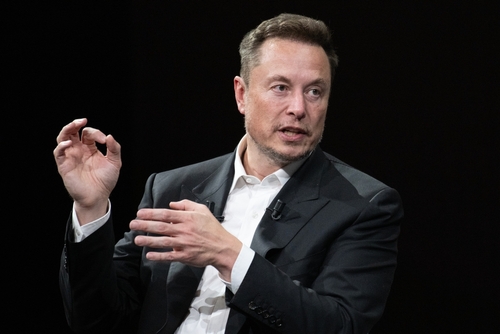
Why Sanae Takaichi Winning Japan’s Diet Election Led to a Surge in Japanese Stock Indices?
TradingKey - Reports indicate that the ruling coalition led by Japanese Prime Minister Sanae Takaichi has secured a single-party majority in the parliamentary elections held on Sunday (February 8). Following the news, the yen weakened slightly, while the Nikkei Index surpassed 57,000 for the first t
A Crash After a Surge: Why Silver Lost 40% in a Week?
TradingKey - Spot silver (XAGUSD) prices continue to decline. Silver plunged 20% on Thursday, breaking below $71 per ounce, with the sell-off intensifying on Friday as prices fell further below $64. Compared to the all-time high set on January 29, silver prices have retraced more than 40%, wiping out nearly all gains accumulated over the previous month.
Is Bitcoin’s Four-Year Cycle Dead in 2026?
Is the Bitcoin 4-year cycle dead? After 2025 broke historical records with a red post-halving year, institutional analysts explore if the Bitcoin price has decoupled from the halving countdown. Analyze the impact of spot ETFs, global liquidity, and the roadmap to the 2028 halving in this 2026 market

