GLOBAL MARKETS-European defence stocks hit record high, dollar gains as geopolitics bites

By Marc Jones and Rae Wee
LONDON/SINGAPORE, Jan 8 (Reuters) - European defence stocks jumped to a record high and oil prices and the dollar both made ground on Thursday, as the rumbling geopolitical tensions from Venezuela to Greenland kept traders guessing.
The seizure of two Venezuela-linked oil tankers in the Atlantic came alongside news U.S. Secretary of State Marco Rubio will meet Denmark's leaders to discuss Greenland next week, while there was some mixed economic data thrown in too.
Europe's record high STOXX aerospace and defence stocks index .SXPARO jumped nearly 2% early on in a fifth straight day of gains that has already seen them surge 13% this year - and more than 260% since Russia's 2022 invasion of Ukraine. .EU
The euro EUR=, meanwhile, was on track for its eighth straight drop against the dollar, though mixed U.S. economic data on Wednesday was keeping the dollar bulls in check ahead of Friday’s closely watched non-farm payrolls report. /FRX
"What investors are realising is that the threat of geopolitics is not going away," Peter McLean, Head of Multi-Asset Portfolio Solutions at Stonehage Fleming Investment Management, said.
"While it is unlikely we see military action in Greenland there is clearly an impetus to increase defence spending in Europe."
Oil prices have slid this week on the prospect of higher Venezuelan crude output, though they recovered on Thursday, with Brent futures LCOc1 clawing back above $60 a barrel and U.S. crude CLc1 rising 0.5% to $56.30 a barrel,
Top U.S. officials said on Wednesday the country needs to control Venezuela's oil sales and revenue indefinitely to stabilise the latter's economy, rebuild its oil sector and ensure it acts in America's interests.
"The market's negative reaction to the Trump comments on controlling Venezuela's oil looks a little misplaced," said Daniel Hynes, ANZ's senior commodity strategist.
"U.S. control of oil sales could actually mean ongoing sanctions or restrictions remaining in place in the short term, which would be bullish for oil prices. I suspect that is why prices are recovering."
Elsewhere, stocks mostly traded lower following a strong start to the New Year that lifted markets globally.
The broader pan-European STOXX 600 .STOXX was down 0.2%. Japan's Nikkei .N225 lost 1.6% overnight amid rising tensions with China .T and Wall Street futures ESc1 NQc1 eased 0.2%. .N
"It seems the Asian markets are just taking a breather after a strong start to 2026," said Charu Chanana, chief investment strategist at Saxo.
"Geopolitical headlines are in the driver's seat," Chanana said, pointing to China's dual-use export ban to Japan, and talk of potential rare earth risk.
Shares in Japanese chemical manufacturers had fallen in Tokyo although those of their Chinese rivals jumped after China's commerce ministry said it was launching an anti-dumping probe into imports of chemicals used in chipmaking.
PAYROLLS UP NEXT
Geopolitics aside, investors also had their eye on the U.S. weekly initial jobless claims coming later and the intensely watched non-farm payrolls jobs report due on Friday, which could provide further clarity on the Federal Reserve's rate outlook.
Analysts at Goldman Sachs said they are forecasting an above-consensus 70,000 rise in nonfarm payrolls in December, while expecting the unemployment rate to edge down to 4.5%.
Wednesday's slew of data had painted a mixed picture with JOLTS labour market figures bolstering the "no hire, no fire" view on the jobs market, while ISM services index for December hit a reassuringly-robust 14-month high.
The readings did little to alter market expectations of two more Fed cuts this year 0#USDIRPR. Ten-year Treasury yields US10YT=RR were muted at 4.15% and Germany's 10-year bund yields were at 2.8% DE10YT=RR, still down over 7 bps this week.
Back in the currency markets, sterling GBP= last bought $1.3458, Japan's yen JPY= rose slightly to 156.67 per dollar.
Safe-haven gold XAU= dipped 0.5% to $4,420 an ounce and silver XAG= and platinum XPT= dropped 2.6% and 3.2% respectively after their recent surges. GOL/
"One of the big risk factors this year is the direction of bond yields," Stonehage Fleming's McLean said. "If the 10-year Treasury yield does fall below 4 and then fall further I think that would be a real positive."
Up, up and away
Related Articles
National Debt Bomb Ignited? Musk Warns U.S. Will Be 1000% Bankrupt Without AI
TradingKey - Tesla (TSLA) CEO Elon Musk recently issued another warning regarding the rapidly ballooning U.S. national debt. He stated clearly that without artificial intelligence and robotics, the United States will inevitably head toward fiscal bankruptcy.
Why Sanae Takaichi Winning Japan’s Diet Election Led to a Surge in Japanese Stock Indices?
TradingKey - Reports indicate that the ruling coalition led by Japanese Prime Minister Sanae Takaichi has secured a single-party majority in the parliamentary elections held on Sunday (February 8). Following the news, the yen weakened slightly, while the Nikkei Index surpassed 57,000 for the first t
A Crash After a Surge: Why Silver Lost 40% in a Week?
TradingKey - Spot silver (XAGUSD) prices continue to decline. Silver plunged 20% on Thursday, breaking below $71 per ounce, with the sell-off intensifying on Friday as prices fell further below $64. Compared to the all-time high set on January 29, silver prices have retraced more than 40%, wiping out nearly all gains accumulated over the previous month.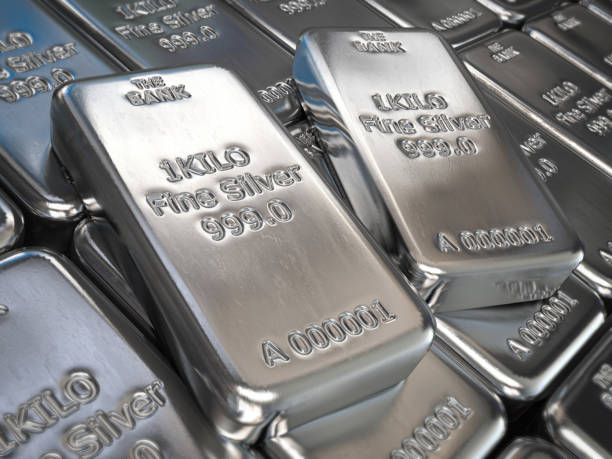
Is Bitcoin’s Four-Year Cycle Dead in 2026?
Is the Bitcoin 4-year cycle dead? After 2025 broke historical records with a red post-halving year, institutional analysts explore if the Bitcoin price has decoupled from the halving countdown. Analyze the impact of spot ETFs, global liquidity, and the roadmap to the 2028 halving in this 2026 market