BREAKINGVIEWS-The Week in Breakingviews: HSBC’s heavy crown

By Peter Thal Larsen
LONDON, Dec 7 (Reuters Breakingviews) - Welcome back! Kevin Hassett, the top economic adviser to U.S. President Donald Trump, is the favourite to be the next chair of the Federal Reserve. Gabriel Rubin reckons he’s the “minimum viable candidate”. Too harsh, or too kind? Email me with your thoughts. If this newsletter was forwarded to you, sign up here to get it every weekend.
OPENING LINE
“Karl Marx observed that historical events tend to appear first as tragedy, then again as farce. Cryptocurrency hoarders may well reverse the formulation.”
Read more: Crypto hoarders veer from farce to tragedy.
FIVE THINGS I LEARNED FROM BREAKINGVIEWS THIS WEEK
Apple AAPL.O trades at the highest multiple of earnings of all the Big Tech companies.
Portuguese oil group Galp’s GALP.LS recent discovery in Namibia has a net present value of around $10 billion.
Net foreign direct investment into India dropped 96% to $400 million in the year to March.
Cyber insurance prices are falling even as attacks increase.
China has more than one million towers taller than 27 metres, of which nearly 20% are more than 30 years old.
AGED LION
The first HSBC HSBA.L chair I interviewed was John Bond. Back in 2004, there was no question who ran the institution that called itself “the world’s local bank”. The chair’s word was final. Indeed, HSBC did not have a chief executive for the first 128 years of its existence. It only created the position in 1993, after moving its head office from Hong Kong to London.
At the time, HSBC was known for smooth management succession. Bond had replaced William Purves as chair in 1998. When Bond stepped down in 2006, he handed the reins to Stephen Green, previously the bank’s CEO. British institutional investors reluctantly accepted the transition but let it be known that HSBC’s next board head should be an outsider. Subsequent heavy losses on U.S. subprime mortgages reinforced their case.
Nevertheless, the resistance to external influence was strong. After Green resigned in 2010 to become a UK trade minister, a vicious boardroom scrap ensued. When the smoke cleared, insiders claimed the top jobs. Douglas Flint, previously the bank’s finance director, became the chair, while Stuart Gulliver stepped up to be CEO. It was not until Flint departed in 2017 that HSBC installed its first external lead director: Mark Tucker, the former boss of Asian insurance giant AIA 1299.HK.
Tucker’s appointment now looks like something of a fluke. When he resigned as chair in June, to take up the same position at AIA, HSBC had yet to settle on a permanent replacement. Brendan Nelson, a non-executive director and former leader of KPMG’s global banking practice, took the job on an interim basis. Yet a new chair of Tucker’s calibre proved elusive. Several possible contenders declined to be considered or lacked the necessary qualifications. On Wednesday HSBC handed 76-year-old Nelson the job permanently, after reviewing candidates including former British finance minister George Osborne, whose experience of international banking appears to consist largely of advising HSBC on its acquisition of the UK business of Silicon Valley Bank for 1 pound in 2023.
Why is it so hard to recruit a chair for one of the world’s largest banks? The answer boils down to a combination of three factors: complexity, commitment, and cash. HSBC is not just one of the world’s largest lenders, but also one of its most geographically and operationally diverse. Chairing its board is a more than full-time job, including regular travel around its sprawling network and courting regulators and dignitaries in its main markets. All of this comes with a salary that looks stingy by international standards: Tucker earned $2.2 million last year, roughly a third of what Swiss rival UBS UBSG.S paid Chair Colm Kelleher. Most of HSBC’s largest American rivals don’t bother to appoint a separate chair but hand the title to their CEO.
Nelson’s age suggests he’s unlikely to stay for a full nine-year term, which is the longest a UK board head can stay in place and still be deemed independent under British governance rules. His main task, then, will be to identify and attract a replacement who can oversee the bank’s $3 trillion balance sheet. The latest governance kerfuffle will not make that task easier. Then again, if a bank is so elaborate that only a handful of people have the skills to run it, perhaps more radical simplification is overdue.
CHART OF THE WEEK
A shortage of Alpine bears last century threatened to throw off the habitat’s fragile equilibrium. Financial markets face a similar ursine imbalance today, as short-sellers become an increasingly endangered species. Jeffrey Goldfarb argues that the shrinking numbers of investment cynics allows fraudsters and charlatans more room to roam.
THE WEEK IN PODCASTS
President Donald Trump is pushing for a peace deal in Ukraine, but the terms of the potential settlement have raised alarm in Europe. In this week’s Viewsroom, Pierre Briancon and Yawen Chen joined Aimee Donnellan and Jonathan Guilford to discuss what a truce might mean for financial markets.
PARTING SHOT
The BBC is suffering another one of its periodic crises. A spat over impartiality, sparked in part by a misleading edit of a Trump speech, prompted the U.S. president to threaten a $1 billion lawsuit and the British broadcaster’s director-general to resign. The row also exposes the corporation’s squeezed finances. Jennifer Johnson makes the case that, whatever the outcome, the BBC faces a leaner future.
Want to receive The Week in Breakingviews in your inbox every Saturday? Sign up for the newsletter here.
Follow Peter Thal Larsen on Bluesky and LinkedIn.
Bear-bones: Number of activist short campaigns has dropped 
Related Articles
BTC Reclaims $70K! Cathie Wood’s Bold Bottom Call: Is the Mega-Rally Next?
Bitcoin prices rebounded above $70,000 as Cathie Wood again suggested a potential bottom, though the reality may prove otherwise.
A Crash After a Surge: Why Silver Lost 40% in a Week?
TradingKey - Spot silver (XAGUSD) prices continue to decline. Silver plunged 20% on Thursday, breaking below $71 per ounce, with the sell-off intensifying on Friday as prices fell further below $64. Compared to the all-time high set on January 29, silver prices have retraced more than 40%, wiping out nearly all gains accumulated over the previous month.
An Overview of U.S. Government Shutdowns: Causes and Consequences
TradingKey - A government shutdown is a uniquely American political event. After former President Donald Trump orchestrated the longest and most costly government shutdown in history during his first term, the risk of another shutdown has resurfaced at the start of his second term.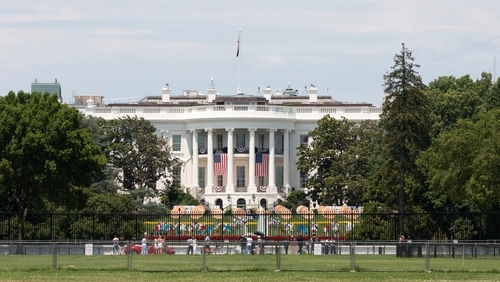
The Overlooked Japanese Bonds: Why Japan Could Be a “Ticking Time Bomb” for Global Financial Stability?
TradingKey - After three decades of economic stagnation, Japan’s financial environment is undergoing a significant transformation. The Bank of Japan (BoJ) has initiated a tightening cycle through interest rate hikes and reduced bond purchases—triggering volatility in both the yen exchange rate and..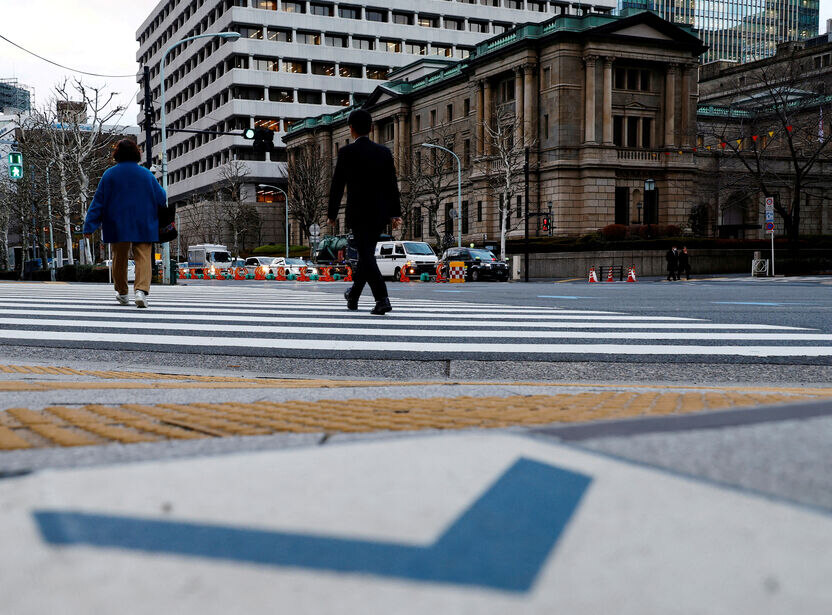
What’s Driving the Japanese Bond Sell-Off? The Root — Life Insurers’ Negative Duration Gap
TradingKey - As the Bank of Japan (BoJ) enters a tightening cycle, Japanese government bond (JGB) yields have been rising steadily. However, the recent sharp selloff in Japan bonds appears unusually severe.