BREAKINGVIEWS-Gulf’s delicate US-China balance can easily flip

By Karen Kwok
LONDON, May 15 (Reuters Breakingviews) - When it comes to the technologies of tomorrow, it has been relatively easy for Saudi Arabia and the United Arab Emirates to choose Donald Trump over Xi Jinping. The United States has the most cutting-edge chips, tech talents, and artificial intelligence knowledge, which both nations need. But as China’s AI capabilities advance, things may get less clear cut.
The U.S. president’s high-profile visit to the Gulf this week has seen some chunky tech announcements. Among those, $3.3 trillion Nvidia NVDA.O is initially selling 18,000 advanced chips to Saudi, while the UAE is set to get more flexible access to chips from the U.S., Reuters reported citing unnamed sources. More aggressively, Washington also warned that any purchase of Huawei AI chips by buyers such as those from the Gulf would be seen as violating its enforcement law – which can mean fines, denial of export privileges and even imprisonment for non-compliance.
Right now, the UAE will be only too happy to play ball. To realise a goal for AI to contribute 20% of non-oil GDP by 2031, the Gulf state needs the most advanced chips. Abu Dhabi sovereign wealth fund Mubadala’s AI offshoot, MGX, is already an investor in OpenAI and its $500 billion data centre Stargate project. Microsoft MSFT.O invested $1.5 billion in Emirati national AI champion G42, which has already reportedly divested from Chinese technology firms, and stripped Chinese tech giant Huawei’s equipment from its data centres.
Yet however much Trump may want the U.S. to be the regional top dog, China still matters. The Middle Kingdom was the UAE’s top fossil fuels importer and biggest non-oil trading partner in the Arab region in 2023, while Chinese government estimates the combined exports and imports between the two nations exceeds $100 billion. Huawei has an agreement to work with the UAE telco firm e& EAND.AD to develop 5G networks. And while Trump's reciprocal tariffs may not prove as ferocious as feared, the haphazard way they've been introduced has lowered his country's standing as a reliable partner.
For now, the U.S. bargaining position remains strong: it can offer a full package from advanced AI chips to cutting-edge large language models and cloud infrastructure. But, as DeepSeek's sensational emergence earlier this year shows, the U.S. is hardly guaranteed to maintain its leadership in AI. China is ramping up its own chipmaking capabilities and Huawei’s chips are catching up with Nvidia: the performance of some of the Chinese group’s semiconductors operating in tandem is comparable to one of its U.S. rival’s. The risk for UAE and Saudi alike is they find themselves too firmly in the U.S. camp, just at the time they want to get closer to Beijing.
Follow @karenkkwok on X
CONTEXT NEWS
The U.S. has a preliminary agreement with the United Arab Emirates to allow it to import 500,000 of Nvidia's most advanced artificial intelligence chips per year, starting in 2025 and to at least through 2027, Reuters reported on May 14 citing two sources familiar with the situation.
The draft deal called for 20% of the chips, or 100,000 of them per year, to go to UAE's tech firm G42, while the rest would be split among U.S. companies with big AI operations like Microsoft and Oracle that might also seek to build data centres in the UAE, the sources said.
U.S. President Donald Trump is set to conclude his visit in the UAE on May 15.
The UAE trades way more with China than with the United States
Related Articles
Tesla Stock Outlook: Competing With Rivian, Robotaxi Potential, and 2026 Prospects
There is much conversation about the prospect of investing in Tesla (TSLA) as we move closer to 2026. The volatility of its share price in 2025 is leading many investors to consider if they should purchase shares of Tesla given the alternatives available in terms of electric vehicles (Rivian, etc.).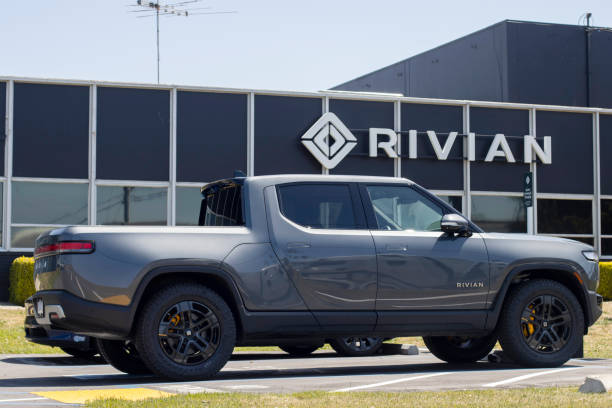
Amazon Stock Predictions for 2026 to 2030: Will They Exceed Expectations and Achieve Major Long-Term Goals?
TradingKey - As we head into 2026, many investors are questioning where Amazon (AMZN) fits into the technology world.
A Crash After a Surge: Why Silver Lost 40% in a Week?
TradingKey - Spot silver (XAGUSD) prices continue to decline. Silver plunged 20% on Thursday, breaking below $71 per ounce, with the sell-off intensifying on Friday as prices fell further below $64. Compared to the all-time high set on January 29, silver prices have retraced more than 40%, wiping out nearly all gains accumulated over the previous month.
Is Bitcoin’s Four-Year Cycle Dead in 2026?
Is the Bitcoin 4-year cycle dead? After 2025 broke historical records with a red post-halving year, institutional analysts explore if the Bitcoin price has decoupled from the halving countdown. Analyze the impact of spot ETFs, global liquidity, and the roadmap to the 2028 halving in this 2026 market