BREAKINGVIEWS-Tech can give Europe more bang for defence buck

By George Hay
LONDON, May 8 (Reuters Breakingviews) - Europe has the martial equivalent of a “how to spend it” problem. Faced with the prospect of a U.S. military pullback in their backyard and a renewed threat from Russia, major powers like Germany and the United Kingdom are planning for defence spending to rise above 3% of GDP. Yet unless the bloc wants to wind up with the 21st-century equivalent of the Maginot Line – France’s vastly expensive border fortification that the German army simply bypassed at the start of World War Two – it needs to direct more of the resulting hundreds of billions of euros to defence technology and innovation.
Of the $1.5 trillion that NATO members spent on defence last year, the average country spent two-fifths on soldiers’ pay and pensions, around a third on maintenance of military equipment, and about the same again on new weapons and kit. Research and development, aimed at keeping members’ armies from becoming obsolete, forms part of the last bucket. In 2023, the United States spent around 15% of its $916 billion military budget on R&D and innovation, compared with only 4% for European Union member states.
The region does admittedly have a big backlog of traditional hardware to sort, following decades of underinvestment amid the post-Cold War “peace dividend”. If President Donald Trump directed the U.S. Army III Corps not to support Europe, Bruegel analysts estimate the bloc would need an extra 1,400 tanks, 2,000 infantry fighting vehicles, 700 howitzer guns and 300,000 troops to provide an effective deterrent to Russia. That’s more combat power than exists in the French, German, British and Italian forces combined. No wonder last year nearly all members spent at least the 20% level recommended by NATO for expenditure on new equipment, a big step up from a decade ago. Some, like Russia-adjacent Poland, forked out 50%.
Still, Ukraine’s ability to repel Moscow’s invading forces indicates that war has changed. Two-thirds of the destruction of Russian tanks, vehicles and other hardware last year, according to Royal United Services Institute analyst Jack Watling, was caused by unmanned aerial vehicles (UAV) – commonly known as drones. These vary from $100,000 versions that can travel 100 kilometres to much shorter-range models costing as little as $500.
Drones’ success partly stems from Ukraine’s relative shortage of traditional hardware, and Russian tanks’ greater vulnerability to such strikes. Even so, it’s relevant to Europe’s rearmament if a UAV costing $35,000 or less can take out a $5 million Russian tank or an even more expensive aircraft.
The same principle applies to the use of technology and software systems in general. Souping up the accuracy of French Caesar artillery pieces with artificial intelligence, for instance, can cut the required quantity of shells by 30%, according to the Ukrainian army. The prize for Europe’s rearming governments could be huge: traditional equipment costs might not need to be as large as they have in the past, in relative terms, while personnel requirements could also fall as a proportion of the whole if more hardware is unmanned.
Using technology to drive cost efficiencies is all the more important because Europe-made kit is disproportionally pricey. The cost of Germany’s Leopard 2A8 third-generation battle tank is 29 million euros, defence experts Guntram Wolff and Juan Mejino-López estimate. Factors like Moscow’s lower production and wage bill, and a subscale and fragmented EU defence industry, mean Russia’s corresponding T-90 model is only 4 million euros. Germany’s Panzerhaubitze 2000 howitzer, manufactured by Rheinmetall RHMG.DE and KNDS, is 17 million euros – whereas Russia’s 2S19 Msta-S is less than 2 million euros.
Ordering 1,400 tanks and 700 howitzers, the amount potentially required to replace U.S. forces, would cost over 50 billion euros at these German prices unless Europe shakes up its procurement processes. That’s already 20% of the 250 billion euros Bruegel analysts reckon the bloc would have to muster to hike its annual defence spending from 2% to 3.5% of GDP.
Admittedly, Europe would be unwise to go all-in on drones. The lesson from Ukraine is more nuanced. Most UAVs miss their target, meaning armies must make them in high volumes, offsetting some of the benefits from their low cost. Meanwhile, the cheapness of Ukrainian drones is partly because of their Chinese supply chains. That could be a risk for Europe, meaning it might have to find a way to boost domestic production of explosive charges, magnets, batteries and the like. Most of all, drones could be overtaken by newer tech: the UK government recently disclosed a new “radio wave” weapon capable of knocking out swarms of UAVs.
That example only supports the wider benefits of staying ahead of the game with innovation. Britain recently pledged to spend at least 10% of its defence equipment budget on new technologies. The 4% spent by Europeans on R&D in 2023 amounted to only 11 billion euros – less than a tenth of equivalent U.S. expenditure. Some economists and defence experts told Breakingviews Europe ought to spend 20%.
Arguably as important as any extra research cash, however, is a change in mindset. Military procurement is often a slow, multi-year contractual process that delivers a relatively small number of pricey war machines. Ukraine has shown that a quicker, scrappier and more tech-focused approach can be more adaptive to the frontline’s needs.
One way to mimic that model would be for European defence ministries to run ad hoc competitions. They could invite companies, including startups, to design new types of hardware to respond to a pressing need, with prizes including tens of millions of euros in cash and a chance at a bigger contract. That would help offset the status quo, which prevails on both sides of the Atlantic, where massive defence companies are financially incentivised to focus on lucrative and long-running contracts and maintenance, rather than devising new kit.
NATO recently updated its equipment-spending guidance to include new tech like drones rather than just tanks and guns. That’s a good start. But the battle to avoid constructing new Maginot Lines is only beginning.
Follow @gfhay on X
Graphic: NATO members spend markedly different amounts on defence hardware
Graphic: The EU’s defence R&D spend lags that of both China and the US
Graphic: European guns are expensive relative to those of other countries
Related Articles
Tesla Stock Outlook: Competing With Rivian, Robotaxi Potential, and 2026 Prospects
There is much conversation about the prospect of investing in Tesla (TSLA) as we move closer to 2026. The volatility of its share price in 2025 is leading many investors to consider if they should purchase shares of Tesla given the alternatives available in terms of electric vehicles (Rivian, etc.).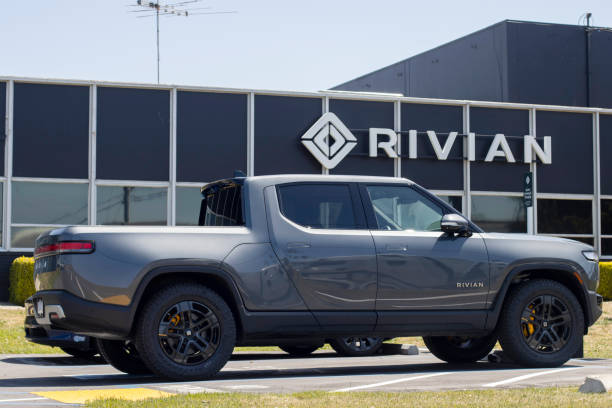
Amazon Stock Predictions for 2026 to 2030: Will They Exceed Expectations and Achieve Major Long-Term Goals?
TradingKey - As we head into 2026, many investors are questioning where Amazon (AMZN) fits into the technology world.
A Crash After a Surge: Why Silver Lost 40% in a Week?
TradingKey - Spot silver (XAGUSD) prices continue to decline. Silver plunged 20% on Thursday, breaking below $71 per ounce, with the sell-off intensifying on Friday as prices fell further below $64. Compared to the all-time high set on January 29, silver prices have retraced more than 40%, wiping out nearly all gains accumulated over the previous month.
Is Bitcoin’s Four-Year Cycle Dead in 2026?
Is the Bitcoin 4-year cycle dead? After 2025 broke historical records with a red post-halving year, institutional analysts explore if the Bitcoin price has decoupled from the halving countdown. Analyze the impact of spot ETFs, global liquidity, and the roadmap to the 2028 halving in this 2026 market