GLOBAL MARKETS-Stocks stabilise, gold hits record before Trump tariff reveal



By Kevin Buckland
TOKYO, April 1 (Reuters) - Asian equities rose on Tuesday following Wall Street's overnight gains, while gold hit an all-time peak and Treasury yields fell as markets awaited details of U.S. President Donald Trump's reciprocal tariffs.
The Japanese yen strengthened as traditional haven assets drew demand.
At the same time, the risk-sensitive Australian dollar rebounded after the Reserve Bank of Australia left interest rates steady, as widely expected, but warning of "pronounced" global uncertainty.
Regional stocks found some respite on the first day of April after being battered in March by worries that Trump's trade war could trigger stagflation or even a U.S. recession.
Investors are nervously awaiting April 2, a day Trump has dubbed "Liberation Day", when he has promised to unveil a massive reciprocal tariff plan.
Australia's benchmark equity index .AXJO advanced 1%, while South Korea's KOSPI .KS11 climbed 1.9% and Taiwan's equity benchmark .TWII rose 1.7%, following steep drops on Monday.
At the same time, Hong Kong's Hang Seng .HSI and Japan's Nikkei .N225 gave up gains of 1% or more to be flat to slightly higher. Mainland Chinese blue chips .CSI300 were also little changed after struggling all session.
Pan-European STOXX 50 futures STXEc1 added 0.35%.
The U.S. S&P 500 .SPX gained 0.55% on Monday, snapping a three-day losing run, but futures EScv1 pointed 0.34% lower.
"It is possible that a significant portion of last night's rebound in the key (Wall Street) indices was attributable to month-end and quarter-end rebalancing flows, as well as short covering ahead of Trump's Liberation Day, amid considerable uncertainty about what comes next," said Tony Sycamore, an analyst at IG.
"U.S. equity markets are priced for a slowdown in growth and earnings. However, they are not priced for a recession, and if the U.S. economy enters recession, U.S. stock markets could easily fall by another 10%."
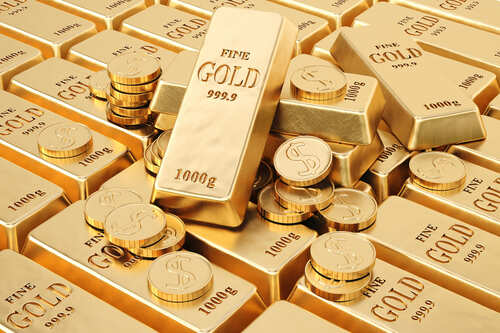
Bullion powered to a record high for a fourth straight session, hitting $3,148.88 per ounce.
"On top of general risk aversion, investors are increasing allocation to gold with the Trump administration's trade policy threatening the dollar's special reserve status," said Kyle Rodda, senior financial markets analyst at Capital.com.
"The fundamental backdrop remains strong for gold."
DOLLAR UNDER PRESSURE
Demand for the safety of Treasuries sent yields lower on Tuesday, with those on benchmark 10-year notes US10YT=RR sinking some 5 basis points to 4.1920%.
That put pressure on the dollar, which slipped 0.08% to 149.85 yen JPY=EBS. The euro EUR=EBS was steady at $1.0813.
The Aussie AUD=D3 added 0.14% to $0.6258. The RBA held rates at 4.1%, having just cut them by a quarter point in February for the first time in over four years.
"Geopolitical uncertainties are also pronounced," the RBA said in its statement, adding that U.S. tariffs are having an impact on confidence globally.
"The RBA's statement suggests they're inching towards their next cut, but in no rush to signal one," said Matt Simpson, senior market analyst at City Index.
"The RBA just want more time to be confident that policy is on the right track."
Bitcoin BTC= was slightly higher at around $83,040.
Oil prices rose, adding to the 2% surge from Monday. Brent LCOc1 gained 0.23% to $74.94 a barrel, while U.S. West Texas Intermediate crude CLc1 advanced 0.22% to $71.64.
At the weekend, Trump threatened secondary tariffs on Russian crude and on Iran. He also warned Iran of bombing if Tehran did not come to an agreement with Washington over its nuclear programme.
Recommended Articles