BREAKINGVIEWS-Rolls-Royce has sunny skies, with a fuzzy horizon

The author is a Reuters Breakingviews columnist. The opinions expressed are his own.
By Oliver Taslic
LONDON, Feb 27 (Reuters Breakingviews) - Tufan Erginbilgic has taken “under-promise and over-deliver” to extremes. Since taking the top job in early 2023 and declaring the storied maker of engines for long-haul planes a “burning platform”, the Rolls-Royce RR.L CEO has seen the company’s shares rise by around 700% – helped by another 20% bump on Thursday after beating expectations for 2024 results and raising mid-term targets. At least for the short and medium term, that good news should persist.
The $80 billion UK company is a specialist in engines for bigger “widebody” jets, like the Trent 1000 for the Boeing 787 Dreamliner and the Trent XWB for Airbus A350s. Flying hours for this market crashed during the pandemic, and so did Rolls’ revenue – the company’s top line fell by nearly a quarter to 11.8 billion pounds in 2020 and it made a 4 billion pound net loss. Now, with 2024 large engine flying hours exceeding 2019 levels, Rolls’ revenue is near 18 billion pounds.
There’s reason to think the climb will continue. Erginbilgic has been renegotiating contracts, cutting procurement costs, and aiming to reduce the need for maintenance shop visits. As older aircraft fly longer and engines require more repairs and spare parts, Rolls has also benefitted from a broad-based “aftermarket” rally that has included peers such as MTU Aero Engines and Melrose.
Moreover, civil aerospace only accounts for around half of Rolls’ sales. Its other units, comprising defence and power systems, are helped by Europe’s need to rearm as U.S. support wavers – and by the data centre boom. Rolls raised its anticipated medium-term power systems operating margin on Thursday, along with civil aero, the latter now expected at between 18% and 20%.
Erginbilgic still faces risks, though. Rolls may get overexcited by the so-called “narrowbody” market for short-haul planes, which has seen flight hours recover more strongly. The company says it’s making progress on new engine technologies, which it hopes can find a home on both future widebody and narrowbody jets. But if it’s going to muscle into the narrowbody market, it’s safer to spread the risk via a partnership with a plane maker like Airbus or with a current player like CFM. The danger is Erginbilgic goes it alone and his engines don’t prove popular.
For now, investors seem comfortable with Rolls’ direction. Following its latest surge, the group trades on over 16 times the operating profit implied by its new 2028 target, compared to rival Safran’s 14 times. Provided he keeps his head, Erginbilgic’s premium should persist.
Follow @Breakingviews on X
CONTEXT NEWS
Rolls-Royce on February 27 reported full-year results for 2024 that saw underlying revenue of 17.8 billion pounds ($22.6 billion), up 17% year-on-year on an organic basis.
Underlying operating profit and free cash flow came in at 2.5 billion pounds and 2.4 billion pounds respectively, up sharply from 2023 and beating analyst expectations.
For 2025, the group forecast underlying operating profit of between 2.7 billion pounds and 2.9 billion pounds, and the same figures for free cash flow, potentially touching ranges previously targeted for 2027 two years ahead of schedule.
The engine maker subsequently upgraded its medium-term targets based on a 2028 timeframe. Operating margins are expected to expand to between 15% and 17%, helped by expected 18% to 20% margins in its civil aerospace division. Free cash flow is forecast to grow to between 4.2 billion pounds and 4.5 billion pounds.
Rolls-Royce also announced a 1 billion pound share buyback.
Shares in Rolls-Royce were trading at 753 pence as of 1142 GMT on February 27, up 19.3%.
Related Articles
Tesla Stock Outlook: Competing With Rivian, Robotaxi Potential, and 2026 Prospects
There is much conversation about the prospect of investing in Tesla (TSLA) as we move closer to 2026. The volatility of its share price in 2025 is leading many investors to consider if they should purchase shares of Tesla given the alternatives available in terms of electric vehicles (Rivian, etc.).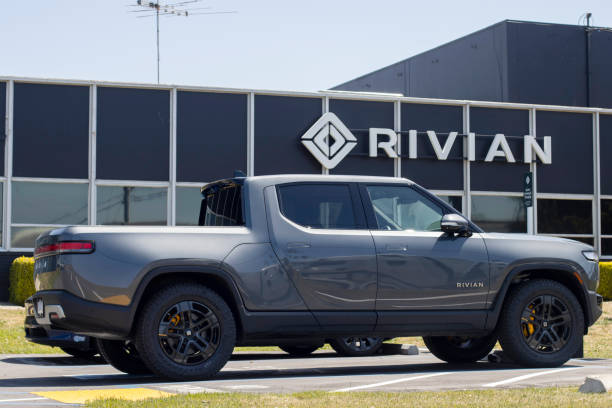
Amazon Stock Predictions for 2026 to 2030: Will They Exceed Expectations and Achieve Major Long-Term Goals?
TradingKey - As we head into 2026, many investors are questioning where Amazon (AMZN) fits into the technology world.
A Crash After a Surge: Why Silver Lost 40% in a Week?
TradingKey - Spot silver (XAGUSD) prices continue to decline. Silver plunged 20% on Thursday, breaking below $71 per ounce, with the sell-off intensifying on Friday as prices fell further below $64. Compared to the all-time high set on January 29, silver prices have retraced more than 40%, wiping out nearly all gains accumulated over the previous month.
Is Bitcoin’s Four-Year Cycle Dead in 2026?
Is the Bitcoin 4-year cycle dead? After 2025 broke historical records with a red post-halving year, institutional analysts explore if the Bitcoin price has decoupled from the halving countdown. Analyze the impact of spot ETFs, global liquidity, and the roadmap to the 2028 halving in this 2026 market