


Today’s Market Recap: Negotiation Deadlock Persists, Three Major US Indices Close Lower but Rally After Hours, Asia-Pacific Stocks Open Under Pressure



TradingKey - US-Iran ceasefire negotiations reached a deadlock, triggering a rapid rise in market risk aversion. International oil prices surged more than 4% at one point, while risk assets including US stocks, Treasuries, gold, and Bitcoin came under synchronized pressure. In post-market trading, Trump announced a ten-day delay on strikes against Iranian energy infrastructure, causing oil prices to pull back sharply before rebounding; US stock futures spiked briefly before gains narrowed again, leaving the market caught in a cycle of shifting expectations and heightened volatility.
Precious metal prices trended lower, with spot gold (XAUUSD) falling below $4,400 per ounce and spot silver (XAGUSD) dropping to near $68.4 per ounce.
In the energy sector, WTI crude futures plummeted from $94.39 to $89.51 per barrel after the US market close before rapidly recovering to $93.60; Brent crude futures dove from $107.58 per barrel to near $100, significantly paring intraday gains.
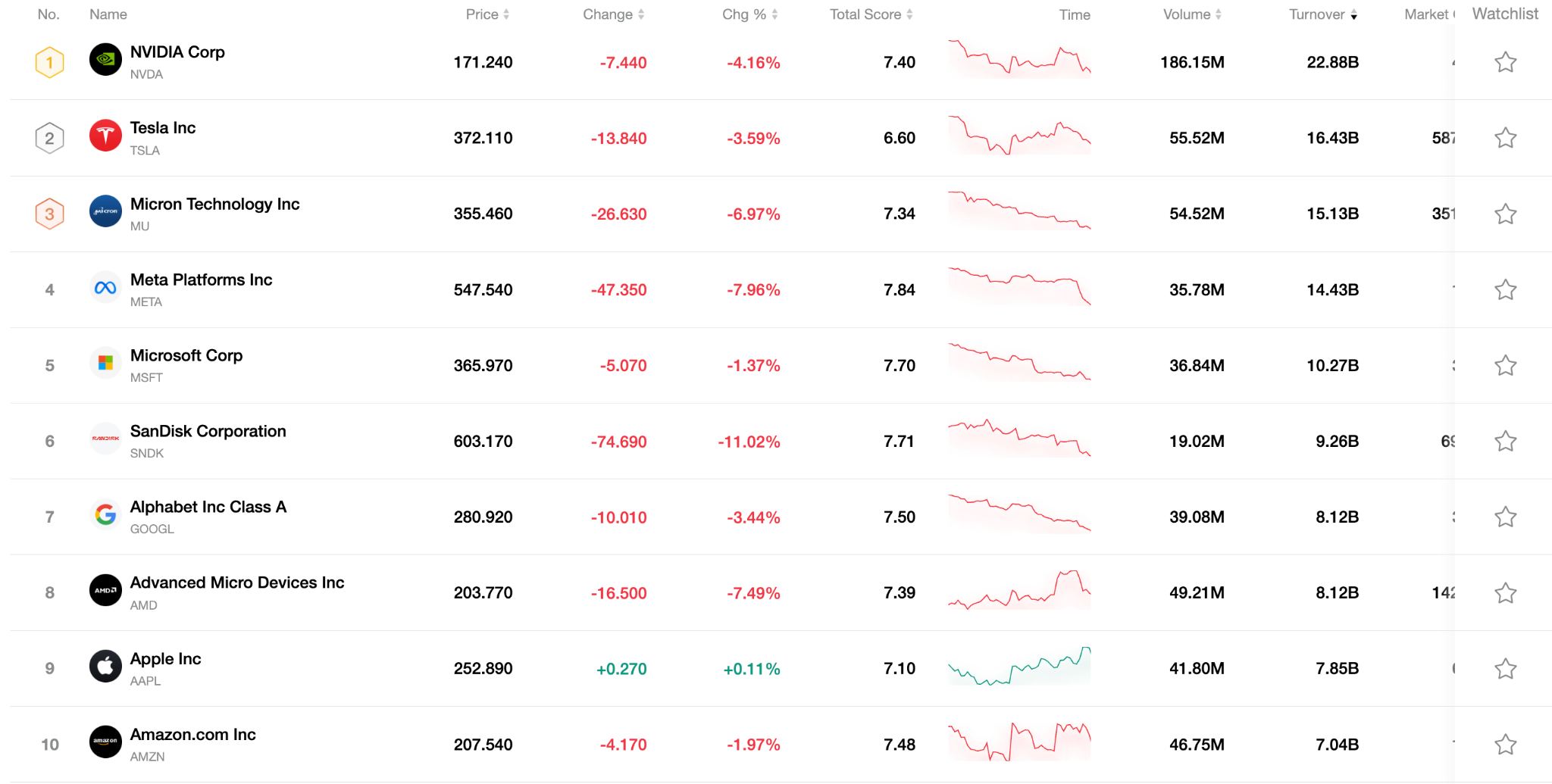
In equity markets, the "Magnificent Seven" (Mag 7) faced pressure: NVIDIA dropped 1.37%, Tesla fell 3.59%, Meta plunged 7.96%, Apple rose slightly by 0.11%, Google shed 3.44%, Amazon declined 1.97%, and Microsoft fell 1.37%.
Meta's share price has remained under pressure lately as investors attempt to find a valuation balance between AI potential and substantial capital expenditure.
Asia-Pacific markets opened on a weak note, with the Nikkei 225 sliding over 1% and South Korea's KOSPI index tumbling more than 4%.
Market Headlines
Trump announces delay of strikes on Iranian energy assets. Trump announced a further 10-day delay for strikes on Iranian energy facilities, pushing the deadline to 8 PM ET on April 6, and stated that US-Iran negotiations are "progressing very smoothly," noting the extension was granted at Iran's request. Previously, Trump had set 48-hour and Friday deadlines, making this the second postponement. Following the news, international oil prices experienced sharp intraday volatility; WTI crude, which had surged nearly 6%, subsequently reversed gains.
The Central Bank of Turkey sells gold following the outbreak of the US-Iran conflict. The Central Bank of Turkey, a long-term major buyer, sold or utilized approximately 60 tons of gold valued at over $8 billion through swap operations in the two weeks following the outbreak of the Iran conflict. A portion was sold outright, while the remainder was used in swaps to obtain foreign exchange or Lira liquidity. This move marks a significant policy shift and exerted downward pressure on gold prices in the short term.
Meta further increases investment in AI infrastructure. On Thursday, the company announced it is raising the investment for its El Paso, Texas, data center project to approximately $10 billion—a more than sixfold increase from the initial $1.5 billion budget, signaling an aggressive push in computing power infrastructure. Against this backdrop, Meta's full-year capital expenditure could soar to a high of $135 billion. Although Wall Street has questioned the sustainability of such massive spending, tech giants overall continue to maintain high-intensity investments during this critical phase of the race for AI dominance.
Top Ten Most Active Stocks
The chart below lists the ten most actively traded stocks in the market today. Driven by massive trading volume and deep liquidity, these instruments have become key benchmarks for tracking global market dynamics.
Recommended Articles






Comments (0)
Click the $ button, enter the symbol, and select to link a stock, ETF, or other ticker.