Adeia settles semiconductor patent lawsuits against AMD

By Blake Brittain
March 9 (Reuters) - Technology licensing company Adeia ADEA.O settled two patent lawsuits it filed against chipmaker Advanced Micro Devices AMD.O in Texas federal court over semiconductor technology, the companies said on Monday.
Adeia said in a press release that AMD has agreed to take a multi-year license to its semiconductor IP portfolio for an undisclosed amount of money. It asked the Midland, Texas, court to dismiss the cases.
“Resolving our disputes allows both companies to move forward and creates an opportunity for exploring future collaborations on advanced semiconductor technologies," Adeia CEO Paul Davis said in a statement.
Spokespeople for AMD did not immediately respond to a request for comment and more information about the settlement.
San Jose, California-based Adeia was the intellectual property licensing unit of TiVo owner Xperi before Xperi was spun off into an independent company in 2022.
Santa Clara, California-based AMD is one of the largest U.S. semiconductor companies and a major producer of processing chips that power artificial intelligence systems. Adeia's lawsuits, filed in November, said that several models of AMD processors used in desktops, laptops and servers violated Adeia's patent rights in inventions for improved semiconductor manufacturing.
Adeia said that its predecessor Tessera pioneered hybrid bonding and advanced process nodes, which are both technologies related to semiconductor manufacturing. Its lawsuits said AMD processors that include "3D V-Cache" technology, including its AI chips, were made using Adeia's patented methods.
AMD denied the allegations in court filings in January.
The cases are Adeia Semiconductor Bonding v. Advanced Micro Devices Inc., U.S. District Court for the Western District of Texas, Nos. 7:25-cv-00510 and 7:25-cv-00511.
For Adeia: Jennifer Cieluch, Adam Swain, John Haynes, Nicholas Tsui and Stephen Lareau of Alston & Bird
For AMD: Nicholas Whilt, Xin-Yi Zhou and Ryan Yagura of O'Melveny & Myers
Read more:
Adeia sues AMD for patent infringement over semiconductor technology
Related Articles
Jensen Huang’s Bold Message: DRAM Fabs Should Expand, Nvidia Will Buy It All.
TradingKey - Nvidia (NVDA) CEO Jensen Huang recently delivered a powerful signal to global memory chip manufacturers at the Morgan Stanley Technology Conference: expand production with confidence, as Nvidia will take all available supply.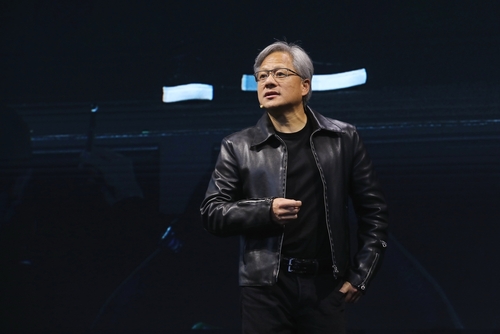
Nasdaq Goes "Limitless" on BTC ETF — But the Market Says No
Nasdaq stock unlocks were overshadowed by Middle East tensions; capital continues to flow into the crude oil market, while Bitcoin prices lack key support.
Oil Surges 30% Past $100 as Wall Street Warns of Record Highs
TradingKey - Oil prices surged at the market open on Monday (March 9). Intraday, WTI crude oil futures spiked more than 30% to $118.7 per barrel, while Brent crude oil futures rose over 26%, hitting a high of $119.46 per barrel. This marks the first time international oil prices have broken above $1
The Week on Wall Street: Oil Spikes, VIX Surges, and the Return of the Inflation Scare
TradingKey - Macroeconomic Landscape: The week was significantly influenced by escalating geopolitical tensions in the Middle East, which redirected global market sentiment towards risk aversion. This led to a notable rise in crude oil prices due to fears of supply disruptions through the Strait of