Trump says he ordered strike on Iran over attack fears

By Nandita Bose and Andreas Rinke
WASHINGTON, March 3 (Reuters) - President Donald Trump said on Tuesday he ordered U.S. forces to join Israel's attack on Iran because he believed Iran was about to strike the United States, his latest explanation amid conflicting accounts from the administration of how the war started.
"I might have forced their (Israel’s) hand," Trump told reporters in the Oval Office as he met with German Chancellor Friedrich Merz. "We were having negotiations with these lunatics, and it was my opinion that they were going to attack first. If we didn't do it, they were going to attack first. I felt strongly about that."
Trump's comments about the run-up to the war were at odds with an earlier account from Secretary of State Marco Rubio, who told reporters on Monday that the United States launched the attack because of fears that Iran would retaliate in response to planned Israeli action against Tehran.
"We knew that there was going to be an Israeli action, we knew that that would precipitate an attack against American forces, and we knew that if we didn’t preemptively go after them before they launched those attacks, we would suffer higher casualties," Rubio said.
Trump on Tuesday said he believed Iran was on the brink of launching attacks, presenting no evidence to support his view, after U.S. negotiations with Iran last Thursday in Geneva. Iran had described those talks as positive with more planned in the days ahead.
"It's something that had to be done," Trump said, taking questions from reporters in a public setting for the first time since the U.S. attacks began. He previously had discussed the attacks in two brief videos and one-on-one interviews with select journalists over the weekend but did not give a televised address to the nation.
Trump also said on Tuesday he could live with higher oil prices for a period of time because it was more important to remove what he said was an imminent threat from Iran. Gasoline prices in the United States have jumped as a result of uncertainty about oil supplies with the conflict showing no signs of ending soon.
Trump described the war effort as successful thus far against many Iranian naval and air targets. "Just about everything has been knocked out," he said.
Iran has responded to the attack by firing missiles and drones at neighboring Arab states and strangling shipping through the Strait of Hormuz, a key waterway for energy trade.
But Trump predicted Tehran will eventually lose its capability to continue lobbing missiles due to a sustained assault against them.
"They've shot a lot of them, and we're knocking out a lot," he said.
Related Articles
Trump’s ‘At All Costs’ Rhetoric Shorts Global Assets? Gold and Silver Not Spared
TradingKey - Amid intensifying geopolitical tensions, investors once bet on risk premiums in precious metals and safe-haven assets. On February 28, 2026, the United States and Israel launched localized air strikes against Iran. The strikes resulted in the death of Iran’s Supreme Leader and triggered multi-directional retaliatory actions across the region. Subsequently, Trump declared that strikes against Iran would be pursued "at all costs."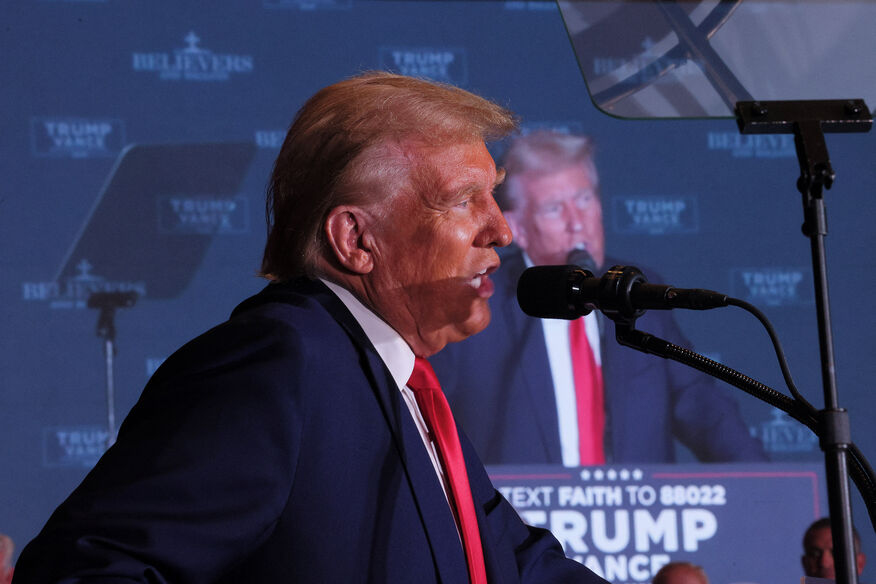
Partnering With Lumentum and Coherent, Can Nvidia’s $4 Billion CPO Bet Support the Future of AI Computing Power?
TradingKey - On Monday, March 2 local time, NVIDIA (NVDA) announced that it has entered into a deep strategic partnership with optical technology manufacturers Lumentum (LITE) and Coherent (COHR). NVIDIA will invest $2 billion in each company, totaling a massive $4 billion investment. This move advances NVIDIA's strategic layout in the field of AI data center network architecture to a new stage.
Bitcoin Stuck in Range Struggle, Can US-Iran Conflict Help a Breakout?
As the US-Iran conflict continues to escalate, Bitcoin prices remain range-bound and are losing their war premium.
JPMorgan Warns Hormuz Blockade Risks Oil Shutdown in 25 Days, But How Will the US-Iran Conflict Shape Global Oil Prices?
TradingKey - Following the announcement on the night of February 28 banning all vessels from passing through the Strait of Hormuz, JPMorgan Chase issued a warning: if the Strait of Hormuz is completely blocked, the combined onshore and offshore storage capacity of Middle Eastern oil-producing nation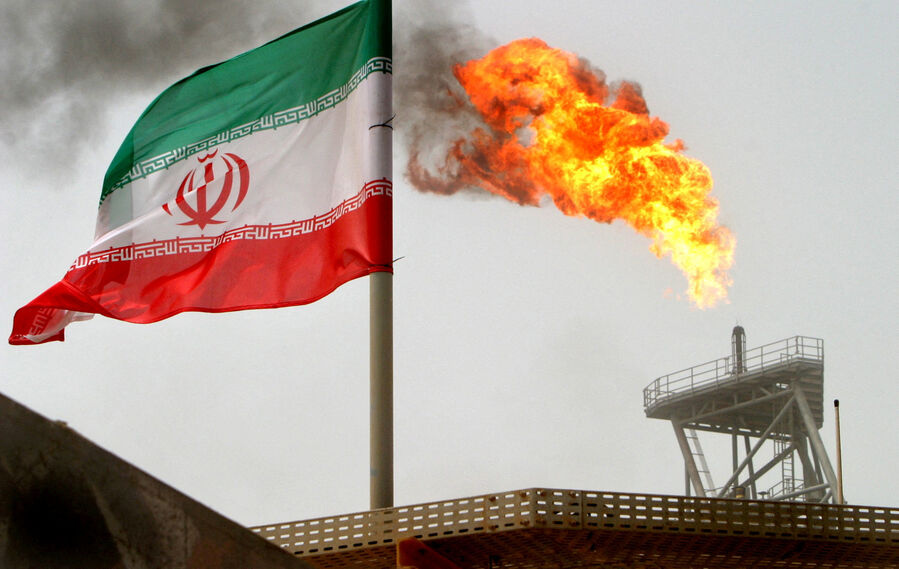
The Hyperliquid Phenomenon: HYPE Ecosystem’s Path to $250
Explore the Hyperliquid (HYPE) 2026 outlook as it evolves from a high-speed DEX into a powerful Layer 1 ecosystem. This analysis breaks down the $2.95 trillion trading volume, the impact of the HIP-4 prediction market launch, and the HYPE token's technical resilience at the $31.77 level amidst globa