CULTURE CURRENT-Ken Burns on revisiting America’s founding at its 250th anniversary

By Yasmeen Serhan
Feb 28 - As the United States prepares to mark 250 years since its founding, Ken Burns is urging viewers to revisit that moment anew. The award-winning documentarian — whose work has chronicled everything from the Civil War to the history of jazz — spent nearly a decade on his latest 12-hour series, “The American Revolution,” which premiered on PBS in November.
Speaking with Reuters at the British Library in London ahead of the film’s international release this summer, Burns discusses the myths and nostalgia that define many Americans’ understanding of the revolutionary period and his guarded optimism for the next 250 years.
This conversation has been edited and condensed for clarity.
What first drew you to filmmaking — and to films about U.S. history, in particular?
I knew by age 12, out of tragedy, that I wanted to be a filmmaker. My mother had cancer and had spent my entire conscious life dying, and then died when I was 11. When I was 12, I watched my dad cry — who I had never seen cry — at an old movie called "Odd Man Out" and I decided to be a Hollywood filmmaker.
By the time I got to Hampshire College in the fall of 1971, all of the teachers were social documentary still photographers. So I suddenly was (into) documentary. And then I realized that I had this completely untrained and untutored interest in American history. I don't know where it came from other than this just deep, abiding curiosity about how the country works.
Your latest film recounts what you describe as the most profound revolution in history. How did telling this story compare to some of your past projects?
I’ve dealt in 18th-century subjects before ... but this has no photographs. It has no newsreels. And so it presents problems. I've not been a big fan of reenactments and so what we did is over five or six years of filming (we) collected a critical mass of photography in a very impressionistic way of people who do reenactments. We collected enough material that we could use, so a volley from a set of British soldiers firing their muskets dissolves into a painting of the very same thing. And so you treat the paintings as if they're live and you treat the live as if they're paintings.
We've always had complex narratives. We've always been interested in lots of different ways to see the subjects and, to use the American baseball metaphor, to call balls and strikes. We just say what actually happened. The heroes are not diminished; they just have more dimension.
And so our films are filled with not just top-down but bottom-up stories: In this case, of women who are essential to keeping the resistance in the decade before the revolution going and are at every single battle, sometimes fighting, but more often than not burying the dead, washing the clothes. We follow many children who sign up and fight; teenagers fighting, seasoned veterans at 18 or 19. And then Native American and Black (populations). And then of course we want to know what a British and Irish soldier felt, what a German soldier felt, what the French were involved in, what the Spanish were thinking and give dimension and multiplicity to those Native American tribes that (history) just sort of reduced to a single "them."
And not unlike your past projects, this one took nearly a decade to complete, right?
There are literally a million decisions you have to make that overcome difficulties to be able to do this, which is why it takes us 10 years — and why I've stayed with public broadcasting because I couldn't have done any of these films. I could get the money instantly. The fundraising is a pain and goes on for most of those 10 years. But nobody (else) would give me 10 years to do it.
The recent rescission that eliminated the Corporation for Public Broadcasting is devastating to us. It's even more devastating for the new filmmaker coming up or for the rural stations. We’ll get by. We'll figure out how to do it. It's still the best place to be.
Most Americans learn a sentimental version of the country’s origin story — taxes, tea, freedom. But your series argues that democracy wasn’t an intention of the Revolution so much as an inadvertent byproduct. What do people most misunderstand about the founding moment?
We sentimentalize it for understandable reasons. We know it’s about really big ideas and we don’t want those ideas diminished by the real stuff, so we suppress the violence of it. We say you can get an A on your test if you say taxes and representation. But it's really Indian land, taxes, and representation. And then all of a sudden it's "pay no attention to those people on the other side of the woods."
We called the Congress that we set up the Continental Congress. We put George Washington at the head of the Continental Army. We knew where we were going. We had dreams of empire. Americans like to say, "Well, at least we're not like the empires of Britain and Spain and France and Portugal and the Netherlands." But in fact, we are. We took over in the continental United States 300 separate sovereign nations and we don't like to tell that story and we don't like to confuse it. And I think it’s always better to confuse it and it’s so much more interesting to understand all the range of characters.
And the film captures those characters while also pointing out their very clear contradictions, right? George Washington, for example, rails against “enslavement” by British policy while himself enslaving hundreds.
He's deeply flawed, he’s rash, and he makes really bad military decisions in a couple of really important cases. But he's able to inspire people in the dead of night to fight for this thing that's never been tried. He defers to Congress. He has an unbelievable humility. He's able to pick subordinate talent that is better than him and is not threatened by that. And he's convincing somebody from New Hampshire, where I live, and somebody from Georgia that they're not from separate countries, but they're one thing: American. And more important than anything else: He surrenders his military commission the second the war is over. Within weeks of the British leaving New York City, he resigns. And then he's unanimously elected president and then resigns that after two terms. That giving up of power has set in motion for at least 250 years this idea that the office is more important than the individuals.
This summer marks 250 years since American Independence. How are you feeling about the next 250?
You have this current political crisis that we're in, which is the lopsided power that the executive has taken vis-a-vis the legislative and the judicial (branches). It's unprecedented in that it's not happened at this highest level, but things happen. So I think that this is our supreme test. I think this — along with the Civil War and the Depression and the Second World War — is one of the greatest crises in American history. And in all those cases, we figured out a way. We were much more divided during the Revolution than we are now. We were much more divided during the Civil War, the Vietnam period, (and) the Depression than we are now. There's a bit of arrogance that the present always has, because we're alive, our stuff is the worst or the best or whatever. But a study of history tells you maybe it's not the worst.
What’s next? Do you have another 10-year project in you?
We've taken on a project on Reconstruction that has been going on for enough years that it might be close to 10 when it's out. I've just decided in the last year to do a film on the history of the CIA and that could take that long to get it right. What I've always said is that if I were given a thousand years to live, I wouldn't run out of topics in American history.
The perspectives expressed in Culture Current are the subject’s own and do not necessarily reflect the views of Reuters News.
Related Articles
Gold and Silver February Summary: Safe-Haven and Speculation Resonance, Precious Metals See Double Boost From Sentiment and Speculative Funds
TradingKey - In February 2026, the precious metals market strengthened significantly against a backdrop of rising geopolitical risks and fluctuating macroeconomic expectations. Gold (XAUUSD) and silver (XAGUSD) not only extended their strong performance since the beginning of the year but also showed signs of accelerated upward momentum toward the end of the month.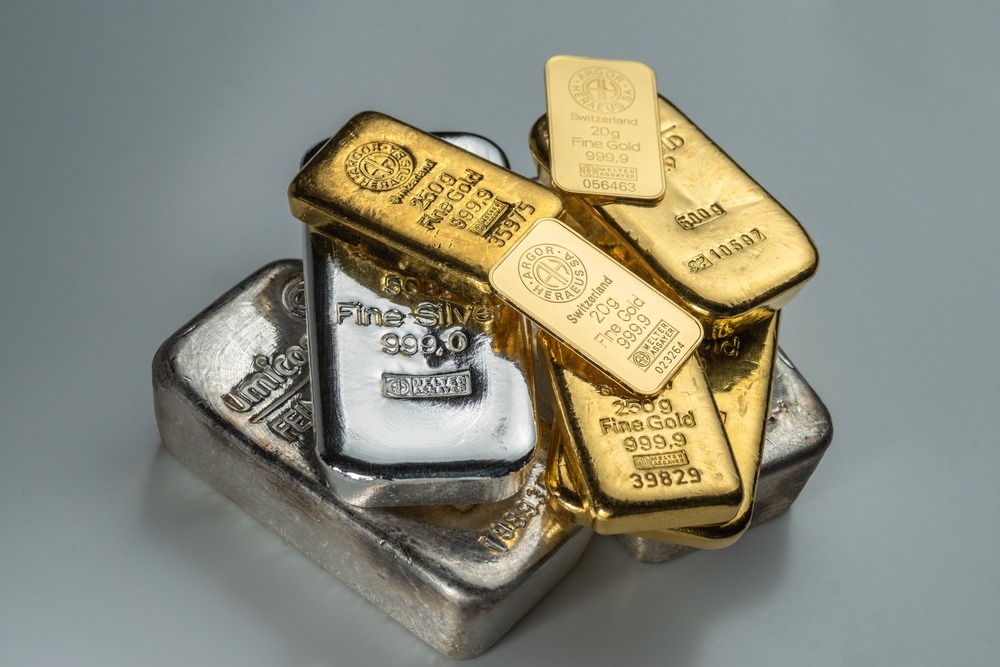
How Tesla Survives the Cold Winter, Will Tesla Stock Continue to Fall in 2026?
TradingKey — Recently, weighed down by earnings missing expectations and factors such as AI bubble and disruption theories, Tesla (TSLA) shares have continued to slide, falling nearly 20% from their December 2025 peak.
U.S.-Iran Nuclear Negotiations Reach Impasse. Safe-Haven Flows Pour Into Gold and Silver as Crypto Market Comes Under Pressure
Negotiations between the United States and Iran have collapsed, triggering a sharp rise in safe-haven demand. Gold and silver attracted capital inflows, while the crypto market remained sluggish.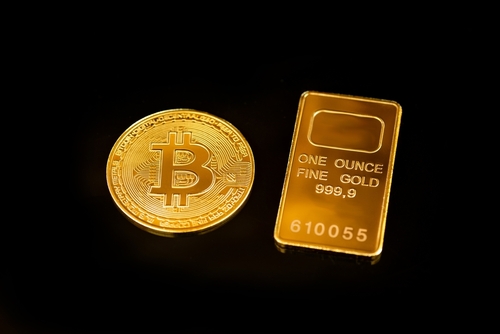
The Hotter AI Gets, the More Attractive “Bricks” Become? Wall Street's HALO Craze Turns Heavy Assets Red-Hot
TradingKey - As AI technology continues to lower the barriers to replication for virtual products, global asset pricing logic is undergoing a subtle shift—tangible assets rooted in the physical world that are difficult to replace digitally are regaining significant favor from capital. This trend has
Nvidia Q4 Earnings Beat Expectations but Stock Plunges 5.5%, $260 Billion in Market Value Erased Overnight, Why Are Investors Voting With Their Feet?
TradingKey - On February 25, 2026, global AI chip leader Nvidia (NVDA) released its fiscal 2026 fourth-quarter earnings report. Revenue, net profit, and data center business all significantly exceeded Wall Street consensus expectations, delivering a "stellar" set of results.