From dating scams to fake lawyers: OpenAI details ChatGPT misuse in new threat report

Feb 25 (Reuters) - OpenAI said it banned accounts linked to Chinese law enforcement, romance scammers and influence operations, including a smear campaign against Japan's first woman prime minister, in a report detailing the misuse of its ChatGPT technology.
The company said several accounts used its chatbot alongside other tools, including social media accounts, to carry out cybercrimes while posing as a dating agency, law firms and U.S. officials, among others.
Here are some details from OpenAI:
A small set of accounts that likely originated in China used OpenAI's models to request information about U.S. persons, online forums and federal building locations, and sought guidance on face-swapping software
The same accounts also generated English-language emails to state-level U.S. officials or policy analysts working in business and finance, inviting targets to participate in paid consultations
OpenAI said it banned a ChatGPT account linked to an individual associated with Chinese law enforcement whose activity involved orchestrating a covert influence operation targeting Japanese Prime Minister Sanae Takaichi
A cluster of ChatGPT accounts used the chatbot to run a dating scam targeting Indonesian men and likely defrauded hundreds of victims a month, according to OpenAI
OpenAI said the scam used ChatGPT to generate promotional text and ads for a fake dating service, luring users to join the platform and pressuring targets to complete several tasks requiring large payments
Several accounts used OpenAI's models to pose as law firms and impersonate real attorneys and U.S. law enforcement, targeting fraud victims, OpenAI said
Related Articles
Circle Stock Price Outlook: Will Circle Internet Group Rebound in 2026?
TradingKey - Circle Internet Group (CRCL) saw its stock price experience a roller coaster ride since its 2025 IPO debut at $31 a share. Those early fireworks faded, and the shares now sit roughly 75% below their June peak, though they’re still more than double the IPO level. Outside of that first-mo
Nvidia Q4 Earnings: Market Fears Competition, but NVDA Moat is Beyond CUDA
All eyes are on Nvidia this week, as the company reports its 2026Q4 earnings.
Nvidia Q4 Earnings Preview: AI-Driven Growth Versus Market Expectations
TradingKey - NVIDIA (NVDA) is set to release its fourth quarter fiscal year 2026 earnings report after the market close on February 25, ET. As the world undergoes a period of rapid AI technological advancement, market debates over a capital expenditure bubble have intensified. In this context, NVIDIA’s results serve not only as a test of its business performance but also as a core bellwether for the sustainability of the global AI boom.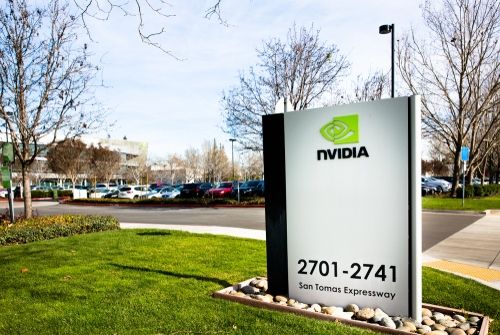
NFT Price Collapse 2026: Full Market Analysis and Digital Asset Recovery Forecast
Analyze the 2026 NFT price collapse and the pivot to digital utility. From Bored Ape floor stability to Solana NFT news and NFT credit cards, explore the recovery forecast.
New Fed Chair Warsh Takes Office: Major Shift in Monetary Policy? US Dollar Short-Term Rebound, 2026 Investment Strategy Analysis
TradingKey - At the start of 2026, global financial markets witnessed a major leadership change as U.S. President Trump officially nominated Kevin Warsh as the next Federal Reserve Chair. Pending Senate confirmation, he will succeed Jerome Powell this May to lead the world’s most influential central bank.