



REFILE-States square off with opioids whistleblower over payout from $4.7 billion Walgreens settlement

By Mike Scarcella and David Thomas
Feb 5 (Reuters) - (Billable Hours is Reuters' weekly report on lawyers and money. Please send tips or suggestions to D.Thomas@thomsonreuters.com.)
A group of U.S. states is fighting a whistleblower’s bid for a cut of their multibillion-dollar opioid settlement with retail pharmacy giant Walgreens, arguing the deal was negotiated to fund opioid-crisis response and not to reward a private tipster.
The dispute stems from a long-running federal case brought by pharmacist T.J. Novak against Walgreens Boots Alliance in Chicago federal court in 2018. Novak alleged Walgreens filled illegal opioid prescriptions and then sought reimbursement from government health programs, including Medicare and Medicaid.
The U.S. government joined Novak's case and reached a $300 million settlement with Walgreens, which denied wrongdoing. The accord last year included $150 million tied to Novak’s federal False Claims Act allegations, and Novak said he received a 17.25% share of the funds — more than $25 million — as a whistleblower award.
More than two dozen states separately settled opioid-related claims with Walgreens in 2022 for more than $4.7 billion. Novak contends the states’ settlement improperly ended his claims under the states' versions of the federal False Claims Act, which allows citizens to sue on the government's behalf and share in any recovery.
In a November filing, he argued that the states would not have been able to achieve their accord without agreeing to release his claims. “Mr. Novak is far from an interloper,” his lawyer told the court.
The states this week flooded the federal court in Chicago with filings challenging Novak's arguments.
Rhode Island warned that a ruling for Novak "would transform every state enforcement action involving overlapping facts into a mandatory payout" for whistleblowers.
North Carolina told the court that Novak has no right to a share of the state's deal since the money is devoted to addressing an alleged public nuisance caused by Walgreens, and not to resolving Novak's claims under the state's false claims laws.
"There is no one-size-fits-all result the court could impose on 28 states,” Virginia argued in its filing, since false claims statutes differ from one state to another. It also warned that Novak's request would force the court into “a complex web of allocation methodologies for 28 states” to decide what part of each state’s recovery, if any, could be subject to whistleblower compensation.
Novak's lawyer and Walgreens did not immediately respond to requests for comment.
RULING ON LEGAL FEES FOR US DETAINEES DEEPENS SPLIT IN FEDERAL COURTS
As U.S. immigration detentions mount under President Donald Trump, a new ruling from the 3rd U.S. Circuit Court of Appeals paves the way for people who have been wrongfully detained to recoup attorney fees under a 1980 federal law.
The ruling deepens a split among federal appellate courts, some of which have ruled that former immigration detainees cannot recover fees and costs under the Equal Access to Justice Act.
The 3rd Circuit's ruling covers Delaware, New Jersey, and Pennsylvania. The plaintiffs in the case, Adewumi Abioye and Adolph Michelin, were both detained in the Philipsburg, Pennsylvania ICE facility, which holds an average of 1,200 people every day, immigration groups told the appellate court.
Immigration attorneys said the ruling would help incentivize attorneys to work on habeas petitions — a legal challenge by a person in custody arguing their detention is unlawful and violates their constitutional rights. Such cases can require hundreds of hours of legal work that could be reimbursed according to the lawyers' hourly rates.
People detained by immigration authorities typically cannot afford a lawyer to file a habeas petition on their behalf, and having legal representation increases detainees' chance of release, said Yulie Landan, a staff attorney at the National Immigration Project.
Habeas petitions require "a certain level of expertise, and that’s why having a lawyer increases the odds of being successful," Landan said.
Under the EAJA, any private party who prevails in a civil action against the United States can earn fees if the government's position was not "substantially justified" or "special circumstances make an award unjust."
The 3rd Circuit appeal hinged on whether a habeas petition challenging an immigration detention is considered a civil action under the EAJA. The 3rd Circuit said it is.
"Habeas actions are civil actions," the panel said. "They have been since before our nation's founding."
The 4th and 5th Circuits have previously ruled that habeas actions are not civil actions under the EAJA, and the 2nd, 9th, and 10th Circuits concluded that they are.
A spokesperson for the U.S. Department of Justice, which opposed the fee awards, declined to comment on whether the government planned to appeal the decision to the U.S. Supreme Court.
Immigration attorneys told Reuters that the number of habeas petitions has surged as the Trump administration has aggressively cracked down on immigration.
"Habeas is all I do now," said Jonah Eaton, a supervising litigation attorney at UnLocal, a non-profit that provides legal services to immigrants in New York, who formerly represented Michelin.
Hundreds of such lawsuits have flooded Minnesota's federal court, where an attorney for the government said this week that she had been overwhelmed by the caseload.
Attorneys at U.S. law firm Arnold & Porter who argued on Abioye and Michelin's behalf at the 3rd Circuit did not immediately respond to a request for comment.
The 3rd Circuit's ruling upheld decisions by trial judges to award Abioye, a Nigerian citizen, $18,224.58, and Michelin, a Jamaican citizen, $15,841.60.
WHY THE DOJ SEES PROBLEMS WITH BLIND CONSUMERS' CLASS ACTION DEAL
The U.S. Justice Department filed a rare “statement of interest” this week, objecting to a proposed $5.15 million settlement in a class action by legally blind consumers who said they couldn’t access the website of clothing retailer Fashion Nova using screen-reading software.
In urging a California federal judge to reject the deal, the DOJ said plaintiffs’ lawyers are seeking $2.52 million in combined fees and costs — more than what’s earmarked to pay class members. But as Reuters columnist Jenna Greene reports, the government also alleges that the website created so class members could submit compensation claims, is itself inaccessible to the visually impaired.
Read More:
Decades‑long clash leads to $256 million verdict against human rights lawyer
Georgia, Trump defendants clash over fee law in election interference case
Are law firms headed for a downturn? Billing rates may hold the key
Related Articles
Warsh’s Fed Era Signals a Death Knell for QE, Jolting the $30 Trillion Treasury Market
With Warsh’s nomination, his past proposals for governing the Federal Reserve are being brought to the forefront. A central issue is the formulation of a new "1951 Accord" to restructure the relationship between the Fed and the Treasury. Analysts suggest such a move could impact the $30 trillion Tre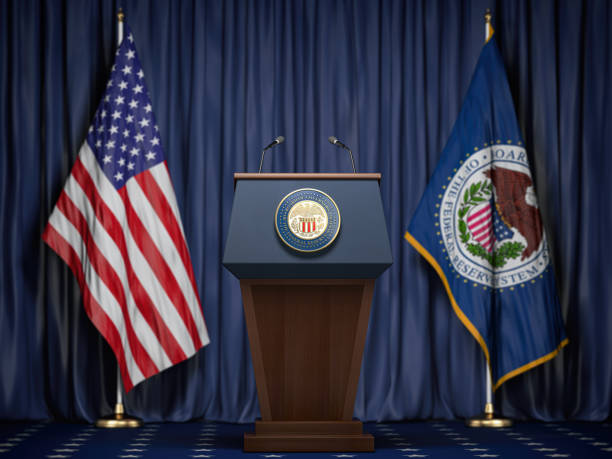
Will TRON Reach $10? TRX Price Prediction 2026 and Canary Staked ETF Update
Explore TRON's 2026 outlook: Will TRX reach $10? Get the latest on the Canary Staked ETF SEC status, Justin Sun's strategy, and TRX price predictions through 2032.
Amazon Stock Predictions for 2026 to 2030: Will They Exceed Expectations and Achieve Major Long-Term Goals?
TradingKey - As we head into 2026, many investors are questioning where Amazon (AMZN) fits into the technology world.
A Crash After a Surge: Why Silver Lost 40% in a Week?
TradingKey - Spot silver (XAGUSD) prices continue to decline. Silver plunged 20% on Thursday, breaking below $71 per ounce, with the sell-off intensifying on Friday as prices fell further below $64. Compared to the all-time high set on January 29, silver prices have retraced more than 40%, wiping out nearly all gains accumulated over the previous month.

