Student, professor face setbacks in law school free speech cases

By Karen Sloan
Jan 9 (Reuters) - A law professor and a law student who sued their universities last year both faced court setbacks on Thursday in cases involving U.S. campus free speech rights.
The U.S. Court of Appeals for the 11th Circuit said the University of Florida cannot be forced to re-admit law student Preston Damsky while a lower court weighs his lawsuit against the school, with two of the three judges on the panel finding that statements Damsky made were “likely not protected by the First Amendment.”
The university expelled Damsky for making controversial statements about race and religion, including a post on X that had said “Jews must be abolished by any means necessary."
Also on Thursday, a federal judge in Lexington denied University of Kentucky law professor Ramsi Woodcock’s bid for an order halting the university’s investigation into his speech critical of Israel and lifting his ban from campus.
Debates over free speech on university campuses have intensified during President Donald Trump's second term, with his administration cracking down on protests and what it has decried as rampant campus antisemitism. Woodcock is at least the third U.S. law professor since January to be suspended or fired in response to politically charged speech on issues such as Israel's war with Hamas in Gaza and the murder of conservative activist Charlie Kirk.
The ruling in the Florida case means that Damsky will remain barred from campus when spring semester classes begin January 20. His attorney, Anthony Sabatini, said he will petition the full 11th Circuit to rehear the case. A University of Florida spokesperson declined to comment on the ruling.
The university had suspended Damsky in April, saying his presence on campus “created a material and substantial disruption." He sued the school after he was expelled in October.
Damsky wrote two seminar papers that “generally argue the United States was founded as a race-based nation and should be preserved as such,” which some on campus viewed as calls to violence, according to a November preliminary injunction ruling by U.S. District Judge Allen Winsor. Winsor said the school had not shown that Damsky’s statements online and in academic papers were true threats of violence, and that his expulsion likely violated his free speech rights.
The majority on the 11th Circuit panel disagreed, putting the November ruling on hold after finding there is a “strong public interest” in mitigating campus violence. A third judge dissented, concluding that Damsky’s speech was protected under the Constitution.
In the Kentucky case, U.S. District Judge Danny Reeves denied Woodcock’s request for a preliminary injunction to stop the university’s investigation into his speech, saying such a move would constitute interference by the court. Reeves also denied the university’s motion to dismiss Woodcock’s case outright.
Woodcock sued the university in November, claiming it violated his free speech and due process rights under the U.S. Constitution when it removed him from teaching, banned him from campus, and launched an investigation into his criticisms of Israel at academic conferences and in online forums.
Woodcock said Friday that his case centers on university officials “torching the First Amendment” and that he’s confident an appeals court will reinstate him to teaching. University of Kentucky spokesperson Jay Blanton said the school “appreciates the court’s thoughtful and clear ruling” and that its investigation into Woodcock’s conduct is ongoing.
Read more:
Judge orders readmission of law student who posted 'Jews must be abolished'
Suspended US law professor and Israel critic sues to block campus probe
Related Articles
Warsh’s Fed Era Signals a Death Knell for QE, Jolting the $30 Trillion Treasury Market
With Warsh’s nomination, his past proposals for governing the Federal Reserve are being brought to the forefront. A central issue is the formulation of a new "1951 Accord" to restructure the relationship between the Fed and the Treasury. Analysts suggest such a move could impact the $30 trillion Tre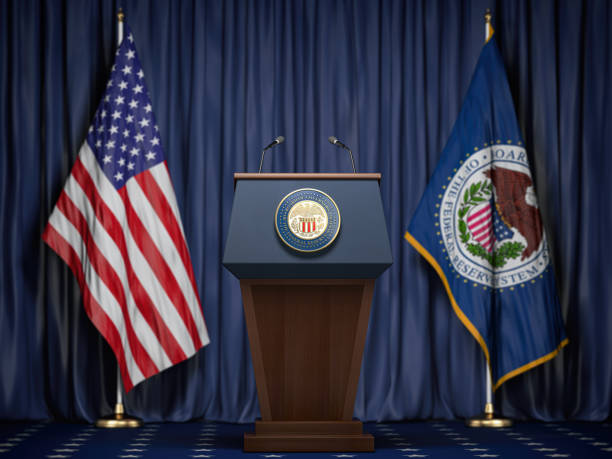
Amazon Stock Predictions for 2026 to 2030: Will They Exceed Expectations and Achieve Major Long-Term Goals?
TradingKey - As we head into 2026, many investors are questioning where Amazon (AMZN) fits into the technology world.
A Crash After a Surge: Why Silver Lost 40% in a Week?
TradingKey - Spot silver (XAGUSD) prices continue to decline. Silver plunged 20% on Thursday, breaking below $71 per ounce, with the sell-off intensifying on Friday as prices fell further below $64. Compared to the all-time high set on January 29, silver prices have retraced more than 40%, wiping out nearly all gains accumulated over the previous month.
USD Dollar Trend Forecast: Dollar Index Falls Below 97.0 to 4-Year Low, Will the Dollar Continue To Fall or Bottom Out in 2026?
TradingKey - In January 2026, the US Dollar Index continued its downward trend from 2025, officially breaking below the key 97.0 level and reaching a low of 95.5, marking a nearly four-year low since February 2022.