tradingkey.logo
tradingkey.logo

Euro area government bond yields rise after US-Japan trade deal

ReutersJul 23, 2025 10:32 AM
  • US-Japan trade deal eases euro area deflationary concerns
  • Investors await ECB meeting and PMI data on Thursday
  • Economists uncertain about rate outlook
  • Markets price in 48% chance of ECB rate cut in September

By Stefano Rebaudo

- Euro zone government bond yields edged higher on Wednesday, as Japan’s trade deal with Washington revived hopes of further agreements and eased concerns over the impact of U.S. tariffs.

Euro area borrowing costs fell over the past two sessions as investor focus shifted to the deflationary fallout from potential U.S. trade duty increases and a strengthening euro.

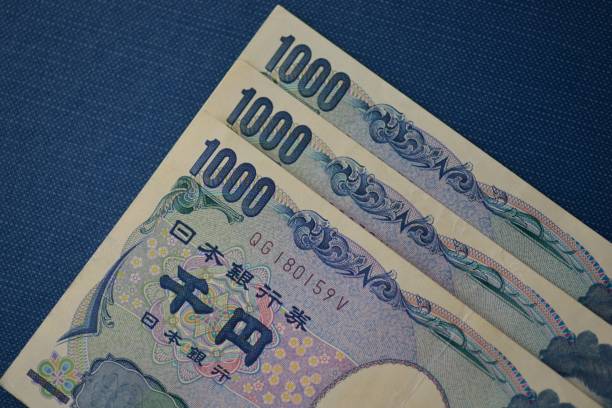
U.S. President Donald Trump struck a deal with Japan that spares Tokyo from punishing levies in exchange for a $550 billion package of U.S.-bound investment and loans.

Germany’s 10-year government bond yield DE10YT=RR, the euro area’s benchmark, rose 3 basis points (bps) to 2.62%, after dropping more than 10 bps in the last two sessions.

German 2-year government bond yields DE2YT=RR – more sensitive to expectations for European Central Bank policy rates – were up 2.5 bps to 1.82%.

The gap between German 10-year and 2-year yields DE2DE10=RR rose 0.5 bps to 80 bps.

Germany’s yield curve flattened on Monday and Tuesday as investors paused after a month-long steepening trend, which reflects a widening gap between short- and long-term yields.

Analysts expect June PMIs to stagnate on Thursday, citing tariff uncertainties and a strong euro — factors that could lend support to Bund prices and drive their yields lower.

The ECB is seen keeping rates on hold and reiterating its data-dependent stance, while awaiting a possible trade deal between Washington and Brussels.

Meanwhile, analysts are trying to assess the rate outlook amid geopolitical and economic uncertainties.

"There are downside risks (for the economy and the rate outlook) from trade tensions, but Europe will also be spending a lot on defence and infrastructure," said Bas van Geffen, senior macro strategist at RaboBank.

"There will be more inflationary pressure from that side. Meanwhile, we are still seeing some wage pressure in Europe."

Money markets are fully pricing an ECB depo rate at 1.75% in December EURESTECBM4X5=ICAP from the current 2%, and a 48% chance of a 25 bps rate cut in September EURESTECBM2X3=ICAP.

"Trade tensions and tariff developments could push the end of the cutting cycle slightly below market expectations," said Gabriele Foa, portfolio manager at Algebris Investments.

"Notably, despite ongoing U.S. tariff activity, there has been little evidence of pass-through into inflation, suggesting any spillover effects into Europe may also take longer to emerge," he added.

Italy’s 10-year government bond yields IT10YT=RR were up 1.5 bps at 3.47%, with the spread between BTP and Bund yields - a market gauge of the risk premium investors demand to hold Italian debt - at 85.5 bps. It hit 84.20 bps in June, its lowest since March 2015.

Disclaimer: The information provided on this website is for educational and informational purposes only and should not be considered financial or investment advice.
Tradingkey

Recommended Articles

KeyAI