


Nokia Oyj Stock (NOK) Closed Up by 5.17% on Apr 28: Drivers Behind the Movement



Nokia Oyj (NOK) closed up by 5.17%. The Technology Equipment sector is down by 2.26%. The company outperformed the industry. Top 3 stocks by turnover in the sector: NVIDIA Corp (NVDA) down 1.45%; Micron Technology Inc (MU) down 3.92%; Advanced Micro Devices Inc (AMD) down 3.37%.
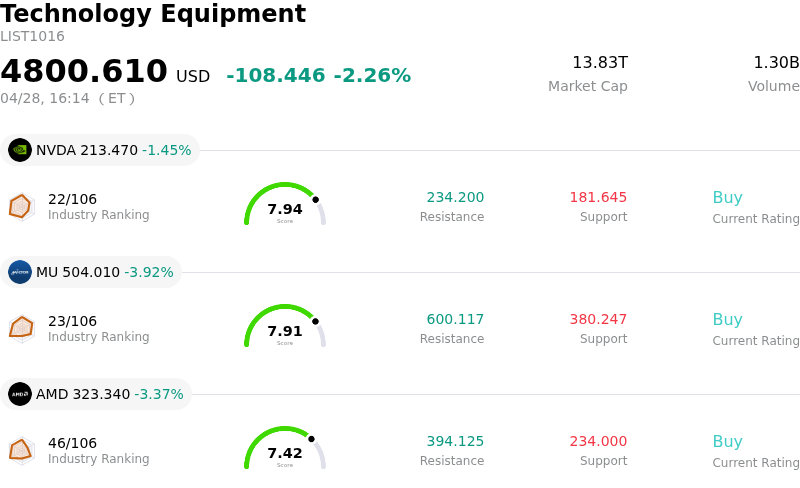
What is driving Nokia Oyj (NOK)’s stock price up today?
Nokia (NOK) experienced a notable upward movement in its share price today, driven by a combination of positive analyst sentiment, strong financial performance, and increased shareholder returns. The company's recent first-quarter 2026 earnings report highlighted robust growth in key segments, particularly in artificial intelligence (AI) and cloud-related demand, which significantly exceeded expectations.
Multiple investment analysts have upgraded Nokia's stock rating and increased their price targets following the promising Q1 results. Argus, for instance, raised its rating to "Buy" from "Hold" and set a higher price target, citing accelerated AI-driven demand in network infrastructure, improved stability in mobile networks, and an elevated 2026 guidance for network infrastructure. Bank of America and Nordea Equity Research similarly moved to a "Buy" rating, while JPMorgan and Raymond James also revised their price targets upwards, reflecting confidence in Nokia's strategic direction and its position in the evolving telecom landscape. This widespread positive re-evaluation by analysts suggests a shift in market perception regarding Nokia's growth prospects, particularly in areas fueled by AI.
The strong financial data from the first quarter of 2026 served as a primary catalyst for investor enthusiasm. Nokia reported a substantial increase in comparable operating profit and earnings per share, with net sales showing solid growth. Revenue from AI and cloud customers notably surged, demonstrating the company's successful pivot towards these high-growth areas. Furthermore, Nokia raised its 2026 Network Infrastructure growth guidance and increased its outlook for the AI/cloud addressable market, signaling continued momentum. The company's CEO emphasized an "AI supercycle" driving network investment in optical and IP technologies, underscoring the long-term potential in these segments.
Adding to the positive sentiment, Nokia recently declared an increased quarterly dividend, with today marking the ex-dividend date. This move to boost shareholder returns likely attracted income-focused investors. Additionally, the CEO's acquisition of a significant number of Nokia shares today under a long-term incentive plan further bolstered investor confidence, indicating strong internal conviction in the company's future performance. These combined factors contributed to the significant intraday upward volatility observed in Nokia's stock.
Technical Analysis of Nokia Oyj (NOK)
Technically, Nokia Oyj (NOK) shows a MACD (12,26,9) value of [0.58], indicating a buy signal. The RSI at 68.79 suggests neutral condition and the Williams %R at -24.37 suggests oversold condition. Please monitor closely.
Fundamental Analysis of Nokia Oyj (NOK)
Nokia Oyj (NOK) is in the Technology Equipment industry. Its latest annual revenue is $22.43B, ranking 3 in the industry. The net profit is $734.02M, ranking 8 in the industry. Company Profile
Over the past month, multiple analysts have rated the company as Buy, with an average price target of $12.01, a high of $15.00, and a low of $8.00.
More details about Nokia Oyj (NOK)
Company Specific Risks:
- Nokia's Q1 2026 revenue of EUR4.49 billion missed analyst estimates of EUR5.32 billion, signaling weaker-than-expected top-line performance.
- The company's guidance for Q2 operating profit is significantly below analyst consensus, projecting a figure approximately 20% lower at the midpoint and indicating potential near-term earnings pressure.
- Nokia reported a negative free cash flow of €-353 million in Q1 2026, a substantial decline from the positive free cash flow in Q4 2025, which could impact operational liquidity and future investments.
- Sales in the legacy mobile infrastructure business segment experienced a 3% year-on-year decline, primarily due to weaker demand in North America, highlighting persistent challenges in a core operational area.
This article may include AI-generated content that is human-reviewed, which is for reference and general information purposes only and does not constitute investment advice.
Recommended Articles







Comments (0)
Click the $ button, enter the symbol, and select to link a stock, ETF, or other ticker.