FOREX-Dollar steady, investors turn bearish on euro as energy prices surge

By Amanda Cooper
LONDON, March 4 (Reuters) - The dollar held firm near three-month highs on Wednesday, with investors turning deeply bearish towards the euro as the conflict in the Middle East sparked fears of a sustained rise in energy prices and took a heavy toll on stock markets.
The euro EUR= steadied at $1.1612, having earlier hit its weakest level since late November. That followed data released on Tuesday that showed euro zone inflation accelerated more quickly than expected in February, before the start of the Iran conflict.
"The impact of the Iran war on EUR/USD boils down to one thing: energy," said George Saravelos, global head of FX research at Deutsche Bank.
Financial markets resumed their selloff on Wednesday as growing fears of a surge in inflation rippled across stocks and bonds after Israeli and U.S. forces pounded targets across Iran, prompting a rush for cash among investors.
OPTIONS MARKET SIGNALS EURO WEAKNESS
The options market shows traders are at their most bearish towards the euro in at least a year, having flipped from an overwhelmingly bullish position just six weeks ago.
"We're still in a scenario where dollar selloffs are probably going to be short-lived and probably bought into because there is still a lot of negativity priced into most currencies, which are sensitive to energy prices," CIBC Capital Markets head of G10 FX strategy Jeremy Stretch said.
"And here in Europe, it's all about the natural gas prices," he said. "If there comes to be more of a supply, as well as a price, issue, then obviously that becomes much more problematic for the euro zone."
The cost of buying options to sell the euro against the dollar over the next three months against the cost of options to buy it is at its largest premium since last March, according to LSEG data, indicating a belief among traders that the euro has further to fall.
Deutsche Bank's Saravelos said that, roughly, for every combined 10% rise in Brent and European natural gas prices, the euro loses around 0.8% in value.
"This means that a combined move to $100/barrel in both Brent and (natural gas futures) would take euro/dollar down to roughly $1.13 on current sensitivities," he said in his note.
Global oil and gas prices have jumped as the strikes on Iran disrupt energy exports from the Middle East, with Tehran's retaliatory attacks on ships and energy facilities closing navigation in the Gulf and forcing production stoppages from Qatar to Iraq.
Benchmark Brent crude oil futures LCOc1 have shot up by nearly 16% since Friday to around $84 a barrel, their highest since July 2024, while European gas prices TFMBMc1 have risen almost 85% since the end of last week.
"Suddenly, the 'good place' of the ECB is being challenged, and we doubt we will see that resolved in the very near term," analysts from ING wrote in a research report. "The possibility of ECB rate hikes poses a serious risk to carry trades and could trigger a significant widening of euro zone government bond (EGB) spreads."
Money market traders are placing a one-in-three chance of the European Central Bank raising rates this year, compared with a roughly 40% chance of one 2026 cut less than a week ago.
Elsewhere, the pound GBP= slipped 0.3% to $1.3323. Sterling has been hit hard by the prospect of a protracted rise in energy prices, given UK inflation at 3% is still well above the Bank of England's 2% target.
The dollar index =USD, which tracks the U.S. currency's performance against six others, was flat at 99.05, having earlier reached its strongest level since November 28.
Against the yen JPY=, the dollar was down 0.26% at 157.35 yen.
The U.S. currency was also down 0.1% versus the Chinese yuan CNH= in offshore trade, changing hands at 6.913 yuan after PMI data for February diverged, with official gauges recording a slump in activity even as a private-sector counterpart blew past estimates.
Related Articles
Middle East Conflict Escalates, Global Stocks and Bonds Fall, Was It Really Caused by One Sentence From Trump?
TradingKey - On Tuesday local time, the escalation of conflict in the Middle East triggered intense global market volatility. Gold (XAUUSD), bonds, and stocks fell in tandem, an unconventional movement that shattered the conventional logic of "buying safe havens during turmoil and trading stocks during stability."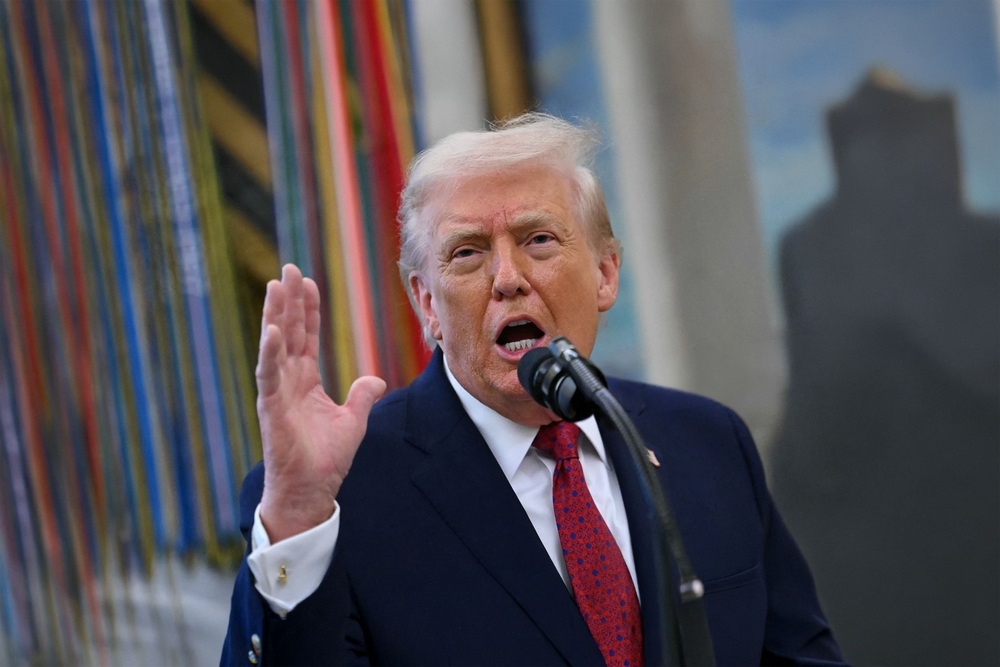
Gold’s $5,000 Breaking Point: Why the Middle East Crisis Isn't Saving the Bulls
As US-Iran tensions continue to escalate, gold prices saw a sudden plunge. Has the metal already peaked?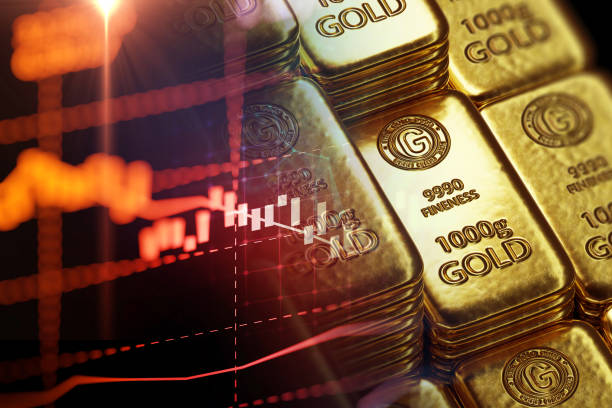
Partnering With Lumentum and Coherent, Can Nvidia’s $4 Billion CPO Bet Support the Future of AI Computing Power?
TradingKey - On Monday, March 2 local time, NVIDIA (NVDA) announced that it has entered into a deep strategic partnership with optical technology manufacturers Lumentum (LITE) and Coherent (COHR). NVIDIA will invest $2 billion in each company, totaling a massive $4 billion investment. This move advances NVIDIA's strategic layout in the field of AI data center network architecture to a new stage.
Best AI Tools for Stock Analysis in 2026 to Boost Your Investment Portfolio
As Artificial Intelligence (AI) continues to enhance everyday decision-making, these tools will allow us to leverage artificial intelligence to analyse stocks and optimise our investment portfolio.
AGI Approaches: 2026 May Be Artificial Intelligence Turning Point, Musk Warns White-Collar Class Will Bear the Brunt
TradingKey — Have you noticed that the pace of artificial intelligence evolution is exceeding the limits of human intuitive perception? From the debut of ChatGPT to the rapid rise of multimodal AI systems, the development of AI technology has demonstrated a non-linear, exponential acceleration in ju