FOREX-Safe-haven Swiss franc soars against euro as Iran war lifts energy prices

By Tom Westbrook and Gregor Stuart Hunter
SINGAPORE, March 2 (Reuters) - The Swiss franc soared to its strongest in more than a decade versus the euro while the dollar hit a five-week high on Monday as investors sought the safest assets after U.S. and Israeli strikes on Iran raised the risk of a protracted conflict.
The franc CHF= shot 0.7% higher to its strongest since 2015 on the euro EURCHF= at 0.9030 in early Asian trade, and climbed as much as 0.4% to 0.7661 per dollar.
The dollar index =USD, which measures the U.S. currency against the franc, euro and four other major peers, rose as much as 0.3% to reach 98.273 for the first time since January 23.
The strikes killed Iran's Supreme Leader Ayatollah Ali Khamenei, setting off a high-stakes succession race.
Attacks extended into Monday after Iran hit back, with the Iranian Revolutionary Guard saying it had struck three U.S. and British oil tankers, while blasts were reported across Israel, the UAE, Qatar, Bahrain and Kuwait.
"You don't know how long this is going to last, how high oil is going to go, how long the Strait of Hormuz is going to be closed," said BNZ strategist Jason Wong in Wellington. "The initial reaction is mild risk off, and you've just got to take each day as it comes."
Oil prices were investors' initial top focus and leapt around 9% early Monday on disruption to sea-borne trade.
After a knee-jerk appreciation, the yen JPY= weakened 0.6% to 157 yen against the dollar as traders digested the effect of the jump in energy prices on oil imports, while assessing what the conflict could mean for Bank of Japan policy.
"We had already viewed the likelihood of an interest rate hike in March or April as low, but amid rising uncertainty stemming from developments of the situation in the Middle East, the BOJ is likely to adopt a more cautious stance, further reducing the probability of a near-term rate hike," Morgan Stanley MUFG analysts wrote in a research report.
The Norwegian crown NOK= appreciated 0.7% versus the dollar, while the currency of fellow oil exporter Canada CAD= was steady.
The euro EUR= fell 0.8% to $1.172525 on the potential for disruption to energy supply in Europe, while sterling GBP= slumped 0.9% to $1.3372. The President of Cyprus said on Monday that Britain's Royal Air Force base of Akrotiri was targeted by an unmanned Shahed drone, causing minor damage and no casualties.
"The euro is in a difficult spot," Wells Fargo analysts said in a note. "Europe's natural gas storage refill season is about to begin and the EU is heading into it with record-low gas in storage, implying it will need to buy a large chunk of energy right as prices potentially shoot higher."
The risk-sensitive Australian dollar AUD= tumbled as much as 1.2% against the greenback, and the New Zealand dollar NZD= dropped as much as 0.8%.
China's yuan CNH= in offshore trade was 0.3% weaker at 6.8801 yuan to the dollar, as the People's Bank of China weakened its daily fixing price for the currency onshore to stem appreciation. China is an energy importer and the main buyer of Iranian oil.
Israel expanded its military campaign to include Iran-backed Hezbollah militants in Lebanon on Monday.
U.S. President Donald Trump told the Daily Mail the military campaign could run for a month. "We figured it will be four weeks or so. It's always been about a four-week process," he said.
Related Articles
U.S.-Iran Conflict Escalates. Strait of Hormuz Shutdown, How Much Room for Oil Prices to Rise?
TradingKey - A sharp escalation in geopolitical risks has directly triggered intense volatility in global crude oil markets. At the market open this Monday, WTI crude oil futures surged by over 11%, and Brent crude opened up 13%, though these gains subsequently narrowed.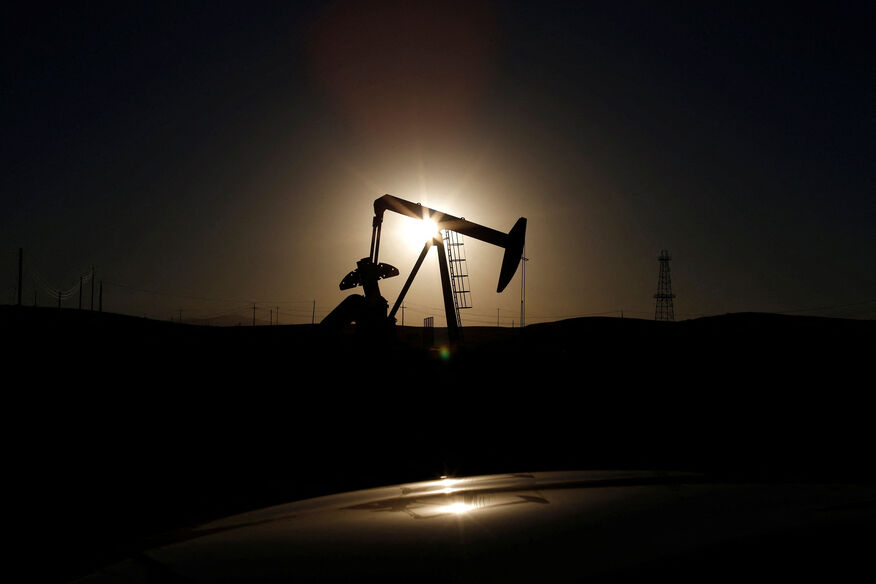
Shiba Inu 2026: L3 Evolution & the Next Bull Run
Discover the Shiba Inu (SHIB) 2026 outlook as it evolves from a meme coin into a sophisticated L3 utility network. This analysis covers the critical $0.00000589 support level, the impact of U.S. government SHIB holdings, and the Shibarium update featuring FHE privacy. Explore the "next Shiba Inu" bu
Korean Stocks Up 47% YTD: How to Join the Rally
TradingKey - Since the start of 2026, South Korea’s KOSPI Index has been on a tear — rising more than 47% so far this year and lifting the market’s capitalization to ninth place globally. That performance makes it one of the brightest stars among major equity benchmarks.
How Tesla Survives the Cold Winter, Will Tesla Stock Continue to Fall in 2026?
TradingKey — Recently, weighed down by earnings missing expectations and factors such as AI bubble and disruption theories, Tesla (TSLA) shares have continued to slide, falling nearly 20% from their December 2025 peak.