FOREX-Dollar falls after Supreme Court rules against Trump's tariffs

By Chuck Mikolajczak
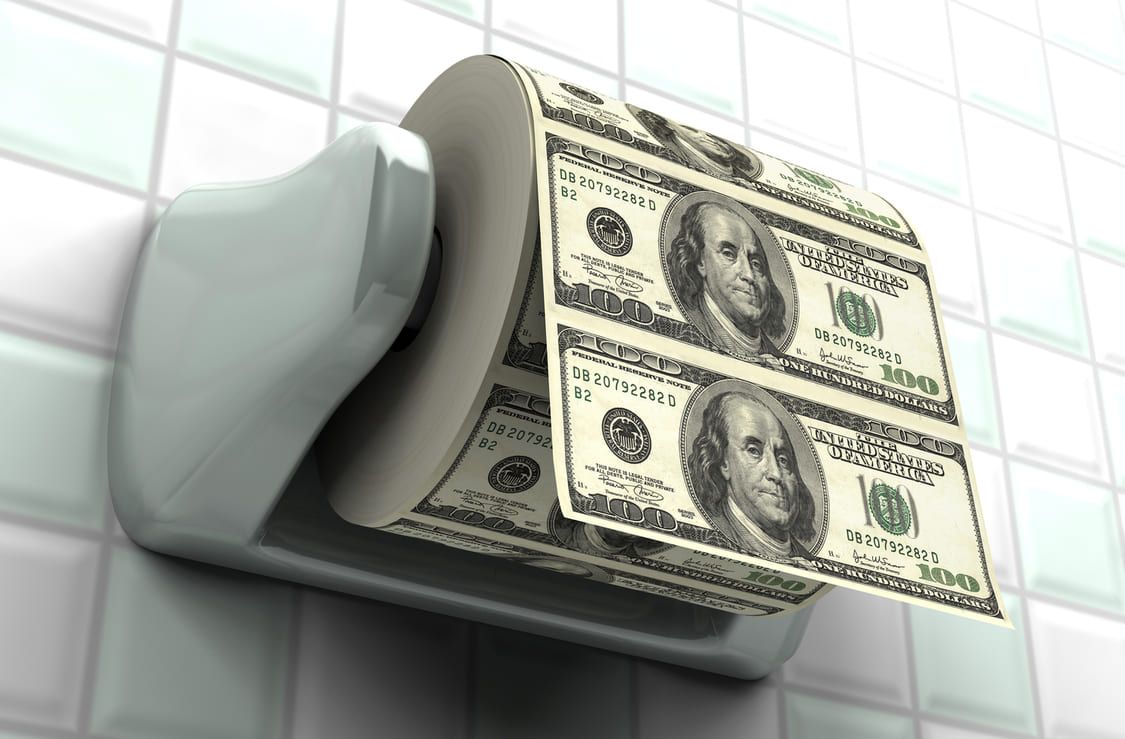
NEW YORK, Feb 20 (Reuters) - The dollar dropped on Friday and was on track to snap a four-session streak of gains after the U.S. Supreme Court struck down President Donald Trump's sweeping tariffs that he pursued under a law meant for use in national emergencies.
The justices, in a 6-3 ruling authored by conservative Chief Justice John Roberts, upheld a lower court's decision that the Republican president's use of this 1977 law exceeded his authority.
The dollar was initially higher on the day after U.S. economic data showed a higher-than-anticipated inflation reading while economic growth fell well short of expectations.
The Commerce Department said gross domestic product increased at a 1.4% annualized rate last quarter, much lower than the 3% growth pace estimate of economists polled by Reuters. Analysts noted, however, that the number was likely negatively impacted by the government shutdown.
"The majority of this week has been dollar positive, except for right now, and why I'd say the 'sell America' trade got a little ahead of itself," said Erik Bregar, director of FX and precious metals risk management at Silver Gold Bull in Toronto.
"We have to see how Trump responds, how Bessent responds, how the administration responds. We've heard all this talk that they have other ways of instituting these tariffs."
Separately, the personal consumption expenditures price index, excluding the volatile food and energy components, rose 0.4%, the Commerce Department said, after an unrevised 0.2% gain in November and above the 0.3% estimate. It rose 3% in the 12 months through December after a 2.8% climb in November.
The dollar index =USD, which measures the greenback against a basket of currencies including the yen and the euro, fell 0.22% to 97.68, with the euro EUR= up 0.19% at $1.1794. The greenback was on pace for its biggest daily drop since February 9 but is up about 0.8% on the week, on track for its biggest weekly gain since November.
A business survey showed euro zone activity accelerated faster than forecast this month as manufacturing swung back to growth for the first time since October, though the dominant services sector marginally underperformed expectations.
Friday's data and the tariff ruling dented market expectations the Federal Reserve could cut rates in the near term. Expectations for a cut of at least 25 basis points at the central bank's June meeting - the first pricing in more than a 50% chance of a cut - dipped to 53.6% from 58.6% a day earlier, according to CME's FedWatch Tool.
Investors have been buying the dollar this week in part due to rising tensions between the U.S. and Iran. Trump said on Friday he was considering a limited military strike on Iran but gave no other details while Iran's foreign minister said he expected to have a draft counterproposal ready within days following nuclear talks this week.
Sterling GBP= strengthened 0.33% to $1.3504. British retail sales volumes rose in January at the fastest annual pace in nearly four years, according to official data, while a survey showed British businesses have extended their early 2026 rebound into a second month.
Against the Japanese yen JPY=, the dollar weakened 0.07% to 154.87. Japanese data showed the country's annual core consumer inflation hit 2.0% in January, the slowest pace in two years.
Related Articles
Will Bank of England Still Cut Rates in 2026? Falling Inflation Favors Loose Monetary Policy, Pound Exchange Rate May Struggle to Sustain Strength.
TradingKey - The outlook for the British Pound in 2026 is undoubtedly one of the most significant focal points for investors in the FX market. Following a structural shift in 2025 characterized by a "low start and high finish," GBP/USD successfully broke out of its two-year trading range and stabilized near 1.35 at year-end, laying the foundation for its performance in 2026.
Why the Yen Falls Further the More It Is Rescued: The Answer Lies in Japan’s Own Structural Contradictions
TradingKey - Entering early 2026, the attention of global investors is once again locked on the Japanese Yen (JPY). Despite the Bank of Japan (BoJ) gradually raising policy rates to a range of 0.5% - 0.75%, marking a definitive end to the era of negative interest rates, the yen continues to trend lower against the U.S. dollar.
What Is the Best Nuclear Energy Investment in 2026? Which Should You Buy in, OKLO or Nuclear Energy ETFs?
TradingKey - Demand for electricity is surging, and data centers designed for artificial intelligence are a big reason. Governments are also demanding cleaner, dependable power. This coupling has brought about a revival in nuclear power, with capacity expected to increase in the coming decades. To i
Stock Market Crash 2026: What Fed Signals and Economic Data Mean for Investors
TradingKey - The possibility of a stock market crash occurring in 2026 is becoming increasingly likely as investor sentiment continues to decline.
New Fed Chair Warsh Takes Office: Major Shift in Monetary Policy? US Dollar Short-Term Rebound, 2026 Investment Strategy Analysis
TradingKey - At the start of 2026, global financial markets witnessed a major leadership change as U.S. President Trump officially nominated Kevin Warsh as the next Federal Reserve Chair. Pending Senate confirmation, he will succeed Jerome Powell this May to lead the world’s most influential central bank.