Ripple Price Forecast: XRP recovery stalls below $2.00 despite steady ETF inflows

- XRP pulls back from Monday’s high of $1.95, weighed down by a weak technical structure.
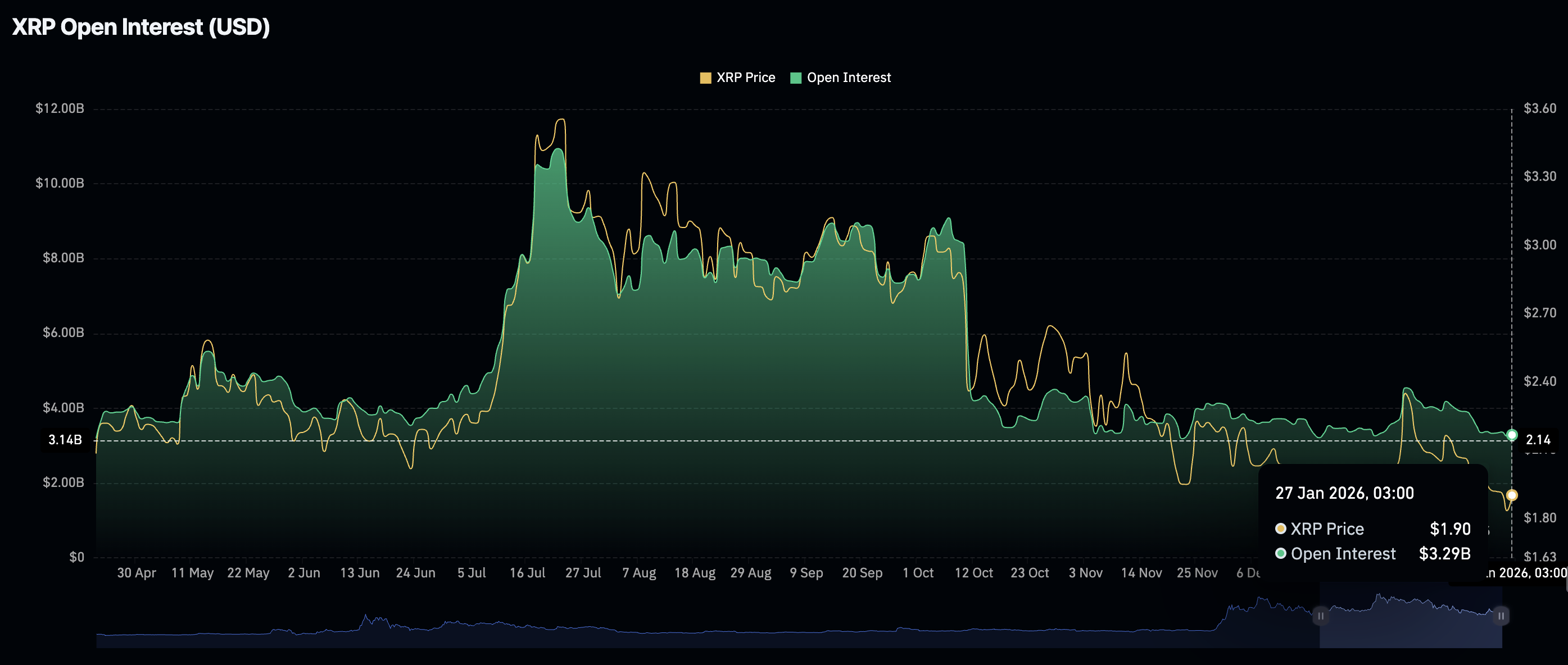
- XRP faces low retail demand, with futures Open Interest near yearly lows around $3.29 billion.
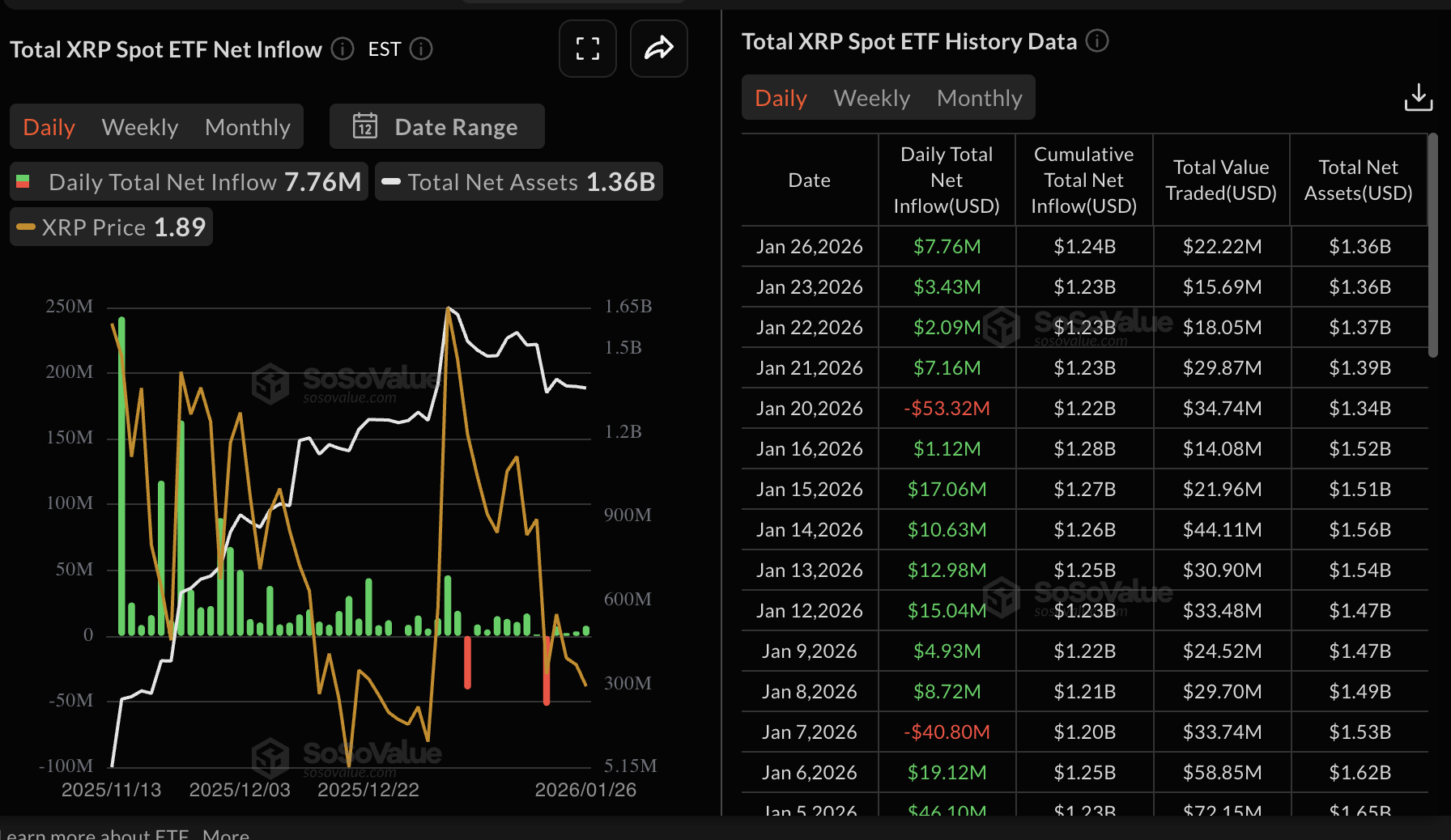
- ETF interest more than doubled on Monday, as total inflows surged to nearly $8 million from Friday’s $3.43 million.
Ripple (XRP) is trading around $1.88 at the time of writing on Tuesday, correcting from the previous day’s high of $1.95. The cross-border remittance token remains under immense pressure amid a weak technical structure.
Despite steady institutional interest, retail demand continues to lag, suggesting a lack of confidence in XRP’s ability to sustain an uptrend.
XRP extends ETF inflows as derivatives momentum fades
Retail interest in XRP has failed to gain traction, aligning with a persistent risk-off sentiment across the crypto market. The futures Open Interest (OI) hovers at $3.29 billion on Tuesday, slightly above the yearly low of $3.26 billion, recorded on Monday.
OI tracks the notional value of outstanding futures contracts. As it declines, it signals a lack of investor conviction in XRP, which weakens price momentum as traders close positions rather than open new ones.
Meanwhile, XRP continues to attract sustained interest from Exchange Traded Funds (ETFs), with a four-day inflow streak. Data by SoSoValue shows that XRP spot ETFs drew nearly $8 million in inflows on Monday.
The cumulative total inflow now stands at $1.24 billion, and net assets at $1.36 billion. Bitwise’s XRP ETF outpaced the rest of the products with an inflow of about $5.3 million.
Technical outlook: XRP trades under persistent pressure
XRP failed to extend its recovery above $2.00 on Monday, stalling at $1.95 before trimming part of the gains as headwinds intensify. The Relative Strength Index (RSI) is at 42 on the daily chart, suggesting bearish momentum is building. A further decline in the RSI toward the oversold region would accelerate the downtrend, with XRP dropping to Sunday's low of $1.81. Below this demand zone, the April low at $1.62 marks the next key support.
The Moving Average Convergence Divergence (MACD) line remains below the signal line on the same chart, confirming XRP’s short-term bearish outlook. Histogram bars expanding below the zero line could encourage investors to close existing positions until a clear recovery path is established.
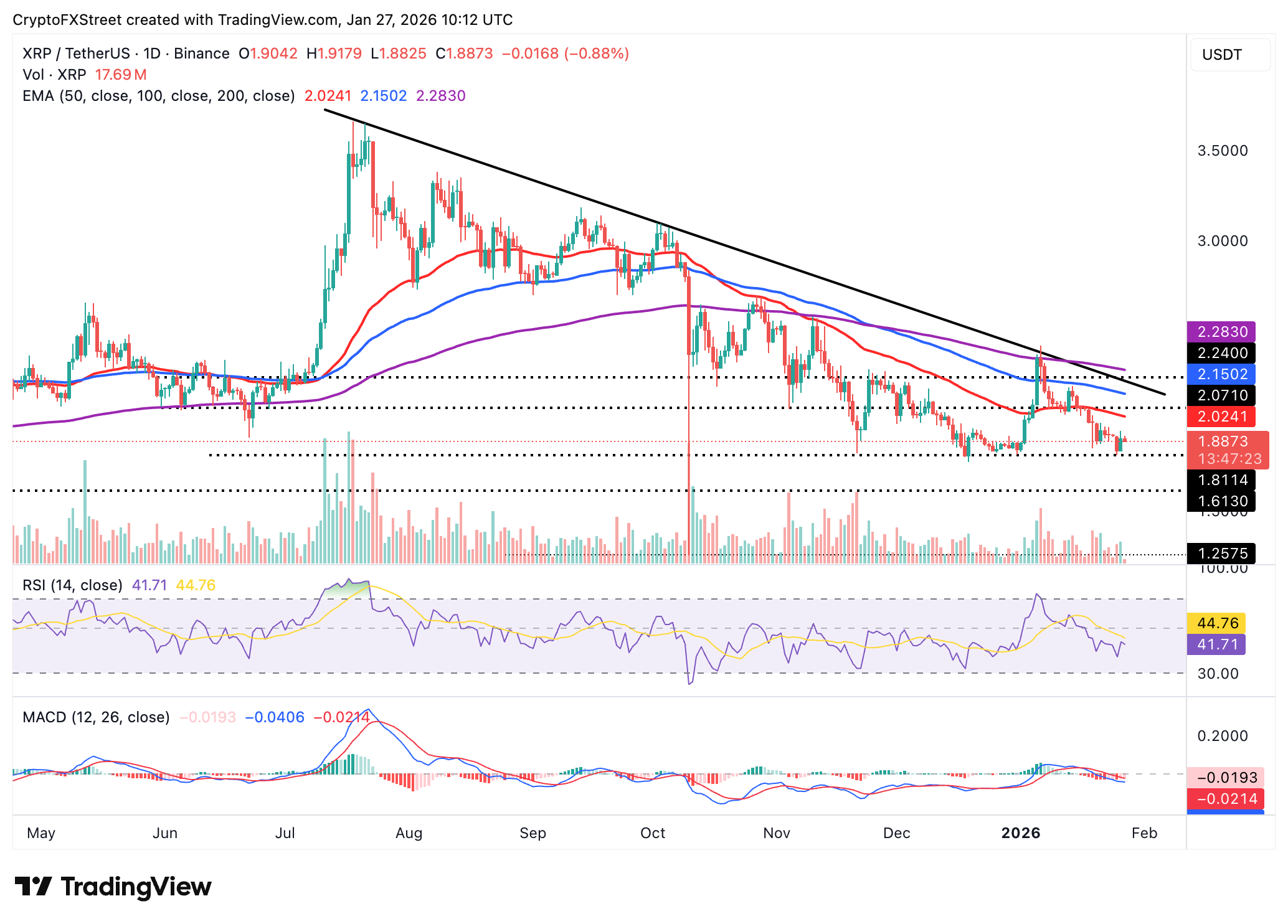
Still, XRP has a chance to steady its recovery with a decisive move above the $1.90 immediate resistance. Despite that, investors should temper their expectations until XRP rises above the supply cluster between the 50-day EMA at $2.02 and the 200-day EMA at $2.38.
Crypto ETF FAQs
An Exchange-Traded Fund (ETF) is an investment vehicle or an index that tracks the price of an underlying asset. ETFs can not only track a single asset, but a group of assets and sectors. For example, a Bitcoin ETF tracks Bitcoin’s price. ETF is a tool used by investors to gain exposure to a certain asset.
Yes. The first Bitcoin futures ETF in the US was approved by the US Securities & Exchange Commission in October 2021. A total of seven Bitcoin futures ETFs have been approved, with more than 20 still waiting for the regulator’s permission. The SEC says that the cryptocurrency industry is new and subject to manipulation, which is why it has been delaying crypto-related futures ETFs for the last few years.
Yes. The SEC approved in January 2024 the listing and trading of several Bitcoin spot Exchange-Traded Funds, opening the door to institutional capital and mainstream investors to trade the main crypto currency. The decision was hailed by the industry as a game changer.
The main advantage of crypto ETFs is the possibility of gaining exposure to a cryptocurrency without ownership, reducing the risk and cost of holding the asset. Other pros are a lower learning curve and higher security for investors since ETFs take charge of securing the underlying asset holdings. As for the main drawbacks, the main one is that as an investor you can’t have direct ownership of the asset, or, as they say in crypto, “not your keys, not your coins.” Other disadvantages are higher costs associated with holding crypto since ETFs charge fees for active management. Finally, even though investing in ETFs reduces the risk of holding an asset, price swings in the underlying cryptocurrency are likely to be reflected in the investment vehicle too.