Oregon contract shows law firms' stake in Coinbase securities fight



By David Thomas, Mike Scarcella and Sara Merken
June 12 (Reuters) - (Billable Hours is Reuters' weekly report on lawyers and money. Please send tips or suggestions to D.Thomas@thomsonreuters.com)
Law firms Cohen Milstein and Keller Rohrback stand to receive up to a quarter of any settlement or judgment resulting from a lawsuit Oregon brought against cryptocurrency exchange Coinbase, according to their contract with the state.
Oregon hired the class action firms and sued Coinbase in April, alleging that the crypto exchange has been profiting off the sale of high-risk and unregistered securities to its residents in violation of state law.
The state is seeking a fine of $20,000 per violation of its securities law, as well as an unspecified amount of damages and the disgorgement of Coinbase's profits from Oregon residents.
Coinbase has denied wrongdoing, saying the lawsuit "threatens to mire a multi-trillion-dollar industry in a patchwork, state-by-state regulatory framework."
Ryan VanGrack, vice president of legal at Coinbase, said in an interview that Oregon Attorney General Dan Rayfield wants to create "a moat around Oregon that's only going to benefit the law firms that support him."
Lawyers at Keller Rohrback and Cohen Milstein did not immediately respond to requests for comment. A spokesperson for Rayfield's office did not respond to a request for comment regarding Coinbase's criticisms.
It is not uncommon for states to bring in private law firms for complex litigation, with payment often contingent on a successful outcome.
According to a copy of the Oregon contract Reuters obtained through a records request, Seattle-founded Keller Rohrback and Washington, D.C.-founded Cohen Milstein would receive any attorney fees paid by Coinbase in a settlement or court order, or a percentage of the state's recovery, whichever is greater.
The firms would receive 15% of the recovery if Oregon and Coinbase settle the litigation before the crypto exchange files a motion to dismiss. At most, they can receive 25% of the recovery if the case is resolved any time after a jury has been impaneled.
The contract does not say how the two firms will divide their potential fee award. A spokesperson for Rayfield's office said such details are up to the firms.
Oregon's lawsuit against Coinbase was filed two months after the U.S. Securities and Exchange Commission under Republican President Donald Trump dropped a similar lawsuit against the cryptocurrency exchange. The SEC had accused Coinbase of arranging trading in at least 13 unregistered tokens.
--Debevoise & Plimpton has created a category of non-equity partners for the first time, becoming the latest major U.S. law firm to abandon the traditional single-tier structure in which all partners have an ownership stake in the firm.
The New York-founded firm confirmed the change to Reuters this week, without providing additional details. Debevoise, which has more than 900 lawyers, also voted to keep a “lockstep” compensation system, the firm confirmed.
Rivals such as Cleary Gottlieb, Paul Weiss and WilmerHale added non-equity or income partner tiers last year, leaving a small number of major U.S. firms with single-tier partnerships. A few of those firms, including Skadden Arps and Ropes & Gray, are reportedly considering changes.
Many U.S. law firms internally designate some partners as non-equity or income partners. The move can help retain and attract lawyers with the clout and higher compensation associated with the partner title while potentially increasing profits for equity partners.
Non-equity partners may be promoted from a firm's associate ranks or hired externally, and they typically earn less than full equity partners, whose compensation is tied directly to firm profits.
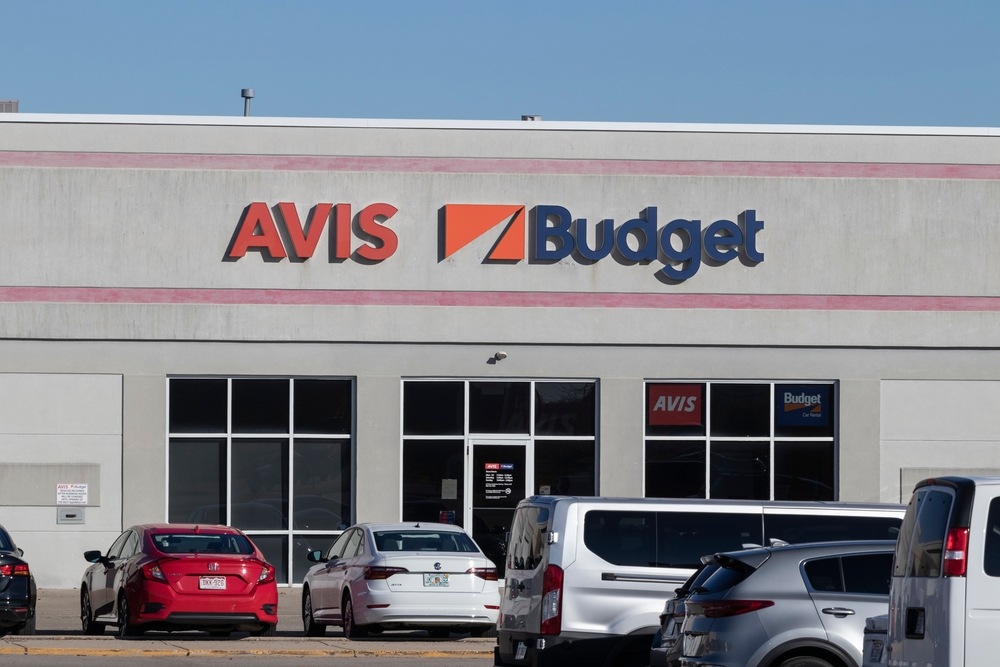
--Two companies that provide car rental services are objecting to a request from law firms Cotchett Pitre, Robins Kaplan and Susman Godfrey for an additional $94 million in legal fees for their work on automotive antitrust settlements valued at more than $1.22 billion.
The new fee request covers legal work since 2019 on the case, which accused auto parts makers of conspiring to fix prices on a large number of products. The requested amount would push the firms' total awards to $363 million.
The objectors, represented by the Hamilton Lincoln Law Institute's Center for Class Action Fairness, said the plaintiffs' new request improperly seeks fees from prior rounds of the litigation. The challengers said earlier fee awards should not be considered "partial." Lead attorneys for the class did not immediately respond to a request for comment.
--Billionaire Elon Musk failed to block a plaintiffs' law firm from hiring a former U.S. Securities and Exchange Commission lawyer who oversaw the agency's lawsuit targeting Musk's 2022 investment disclosure in Twitter.
U.S. Magistrate Judge Gabriel Gorenstein last week approved New York-based Bernstein Litowitz Berger & Grossmann's proposal to complete its hire of Jorge Tenreiro but wall him off completely from the firm's lawsuit against Musk on behalf of an Oklahoma firefighters pension fund.
In addition to being prohibited from working on the case, Tenreiro would not receive any fee the firm earns, Bernstein Litowitz said in its proposal.
Bernstein Litowitz did not immediately respond to a request for comment, nor did Musk's lawyers at Quinn Emanuel Urquhart & Sullivan.
Read more:
Madison Square Garden wants sanctions, lawyers' fees in ex-NBA player's case
Wegovy maker Novo faces fee demand after losing copycat drug lawsuit
US agencies face fees over faulty cases, Ford seeks $300 million from lemon law lawyers
Recommended Articles