Crypto Today: BTC nears $90K as Trump’s White House Summit lifts XRP, ADA and SOL

- Cryptocurrency markets dipped $17.4 billion to hit $2.87 trillion on Friday, as losses shrank to their lowest this week.
- XRP price reclaimed the $2.50 level after reports confirmed Ripple CEO Brad Garlinghouse’s attendance at the White House Summit.
- Bitcoin price rose as high as $91,200 after Trump announced a new strategic Bitcoin reserve policy.
- Derivative markets sentiment leans bearish, with $382 million long positions liquidated accounting for 73% of total losses on the day.
Bitcoin market updates:
Bitcoin price is experiencing volatile price action on Friday, bouncing within a 10% range from lows of $84,600 to $91,280 on the daily candle. United States (US) President Donald Trump's announcement of a bitcoin strategic reserve failed to lift the market following the caveat that the reserve will be funded by BTC seized in legal settlements and forfeitures.
- Bitcoin ETFs flooded another $134 million in total outflows on Thursday, contributing to BTC price struggling to breach the $92,000 resistance.
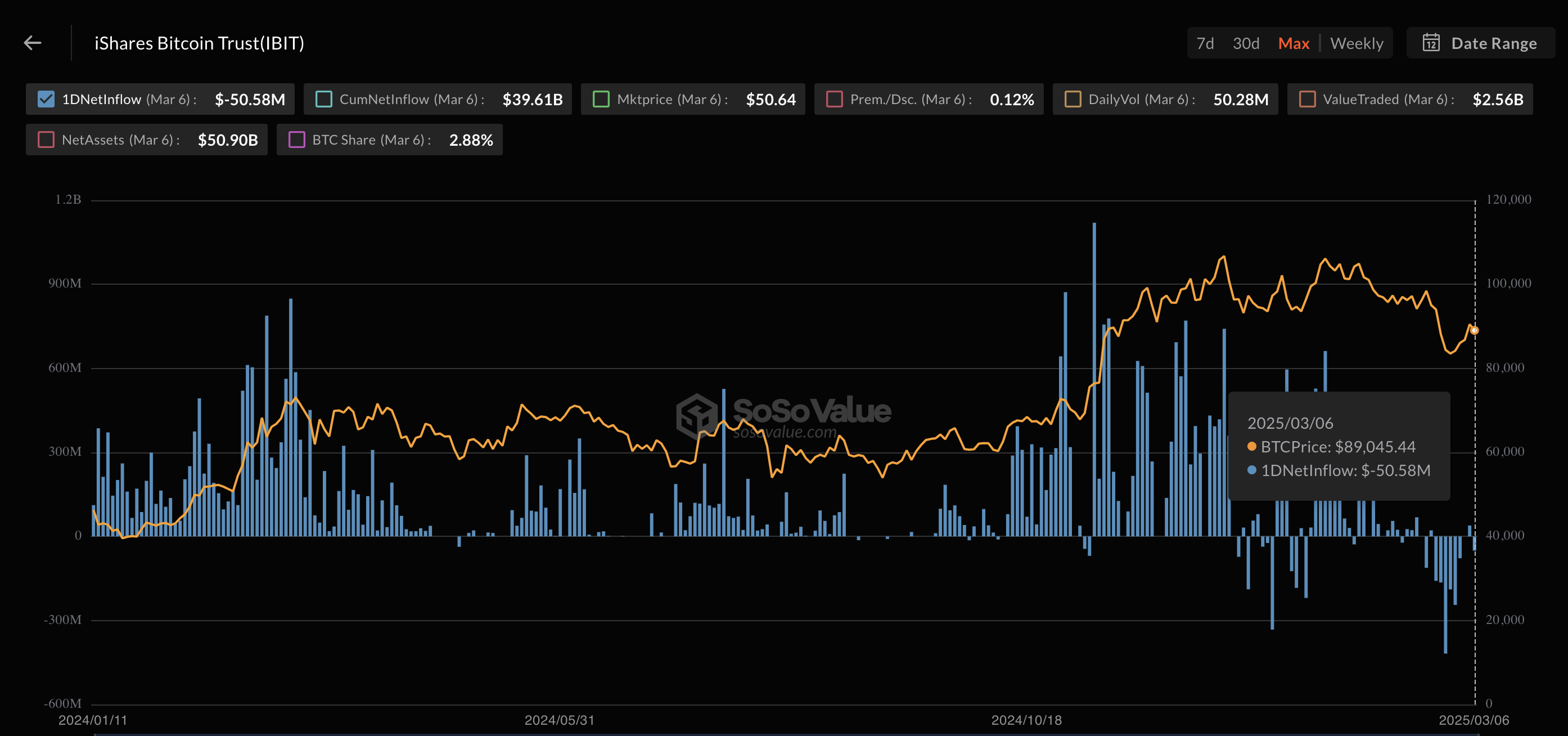
Blackrock (IBIT) BTC ETF Flows, March 7 | Source: Sosovalue
Blackrock’s IBIT ETF swung back into sell-off mode with $50 million outflows on Thursday. After the $38 million inflows on Tuesday had halted a seven-day selling frenzy.
Altcoin market updates: XRP, Cardano and Solana hold key support levels amid White House Summit
The crypto market declined by 4.8%, reflecting $150 billion outflows on Friday. The latest sell-off was largely driven by the negative reaction to hawkish readings in the US Nonarm Payrolls reports published on the day.
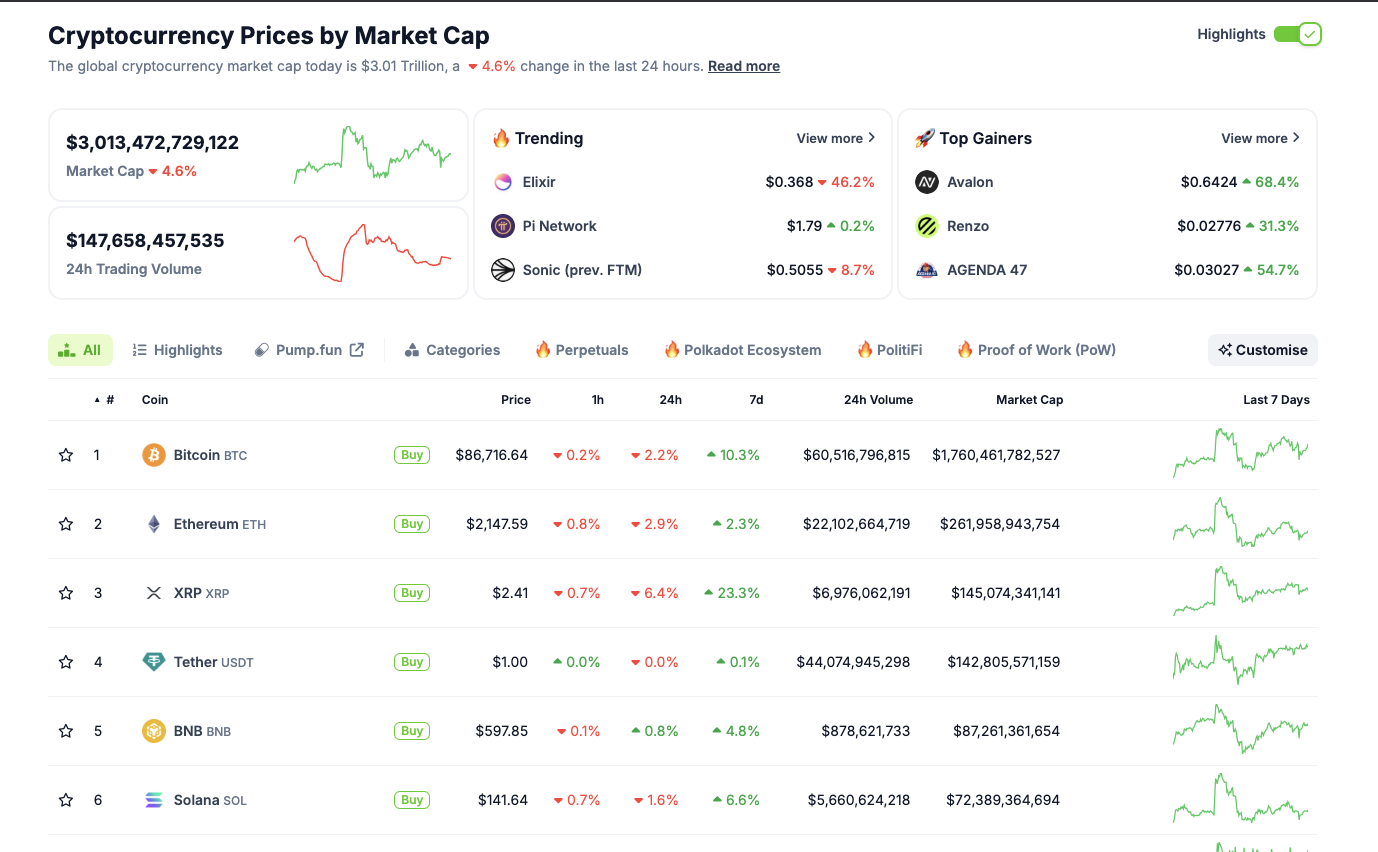
Crypto market performance | March 5 | Coingecko
Rather than a full-blow exit from the markets, the performance overview shows that investors are reluctant to exit top altcoins like Cardano, Ripple (XRP) and Solana (SOL) as prices approach key support levels.
The White House Crypto Summit is expected to be centered around improved regulatory clarity for the cryptocurrency sector; many anticipate major gains for tokens within the crypto strategic reserve bucket.
- Ethereum price tumbled as low as $2,100 following the US NFP data before bulls made frantic efforts to retake $2,140 at press time.
- Ripple (XRP) price continues to hold above the $2.40 mark amid optimism surrounding Ripple’s CEO appearance at the White House Crypto Summit.
- Cardano (ADA) price also clawed back significant losses in the last 24 hours, trading above the $0.80 mark at the time of writing.
- Solana (SOL) price is also consolidating above the $142 mark as traders take on a sit-and-watch approach in anticipation of fresh policy updates from the Trump administration's meeting with top crypto industry stakeholders.
Chart of the day: Trump’s latest policies unsettled Bitcoin long-term holders
Bitcoin long-term holders appear rattled amid conflicting market signals from President Donald Trump’s recent policy updates.
On Thursday, Trump’s crypto czar David Sack confirmed an executive order mandating that expropriated BTC be added to the national strategic reserve.
Despite this positive policy announcement, Bitcoin price dipped 5%, falling below $85,000 on Friday, as concerns over hawkish readings in the US Nonarm Payrolls (NFP) report amid inflationary risks stemming from recent trade tariffs.
The market reaction suggests that macroeconomic uncertainty is outweighing optimism around Trump’s pro-crypto agenda.
Validating this stance, Bitcoin’s recent downturn coincides with significant selling pressure from long-term investors.
Santiment’s Age Consumed metric, which measures the total number of coins moved multiplied by their dormancy period, has recorded persistent spikes since Trump confirmed tariffs on February 25.
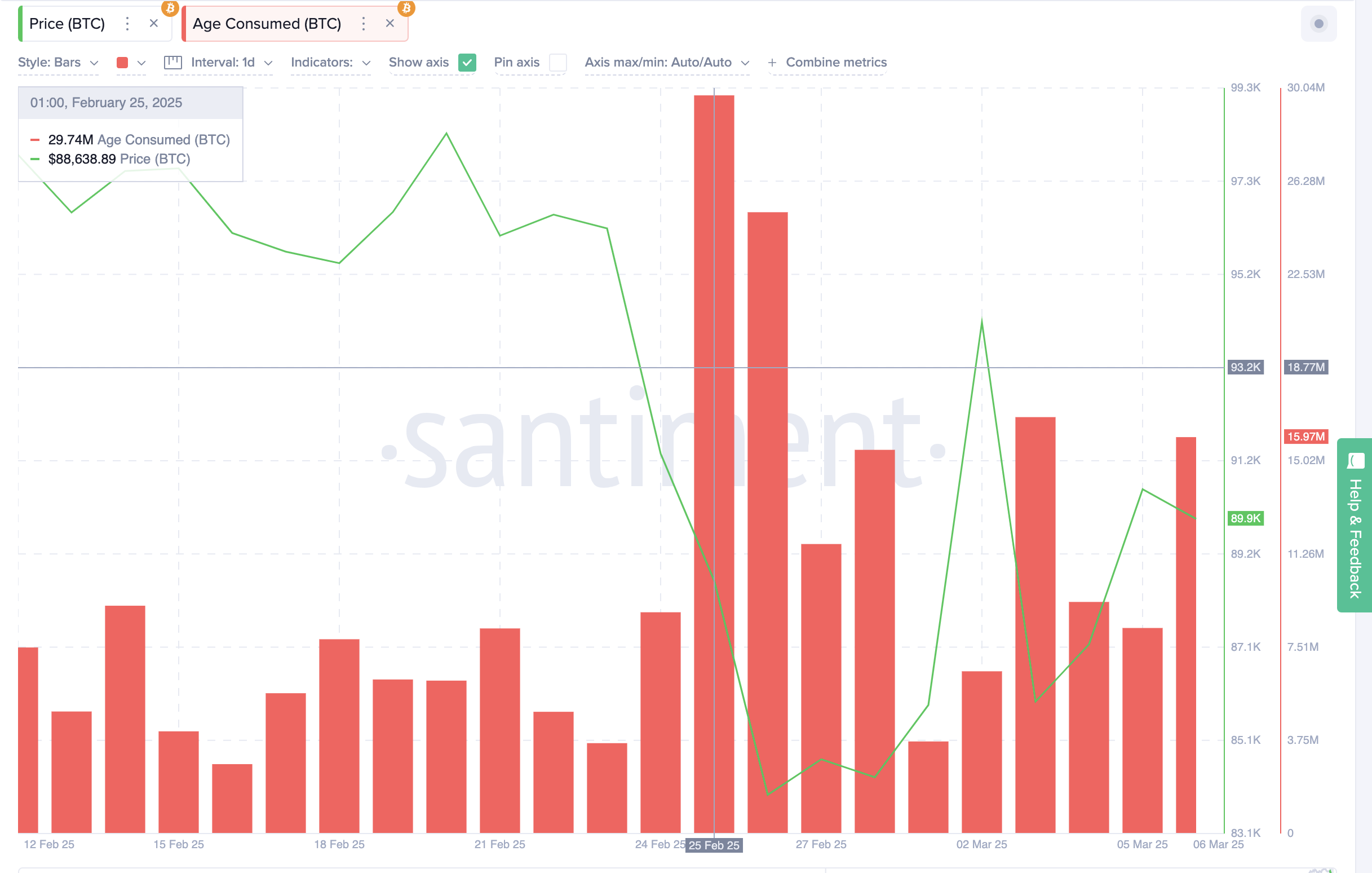
Bitcoin Age Consumed vs. BTC Price | Source: Santiment
As seen in the chart above, the Bitcoin Age Consumed surged to 29.4 million when the tariffs were first announced and has remained elevated.
On Friday, as the US Bureau of Labor Statistics released the latest NFP report, Age Consumed spiked again to 15.9 billion, marking a 450% increase from the 2.8 million recorded on February 6.
When long-held BTC floods the market, it increases short-term supply and heightens downside risk.
This explains why Bitcoin has struggled to reclaim $92,000, despite Trump’s strategic reserve announcement boosting long-term sentiment.
Going by the current market dynamics, until macroeconomic fears subside, BTC traders may continue to prioritize booking short-term gains at intervals, over holding for prolonged runs.
Crypto news updates:
-
Senator Elizabeth Warren demands public disclosures from David Sacks amid crypto policy development
Senator Elizabeth Warren has urged David Sacks, President Trump’s newly appointed crypto policy chief, to publicly disclose his financial filings to address potential conflicts of interest.
Warren’s request follows Trump’s executive order to establish a US Strategic Bitcoin Reserve and introduce new crypto regulations, raising concerns about potential market manipulation and regulatory leniency.
Sacks denied holding significant indirect crypto assets and stated that he had liquidated all his cryptocurrency investments before assuming office.
He emphasized his commitment to transparency, adding that his financial disclosures are currently under official ethics review.
Warren’s demand signals increasing scrutiny over the administration’s crypto policies as regulatory oversight debates continue in Washington.
-
Nasdaq plans to launch 24-hour stock trading in 2026
Nasdaq has announced plans to introduce 24-hour trading on its equities exchange by the second half of 2026, pending regulatory approval.
The initiative aims to meet increasing global demand for US stocks and align with similar efforts by exchanges such as Cboe and the New York Stock Exchange.
If approved, Nasdaq’s move would mark a significant shift in market structure, allowing investors to trade continuously across different time zones.
While the proposal has raised concerns over potential volatility and higher transaction costs, Nasdaq has stated that it will work closely with industry participants to mitigate risks. The exchange plans to implement measures to ensure liquidity and maintain investor confidence in extended trading hours.
The shift follows a broader trend toward round-the-clock access in financial markets, reflecting changing investor behavior and advancements in trading technology.
Coinbase executive says Trump’s Bitcoin reserve could ease $18 billion in sell pressure
In a recent post on X, Coinbase executive Conor Grogan stated that President Donald Trump’s newly signed executive order to establish a Strategic Bitcoin Reserve could reduce approximately $18 billion in potential market sell pressure.
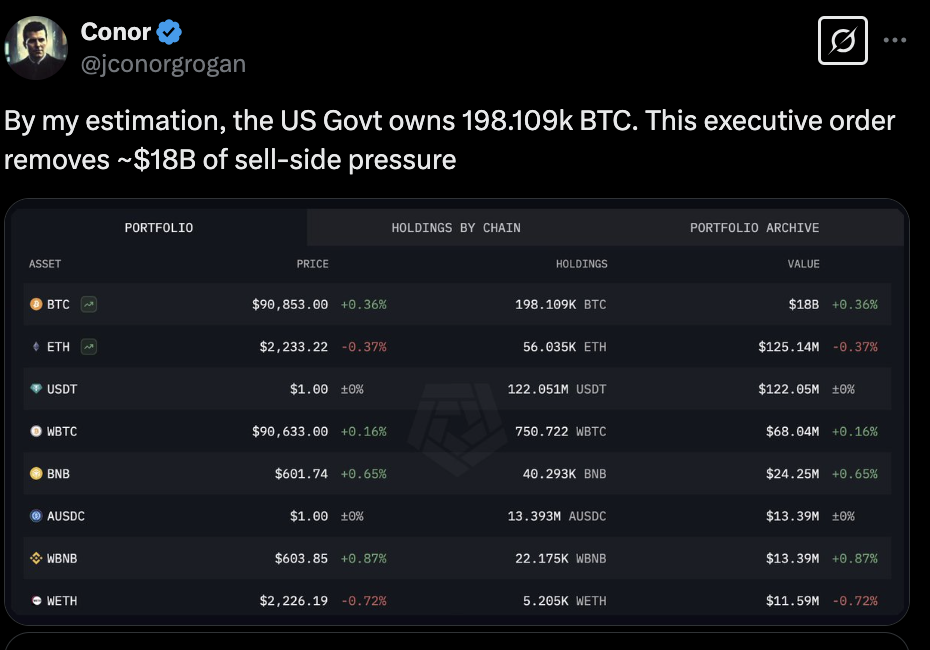
Coinbase Exec Conor Grogan on market impact of Trump's Bitcoin strategic resever | Source: X.com
The initiative aims to retain Bitcoin previously seized by the US government, preventing it from being liquidated in public auctions.
Related Articles
Amazon Stock Predictions for 2026 to 2030: Will They Exceed Expectations and Achieve Major Long-Term Goals?
TradingKey - As we head into 2026, many investors are questioning where Amazon (AMZN) fits into the technology world.
A Crash After a Surge: Why Silver Lost 40% in a Week?
TradingKey - Spot silver (XAGUSD) prices continue to decline. Silver plunged 20% on Thursday, breaking below $71 per ounce, with the sell-off intensifying on Friday as prices fell further below $64. Compared to the all-time high set on January 29, silver prices have retraced more than 40%, wiping out nearly all gains accumulated over the previous month.
Is Bitcoin’s Four-Year Cycle Dead in 2026?
Is the Bitcoin 4-year cycle dead? After 2025 broke historical records with a red post-halving year, institutional analysts explore if the Bitcoin price has decoupled from the halving countdown. Analyze the impact of spot ETFs, global liquidity, and the roadmap to the 2028 halving in this 2026 market
USD Dollar Trend Forecast: Dollar Index Falls Below 97.0 to 4-Year Low, Will the Dollar Continue To Fall or Bottom Out in 2026?
TradingKey - In January 2026, the US Dollar Index continued its downward trend from 2025, officially breaking below the key 97.0 level and reaching a low of 95.5, marking a nearly four-year low since February 2022.