


Asia faces crisis from Mideast disruption, Singapore foreign minister warns



By Mark Bendeich, Xinghui Kok and Josh Smith
SINGAPORE, March 23 (Reuters) - The war against Iran threatens to send Asian economies into crisis, Singapore’s foreign minister said on Monday, a stark warning in a region that is acutely exposed to the massive disruption of Middle East energy supplies.
"Right now the closure of the Strait of Hormuz is, in a sense, an Asian crisis," Vivian Balakrishnan told Reuters.
In remarks made over an hour-long interview, he also raised questions about the necessity and legality of the U.S.-Israeli war on Iran that is now entering its fourth week, saying the "entire global economy has been taken hostage" by a conflict that could usher in a financial crisis.
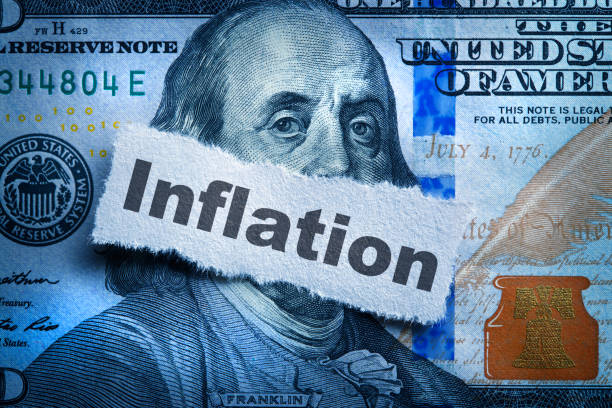
The war has shut down the Strait of Hormuz through which 20% of the world's oil and liquefied natural gas flow, pushing up oil prices and raising fears of a renewed spike in global inflation, with no clear end in sight.
While the United States has become a net oil exporter, industry-heavy economies in Asia are far more reliant on crude oil from the Middle East, Balakrishnan said.
MOST VULNERABLE TO HORMUZ DISRUPTION
Asia, the top oil importing region, sources nearly 60% of its crude and petrochemical naphtha feedstock from the Middle East. That exposure has led countries including China to halt refined fuel exports, while numerous petrochemicals plants and refineries in the region have scaled back operations or declared force majeure.
Reuters reporting shows around 80% of oil shipped through the Strait of Hormuz heads to Asian buyers.
"The vulnerability has been known, but it's never been tested to the extreme that it is being tested today," Balakrishnan said.
He warned that much would be determined by whether U.S. President Donald Trump followed through on his warning to destroy Iranian power plants if the Strait of Hormuz was not open to all shipping by around 2345 GMT on Monday. In turn, Iran said it could attack Israel's power plants and plants supplying U.S. bases in the Gulf.
"If indeed you get tit-for-tat destruction of energy infrastructure, then you're dealing not only with an immediate blockage of the straits, but scarring of energy infrastructure from the Middle East which means a prolonged period in which energy exports will be diminished," Balakrishnan said, cautioning that would mean higher oil and gas prices, as well as greater inflation across the board.
Balakrishnan said it is too early to tell if the situation will deteriorate to the levels of the 1997-1998 Asian financial crisis, which sent many countries in the region into recession and spread to the global economy. But Singapore is dusting off contingency plans to not only weather the storm but look for opportunities as well, he said.
Planning scenarios are framed around the next 18 hours, three months, and then the next three years but Singapore aims to play to its strengths by relying on fiscal conservatism, international cooperation, and adapting to changes in global supply chains, he said.
"In the state of the world now, some stability, some predictability, some safety, will be a welcome bright spot in an otherwise difficult, volatile world," Balakrishnan said.
Countries in Asia need to accelerate the push for renewable energy, boost power grids, update digital infrastructure, and retrain the labour force, while also keeping government coffers balanced and preventing runs on their economies or currencies, he said.
SURPRISED BY OUTBREAK OF WAR
Balakrishnan said he was disappointed that talks broke down between the United States and Iran.
"I will confess that I was surprised with the onset of hostilities. I didn't think it was necessary. I don't think it's helpful, and even now, there are even doubts expressed about the legality of the situation."
Singapore is a longtime U.S. investment and security partner, including extensive military training, logistics support, and intelligence sharing.
It also trades heavily with China, and Balakrishnan said it is not in Singapore's interest to be forced to choose sides.
"From time to time, Singapore will have to say no to the United States or to China, but it must be very clear when we say no, it's not done at the behest of the other but done after careful computation of our own long-term national interest," he said.
Recommended Articles








Comments (0)
Click the $ button, enter the symbol, and select to link a stock, ETF, or other ticker.