Trump, Rubio offer conflicting reasons for US entry into Iran war

By Nandita Bose, Steve Holland and Nathan Layne
WASHINGTON, March 3 (Reuters) - President Donald Trump said on Tuesday he ordered U.S. forces to join Israel's attack on Iran because he believed Iran was about to strike first, contradicting the rationale offered a day earlier by his secretary of state for how the war began.
Secretary of State Marco Rubio told reporters on Monday that the U.S. launched the attack because of fears that Iran would retaliate in response to planned Israeli action against Tehran.
"We knew that there was going to be an Israeli action; we knew that that would precipitate an attack against American forces, and we knew that if we didn’t preemptively go after them before they launched those attacks, we would suffer higher casualties," Rubio said.
Trump rejected suggestions that Israel pushed the U.S. into the conflict, as his administration gave varying accounts and faced criticism from some supporters and Democrats who accused him of launching a "war of choice."
"I might have forced their (Israel’s) hand," Trump told reporters in the Oval Office as he met with German Chancellor Friedrich Merz. "We were having negotiations with these lunatics, and it was my opinion that they were going to attack first. If we didn't do it, they were going to attack first. I felt strongly about that."
Iran has said the U.S. assault was unprovoked.
Several prominent conservative commentators ratcheted up their criticism of the Iran attacks, arguing Rubio's comments indicated that Israel, not the Trump administration, was calling the shots.
"So he's flat out telling us that we're in a war with Iran because Israel forced our hand," conservative podcaster Matt Walsh wrote of Rubio to his 4 million followers on X. "This is basically the worst possible thing he could have said."
Megyn Kelly, a conservative podcaster, told her audience that she had doubts about Trump's decision to strike Iran.
"Our government's job is not to look out for Iran or for Israel. It's to look out for us. And this feels very much to me like it is clearly Israel's war," Kelly said in remarks aired prior to Rubio's comments.
The criticism from Trump's right flank comes as his Republican Party is fighting to hold on to control of the U.S. Congress in November midterm elections.
DAMAGE CONTROL
The debate over the run-up to the war has forced the White House into damage control.
Trump on Tuesday took questions from reporters in a public setting for the first time since the U.S.-Israeli air war began three days earlier. He previously discussed the attacks in two videos, one-on-one interviews with select journalists and brief remarks on Monday at the White House.
The president said he believed Iran was on the brink of launching attacks, presenting no evidence to support his view, after U.S. negotiations with Iran last Thursday in Geneva. Iran had described those talks as positive with more planned in the days ahead.
"It's something that had to be done," said Trump, who did not make a detailed case for war against Iran before it began.
Rubio, pressed on Tuesday about his prior comment during a visit to Capitol Hill, told reporters: "The bottom line is this: The president determined we were not going to get hit first. It’s that simple, guys.”
Two senior Trump administration officials held a conference call on Tuesday with reporters to describe events leading up to military operations, in particular the Geneva talks with Iranian officials held by U.S. envoys Steve Witkoff and Jared Kushner and mediated by Oman.
The two officials said Witkoff and Kushner repeatedly pressed Iran to give up uranium enrichment. Instead, Iran presented a plan that would allow the Iranians to enrich uranium at higher percentages at the Tehran Research Reactor in northern Iran, they said.
The U.S. envoys felt the Iranians were engaging in delay tactics, according to the officials.
"They were unwilling to give up the building blocks of what they needed to preserve in order to get to a (nuclear) bomb," one official said.
Iran denies seeking a nuclear weapon.
The envoys reported back to Trump, telling him it might have been possible to get a nuclear agreement similar to the one that former President Barack Obama's team and world powers negotiated with Iran in 2015 but that it would take months.
Trump ordered U.S. forces into action the next day, and the strikes began on Saturday.
Related Articles
Trump’s ‘At All Costs’ Rhetoric Shorts Global Assets? Gold and Silver Not Spared
TradingKey - Amid intensifying geopolitical tensions, investors once bet on risk premiums in precious metals and safe-haven assets. On February 28, 2026, the United States and Israel launched localized air strikes against Iran. The strikes resulted in the death of Iran’s Supreme Leader and triggered multi-directional retaliatory actions across the region. Subsequently, Trump declared that strikes against Iran would be pursued "at all costs."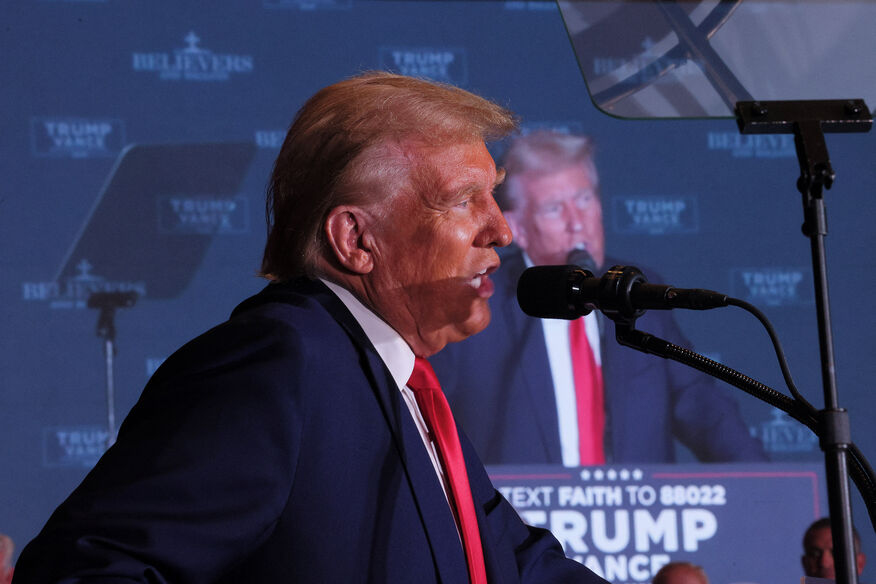
2026 Evolution of Global Payment Industry Landscape: PayPal’s Defensive Transformation and the Rise of AI Agent Settlement Infrastructure
An in-depth analysis of 2026 PayPal M&A rumors and Stripe competitive insights, exploring fundamental transformations in stablecoin settlement within the AI Agent era. Incorporating the latest earnings data from Circle (CRCL) and Block (SQ), this report provides investors with deep value analysis of the U.S. fintech sector and logical deductions for digital clearing frameworks.
JPMorgan Warns Hormuz Blockade Risks Oil Shutdown in 25 Days, But How Will the US-Iran Conflict Shape Global Oil Prices?
TradingKey - Following the announcement on the night of February 28 banning all vessels from passing through the Strait of Hormuz, JPMorgan Chase issued a warning: if the Strait of Hormuz is completely blocked, the combined onshore and offshore storage capacity of Middle Eastern oil-producing nation
US-Iran Conflict Ignites, Global Arms Race Heats Up, Will Defense Stocks See a New Round of Gains?
TradingKey - On February 28 local time, the United States and Israel launched joint large-scale airstrikes against Iran, targeting its nuclear facilities, missile industry, and naval forces. This marks another sharp escalation in the conflict following the US military strikes on Iranian nuclear facilities in June last year. The military operation not only exacerbates already strained geopolitical tensions but has also sent shockwaves through global capital markets, which is expected to further boost defense stocks.
USD Dollar Trend Forecast: Dollar Index Falls Below 97.0 to 4-Year Low, Will the Dollar Continue To Fall or Bottom Out in 2026?
TradingKey - In January 2026, the US Dollar Index continued its downward trend from 2025, officially breaking below the key 97.0 level and reaching a low of 95.5, marking a nearly four-year low since February 2022.