EU pushes barely available green steel as auto emissions fix

By Marie Mannes, Greta Rosen Fondahn and Nick Carey
STOCKHOLM/LONDON, March 3 (Reuters) - Buying expensive steel made with a nascent technology fuelled by green hydrogen that barely exists yet?
That is the prospect facing Europe's automakers, already under pressure from intensifying Chinese competition, under European Union plans aimed at bolstering the bloc's steel industry and still hitting its environmental targets.
In December, the EU shifted to a 90% cut in CO₂ emissions for all new cars from 2035 from an earlier 100% - dropping a full ban on combustion‑engine vehicles, which the industry had opposed due to the slow uptake of electric cars.
EU WANTS TO BOOST EUROPEAN STEEL SECTOR
Under the new proposal, tied to the EU's Industrial Accelerator Act due to be presented on March 4, automakers, which account for a fifth of Europe's steel demand, must compensate the remaining 10% through low‑carbon steel and alternative fuels.
The catch? European "green steel" projects have increasingly been delayed, paused or cancelled, as green hydrogen made with the use of renewable energy is proving expensive and not yet available at scale.
When available, such steel is expected to cost about a third more than the conventional product, according to pure-play green steel hopeful Stegra.
Confronted with such economics, steelmakers including ArcelorMittal MT.LU and Salzgitter SZGG.DE are pivoting to scrap‑based output. Others, most notably Thyssenkrupp TKAG.DE, are renegotiating subsidy terms with Brussels.
Data from the Leadership Group for Industry Transition - an initiative gathering governments and global companies - showed planned annual green steel capacity reaching around 28 million tons by 2050. Reuters calculations, however, show that only a third of that capacity is under construction. Around 18 million tons of planned capacity would be in Europe.
"We don't really have hydrogen available - at least not in the scale needed," ArcelorMittal CFO Genuino Christino told Reuters last month.
Germany's auto lobby has criticised the EU's plan.
"This means that our industry is once again dependent on developments over which it has no influence," VDA president Hildegard Mueller said in December.
Nearly a dozen executives and experts across the automotive and steel industries told Reuters they expected Brussels to introduce policies to create a new market for low-emission steel and encourage demand. Most expect only limited detail in the initial proposal, with key elements delayed.
"There's confusion amongst a lot of people after the Commission's proposal, trying to understand ... what's realistic, what the market would actually look like," said Chris Heron, secretary general of E‑Mobility Europe.
DEFINITION 'WILD WEST'
Another challenge is the absence of an agreed definition of green, or low‑carbon, steel. One steel executive described today’s market as a "wild west". Reuters has found companies use varying terms, metrics and thresholds to market their lower‑emission products.
Switching from coal‑based blast furnaces to hydrogen‑based direct reduced iron (DRI) systems and electric arc furnaces (EAF) involves investments of billions of euros.
Many steelmakers are instead pivoting to a more cautious, step‑by‑step strategy, centred on the electric arc furnaces, which can initially run on scrap before switching to hydrogen-based DRI.
Scrap‑fed EAFs emit far less carbon than blast furnaces, but many industry players say they cannot be the long‑term solution because high‑quality scrap is limited.
Automakers are adjusting, too.
Volvo Car VOLCARb.ST, which had aimed to start using hydrogen‑based steel from 2027 from SSAB SSABa.ST, has agreed to begin using scrap‑based fossil‑free steel, later shifting to hydrogen‑based supply once production is in place.
"We believe that there will be a demand," said Christian Levin, CEO of Traton's 8TRA.DE Scania. "(But) we are not commercially offering it yet and we are not yet buying it because it is not yet available."
The automotive industry is the second largest consumer of steel in Europe 
Planned green steel capacity is below 2% of today's global steel production 
Announcements of new green steel projects declined in 2025 
Related Articles
Trump’s ‘At All Costs’ Rhetoric Shorts Global Assets? Gold and Silver Not Spared
TradingKey - Amid intensifying geopolitical tensions, investors once bet on risk premiums in precious metals and safe-haven assets. On February 28, 2026, the United States and Israel launched localized air strikes against Iran. The strikes resulted in the death of Iran’s Supreme Leader and triggered multi-directional retaliatory actions across the region. Subsequently, Trump declared that strikes against Iran would be pursued "at all costs."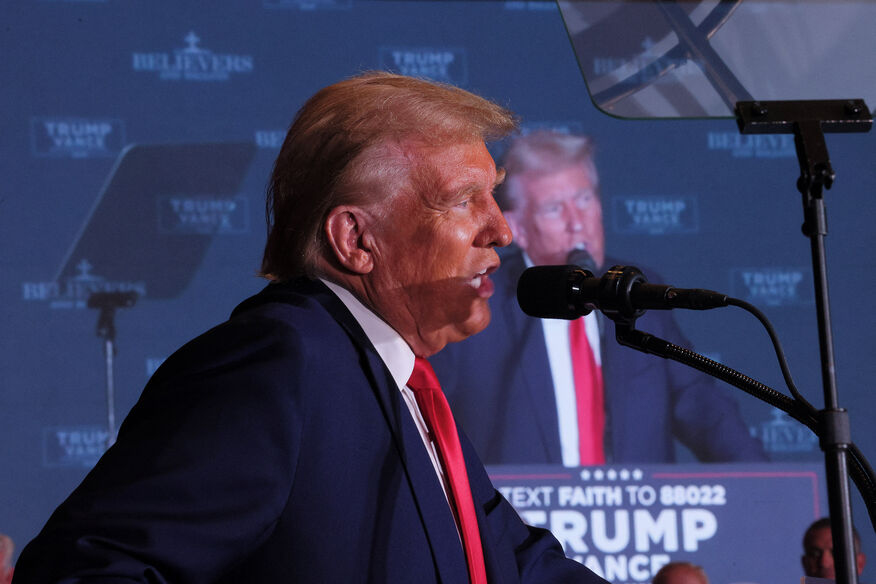
Partnering With Lumentum and Coherent, Can Nvidia’s $4 Billion CPO Bet Support the Future of AI Computing Power?
TradingKey - On Monday, March 2 local time, NVIDIA (NVDA) announced that it has entered into a deep strategic partnership with optical technology manufacturers Lumentum (LITE) and Coherent (COHR). NVIDIA will invest $2 billion in each company, totaling a massive $4 billion investment. This move advances NVIDIA's strategic layout in the field of AI data center network architecture to a new stage.
Bitcoin Stuck in Range Struggle, Can US-Iran Conflict Help a Breakout?
As the US-Iran conflict continues to escalate, Bitcoin prices remain range-bound and are losing their war premium.
JPMorgan Warns Hormuz Blockade Risks Oil Shutdown in 25 Days, But How Will the US-Iran Conflict Shape Global Oil Prices?
TradingKey - Following the announcement on the night of February 28 banning all vessels from passing through the Strait of Hormuz, JPMorgan Chase issued a warning: if the Strait of Hormuz is completely blocked, the combined onshore and offshore storage capacity of Middle Eastern oil-producing nation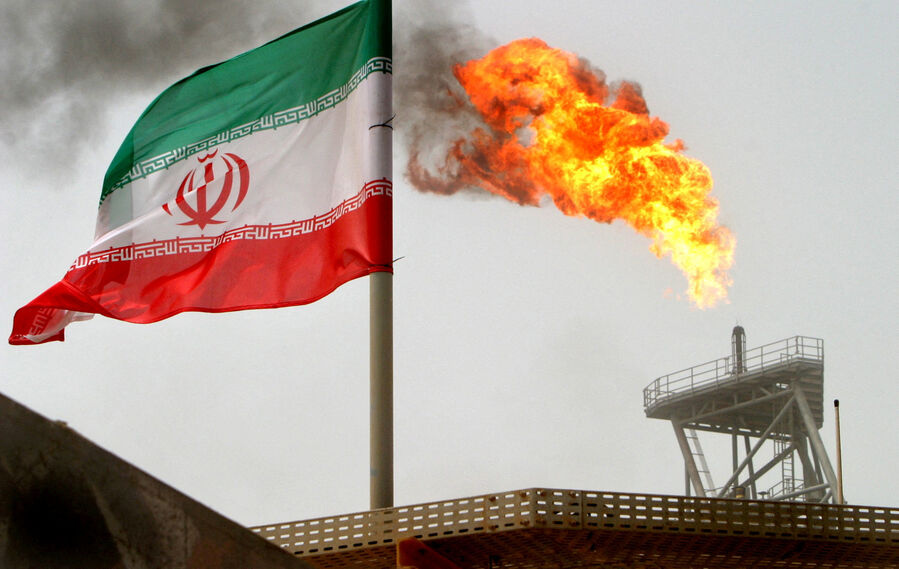
The Hyperliquid Phenomenon: HYPE Ecosystem’s Path to $250
Explore the Hyperliquid (HYPE) 2026 outlook as it evolves from a high-speed DEX into a powerful Layer 1 ecosystem. This analysis breaks down the $2.95 trillion trading volume, the impact of the HIP-4 prediction market launch, and the HYPE token's technical resilience at the $31.77 level amidst globa