Asia, Europe most exposed to LNG impact from Iran conflict, Vortexa says

NEW YORK, March 2 (Reuters) - Liquefied natural gas exports to Asia and Europe stand to be most impacted if the Strait of Hormuz is closed due to the ongoing war in the Middle East, according to analysts from Vortexa, an energy market analytics firm.
A fifth of the world's LNG transits through the Strait of Hormuz, a narrow stretch that lies between Oman and Iran, according to Vortexa. Several tanker owners, oil majors and trading houses have suspended crude oil, fuel and liquefied natural gas shipments via the Strait of Hormuz after the U.S. and Israel attacked Iran and Tehran said it had closed navigation, sources said on Saturday.
"There's no spare capacity in the LNG market, so the disruption could be immediate and immense," Claire Jungman, director of maritime risk and intelligence at Vortexa, said.
Over 90% of Qatar's LNG exports pass through the Strait, putting Asian buyers most at risk: 25% of Asia's total LNG supply and 30% of China's LNG flow through this point, she said
If Qatar (the world's second-largest LNG supplier) is disrupted, Asia bears the brunt since 80% of its cargo goes there. China, India, Taiwan and South Korea are the most exposed, Jungman said
Regional exports are already being hit; Israel has suspended exports to Egypt, Iran's gas flows to Turkey are at risk, and Qatar has halted LNG production
Europe is at risk, with European Union gas storage 35% below its five-year average and the lowest since the 2022 energy crisis, leaving little buffer against a major supply shock, Jungman said
Related Articles
JPMorgan Warns Hormuz Blockade Risks Oil Shutdown in 25 Days, But How Will the US-Iran Conflict Shape Global Oil Prices?
TradingKey - Following the announcement on the night of February 28 banning all vessels from passing through the Strait of Hormuz, JPMorgan Chase issued a warning: if the Strait of Hormuz is completely blocked, the combined onshore and offshore storage capacity of Middle Eastern oil-producing nation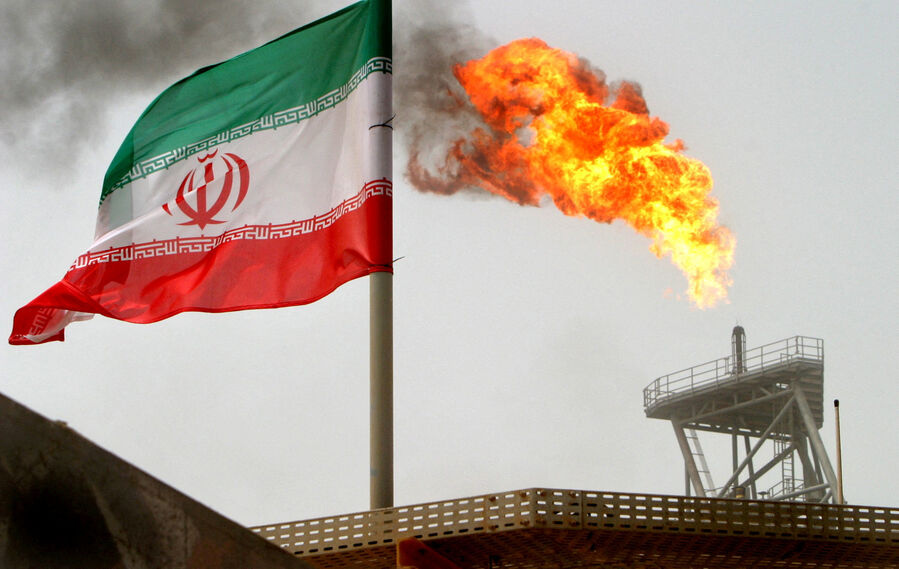
US-Iran Conflict Ignites, Global Arms Race Heats Up, Will Defense Stocks See a New Round of Gains?
TradingKey - On February 28 local time, the United States and Israel launched joint large-scale airstrikes against Iran, targeting its nuclear facilities, missile industry, and naval forces. This marks another sharp escalation in the conflict following the US military strikes on Iranian nuclear facilities in June last year. The military operation not only exacerbates already strained geopolitical tensions but has also sent shockwaves through global capital markets, which is expected to further boost defense stocks.
The Hyperliquid Phenomenon: HYPE Ecosystem’s Path to $250
Explore the Hyperliquid (HYPE) 2026 outlook as it evolves from a high-speed DEX into a powerful Layer 1 ecosystem. This analysis breaks down the $2.95 trillion trading volume, the impact of the HIP-4 prediction market launch, and the HYPE token's technical resilience at the $31.77 level amidst globa
U.S.-Iran Conflict Escalates. Strait of Hormuz Shutdown, How Much Room for Oil Prices to Rise?
TradingKey - A sharp escalation in geopolitical risks has directly triggered intense volatility in global crude oil markets. At the market open this Monday, WTI crude oil futures surged by over 11%, and Brent crude opened up 13%, though these gains subsequently narrowed.
Shiba Inu 2026: L3 Evolution & the Next Bull Run
Discover the Shiba Inu (SHIB) 2026 outlook as it evolves from a meme coin into a sophisticated L3 utility network. This analysis covers the critical $0.00000589 support level, the impact of U.S. government SHIB holdings, and the Shibarium update featuring FHE privacy. Explore the "next Shiba Inu" bu