EUROPE GAS-European gas prices close higher on disruption to LNG shipments

By Susanna Twidale
LONDON, March 2 (Reuters) - Benchmark European wholesale gas prices closed around 35-40% higher on Monday, after major liquefied natural gas (LNG) exporter Qatar Energy said it had halted production due to attacks in the Middle East and cargo standstill via the Strait of Hormuz raised concerns about how long the disruption will last.
Qatar, soon to cement its role as the world’s second largest LNG exporter after the United States, plays a major role in balancing both Asian and European markets' demand of LNG.
A source with knowledge of the matter told Reuters QatarEnergy is set to declare force majeure on shipments of LNG.
"The decision by Qatar to halt LNG production is likely precautionary as gas is a very flammable hydrocarbon. Should a drone strike a facility that is flowing LNG/natural gas, the results would be catastrophic...As for duration, it would be fair to assume that such a force majeure will last for as long as Iran is retaliating and ships are not moving through the Strait of Hormuz," said Scott Shelton, energy analyst at British inter-dealer broker TP ICAP.
The Dutch front-month contract at the TTF hub, seen as a benchmark price for Europe TFMBMc1, was up around 35%, at 43.30 euros per megawatt hour (MWh), (around $15.25/mmBtu), by closing trade, ICE data showed, having surged to almost 50% higher in earlier trade.
Europe has increased imports of LNG over the past few years as it seeks to phase out Russian gas following Russia’s invasion of Ukraine. While it has become increasingly dependent on U.S. LNG shipments, it sourced 6% of its LNG from Qatar in the third quarter of 2025, the latest EU data show.
Around 20% of the world’s LNG transits through the Strait of Hormuz and a prolonged suspension or full closure would increase global competition for other sources of the gas, driving up prices internationally.
Benchmark Asian LNG prices jumped almost 39% on Monday morning with the S&P Global Energy Japan-Korea-Marker (JKM), widely used as an Asian LNG benchmark, at $15.068 per million British thermal units (mmBtu), Platts data showed.
"In a scenario where flows halt for one month, we think it is likely that TTF and JKM could approach 74 euros/MWh ($25/mmBtu)—130% above current levels—a threshold that triggered large natural gas demand responses during the 2022 European energy crisis," said analysts at Goldman Sachs.
A longer disruption lasting more than two months could lift TTF prices to more than 100 euros/MWh, they added.
The British April contract NGLNMJ6 was up 32.15 pence at 110.72 pence per therm, ICE data showed.
Europe is also relying on LNG imports to help fill its gas storage sites which have been depleted over the winter and are currently around 30% full, the latest data from Gas Infrastructure Europe showed.
A European Commission spokesperson told Reuters on Monday that the EU's gas coordination group, which includes representatives from member state governments will meet on Wednesday to assess the impact of the widening conflict in the Middle East.
Related Articles
JPMorgan Warns Hormuz Blockade Risks Oil Shutdown in 25 Days, But How Will the US-Iran Conflict Shape Global Oil Prices?
TradingKey - Following the announcement on the night of February 28 banning all vessels from passing through the Strait of Hormuz, JPMorgan Chase issued a warning: if the Strait of Hormuz is completely blocked, the combined onshore and offshore storage capacity of Middle Eastern oil-producing nation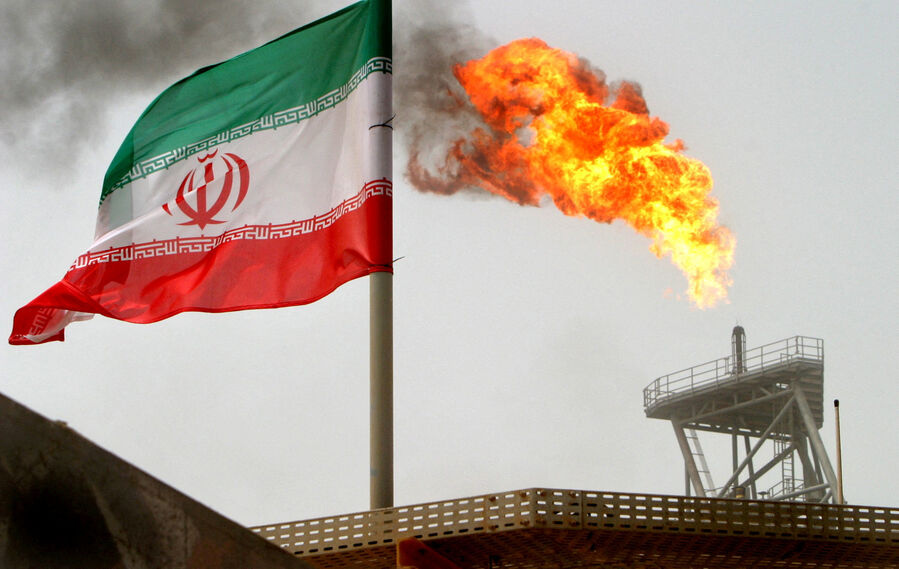
US-Iran Conflict Ignites, Global Arms Race Heats Up, Will Defense Stocks See a New Round of Gains?
TradingKey - On February 28 local time, the United States and Israel launched joint large-scale airstrikes against Iran, targeting its nuclear facilities, missile industry, and naval forces. This marks another sharp escalation in the conflict following the US military strikes on Iranian nuclear facilities in June last year. The military operation not only exacerbates already strained geopolitical tensions but has also sent shockwaves through global capital markets, which is expected to further boost defense stocks.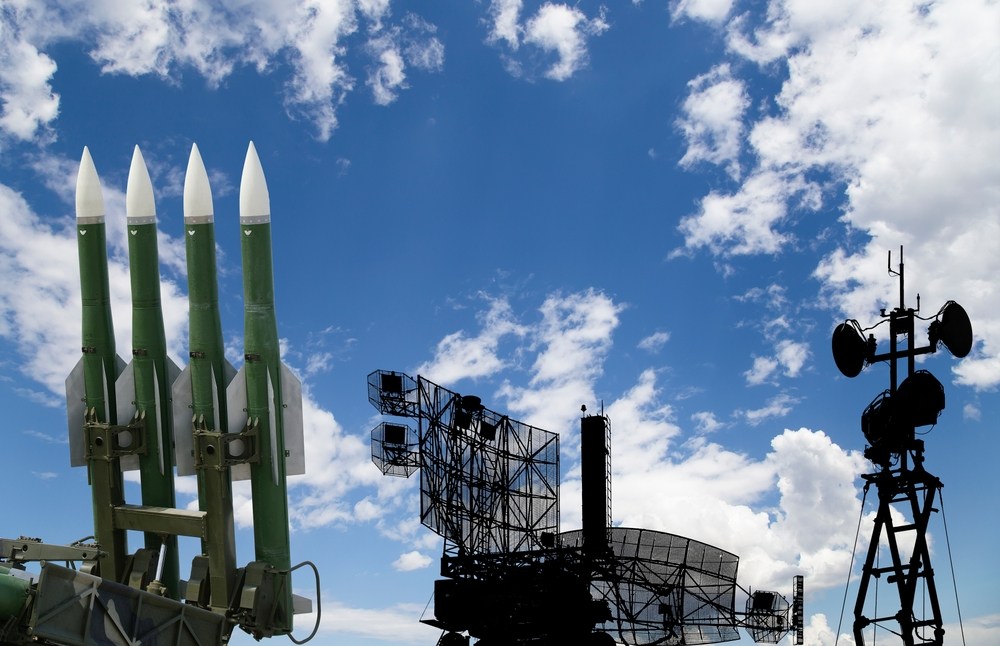
The Hyperliquid Phenomenon: HYPE Ecosystem’s Path to $250
Explore the Hyperliquid (HYPE) 2026 outlook as it evolves from a high-speed DEX into a powerful Layer 1 ecosystem. This analysis breaks down the $2.95 trillion trading volume, the impact of the HIP-4 prediction market launch, and the HYPE token's technical resilience at the $31.77 level amidst globa
U.S.-Iran Conflict Escalates. Strait of Hormuz Shutdown, How Much Room for Oil Prices to Rise?
TradingKey - A sharp escalation in geopolitical risks has directly triggered intense volatility in global crude oil markets. At the market open this Monday, WTI crude oil futures surged by over 11%, and Brent crude opened up 13%, though these gains subsequently narrowed.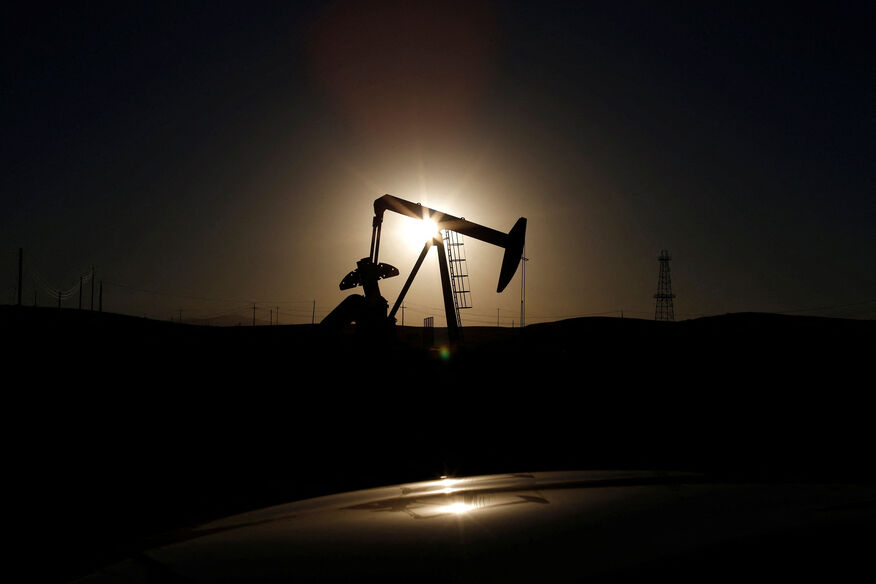
Shiba Inu 2026: L3 Evolution & the Next Bull Run
Discover the Shiba Inu (SHIB) 2026 outlook as it evolves from a meme coin into a sophisticated L3 utility network. This analysis covers the critical $0.00000589 support level, the impact of U.S. government SHIB holdings, and the Shibarium update featuring FHE privacy. Explore the "next Shiba Inu" bu