ROI-US turns multilateral in search of critical mineral security: Andy Home

By Andy Home
LONDON, Feb 11 (Reuters) - U.S. President Donald Trump has just unveiled "Project Vault", a $12 billion critical minerals stockpile intended to cushion U.S. manufacturers from supply disruption.
But to fill the Vault with the 60 minerals currently classified as critical, the U.S. realises it is going to need a lot of help.
Friend-shoring is back with a vengeance as the U.S. seeks to build a metallic alliance to loosen China's chokehold on the metals that sit at the heart of modern technology.
Indeed, the U.S. has more friends than ever.
Fifty-four countries were represented at the February 4 ministerial meeting on critical minerals in Washington. Eleven new bilateral deals and a trilateral agreement with the European Union and Japan were signed.
The multilateral outreach is a stark contrast to Trump's recent unilateral rhetoric, but to quote U.S. Vice President JD Vance, when it comes to critical minerals, "we're all on the same team".
LOCKING IN SUPPLY
China's export restrictions on a growing number of arcane but critical metals such as gallium, germanium and rare earths have added a sense of urgency to U.S. mineral policy.
Funding a new stockpile is the easy part. Securing the desired amount of metal is much harder, particularly if China is the dominant global supplier.
One solution is to invest in the mines themselves, using off-take deals to lock in future supply of raw materials.
It's even better if the mines are already in production.
Greenland may have grabbed the headlines recently. But its large reserves of rare earths are untapped and locked in rock beneath the Arctic ice.
That is why the real critical minerals action has been taking place in central Africa.
CONTESTING THE CONGO
The Democratic Republic of Congo is the world's largest cobalt producer, a growing copper powerhouse and hosts a wide array of other metals on the U.S. Geological Survey's critical minerals list.
Since the U.S. brokered a pact between Congo and its neighbour Rwanda to ease tensions along the border, U.S. agencies have been rushing to secure mineral rights.
A consortium led by private equity fund Orion Resource Partners and the U.S. International Development Finance Corp (DFC) is in talks to buy a 40% stake in Glencore's GLEN.L copper and cobalt operations in the country.
The DFC also plans to buy into a joint venture between Swiss trade house Mercuria and Congo's state mining entity Gecamines to market the government's share of national production. U.S. buyers would have rights of first refusal.
This is just part of a multi-faceted campaign aimed at countering China's dominant role in one of the world's most resource-rich countries.
It's also a template for others, which explains the big turnout in Washington last week.
RESHAPING THE MARKET
The proposed FORGE alliance, or the Forum on Resource Geostrategic Engagement to give it its full title, is not just about securing critical minerals but also about reshaping the market.
"We know that today the international market for critical minerals is failing," Vance told the Washington meeting.
It is "a market distorted beyond recognition, one that punishes strategic investment, one that punishes diversification, and one that punishes long-term planning."
Vance didn't name any names but the Chinese elephant in the room loomed large.
China's dominance of critical mineral supply chains allows it both to restrict production, as it has been doing recently, and to flood the world with surplus to crush prices and potential competitors.
The proposed answer is a preferential trade zone with enforceable floor prices and price-gap subsidies to protect against such predatory practices.
The mitigation of price risk will, it is hoped, entice more private capital into both mining and processing.
METALS WORLD
The Trump administration has made no secret of its antipathy to global multilateral institutions, but when it comes to critical minerals it has no choice but to form its own one.
While federal money has been pouring into new domestic mining projects, the reality is that many will take months if not years to produce first metal.
That's too long a wait given China's proven ability to starve key manufacturing sectors of critical inputs.
Moreover, the list of critical minerals is a long one and no one country can boast exploitable reserves of all of them or the processing capacity to convert mineral to metal.
That includes even China. Its grip on supplies of finished products such as rare earth magnets belies a dependency on imports of raw materials from countries like the Congo.
The U.S. re-embrace of a multilateral mineral policy is an acknowledgment of the complexity of modern metallic supply chains.
But they all start in the ground. And if you don't have your own deposits and mines, you'd best find a friend who does.
Andy Home is a Reuters columnist. The opinions expressed are his own
Enjoying this column? Check out Reuters Open Interest (ROI) for thought-provoking, data-driven commentary on markets and finance. Follow ROI on LinkedIn and X.
And listen to the Morning Bid daily podcast on Apple, Spotify, or the Reuters app. Subscribe to hear Reuters journalists discuss the biggest news in markets and finance seven days a week.
Related Articles
Silver Faces Sixth Consecutive Year of Supply Deficit, How Much Upside Is Left in 2026?
TradingKey - According to the 2026 Silver Market Outlook recently released by the Silver Institute, the current robust performance of the silver market remains supported by solid fundamentals. The report indicates that the global silver market is expected to face a structural supply-demand imbalance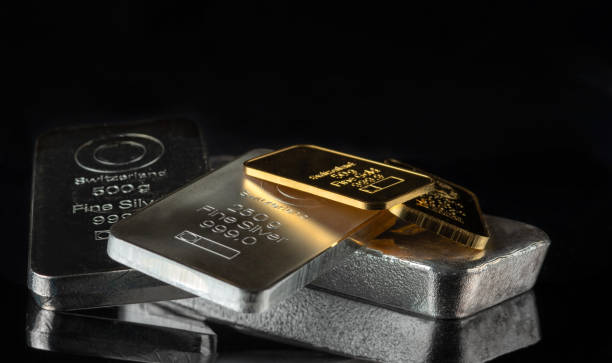
Electric Vehicle Stocks and the Waymo Opportunity: Dynamics of the EV Market and How Future Tech Will Be Invested in?
TradingKey - The entire world is moving to make transportation more environmentally friendly and to offer independent travel options to almost everyone in an autonomous vehicle, resulting in a greater focus on investing in companies that manufacture electric vehicles and developing the technologies
Retail Trading Hub Robinhood Sinks Again, Slumping Over 7% After Hours, Signaling Lack of Interest in Crypto?
TradingKey - Robinhood (HOOD) reported a 34% decline in fourth-quarter net profit to $605 million, with total revenue of $1.28 billion missing Wall Street expectations.
After $20B Debt Sale, Google’s Rare 100-Year Bond Sparks Scrutiny: Has AI Drained the Tech Giant’s Coffers?
TradingKey - According to a Financial Times report, Google parent Alphabet (GOOG)(GOOGL) is planning to issue bonds denominated in British pounds and Swiss francs, which may include the first 100-year GBP bond of this century.
SpaceX IPO Approaching: Will EchoStar Be a Good Buy in 2026?
TradingKey - Today, EchoStar (SATS) is a hybrid story around legacy consumer communications and a high-profile private space play. As a result of its merger with DISH, the company offers satellite TV services and the wireless brand Boost Mobile, in addition to spectrum assets and wholesale network a