


Nvidia Rises Over 4% Pre-Market: Reportedly Plans to Retrofit Over 130 Brightspeed Telecom Buildings to Ease Data Center Approval Restrictions



AI Podcast


As of press time on November 6, Eastern Time, Nvidia is in talks with Apollo Global Management to retrofit Brightspeed’s U.S. telecom facilities into small AI data centers, aiming to utilize approximately 1 gigawatt of power for an inference network. Amid tightening regulatory scrutiny on new data center approvals, this initiative bypasses certain hurdles by leveraging existing infrastructure and could deploy Vera Rubin servers by early 2027. However, Brightspeed faces potential bankruptcy, and uncertainties remain regarding retrofit scales, operating cost efficiencies, and final customer chip procurement commitments.
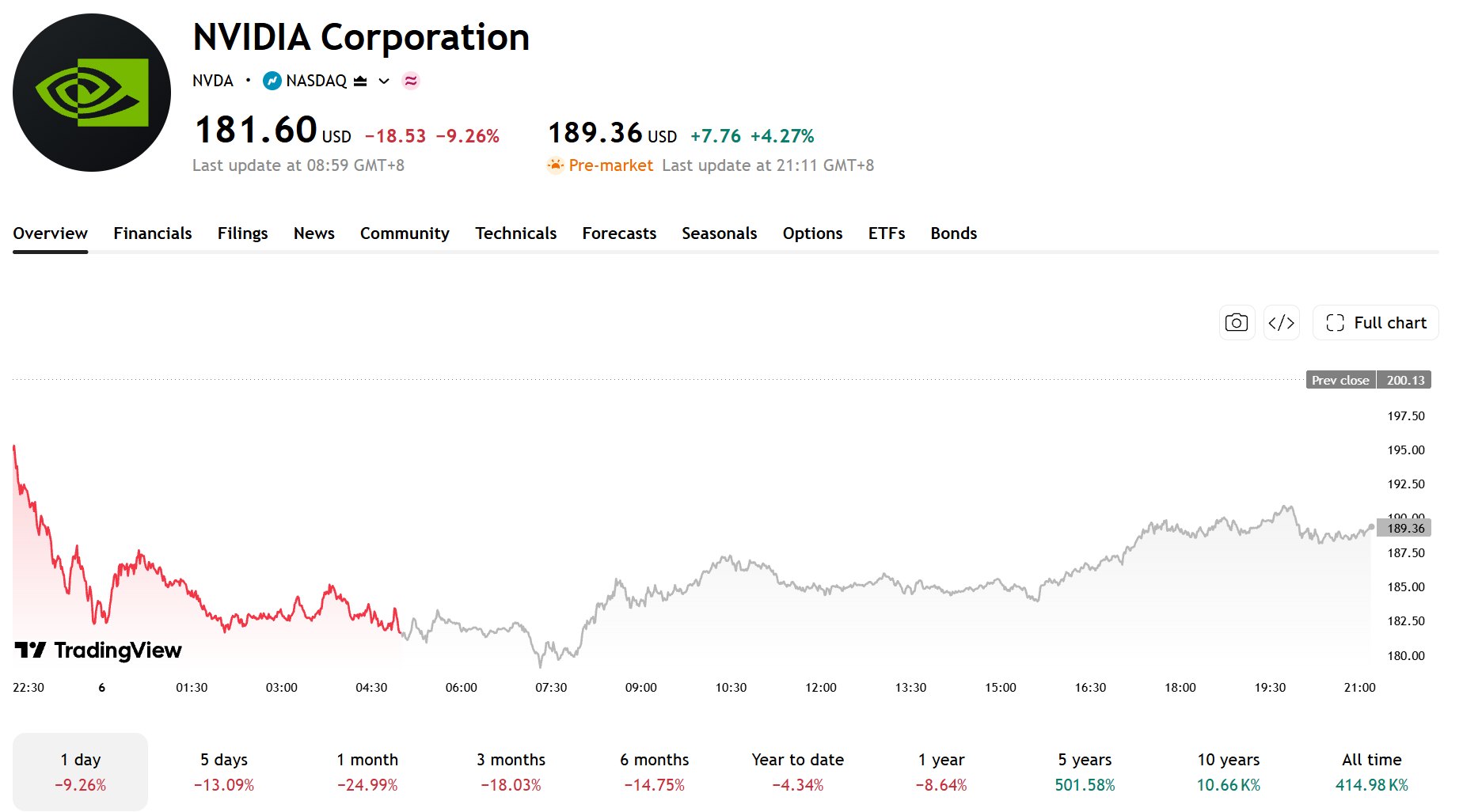
TradingKey - As of press time on November 6, Eastern Time, Nvidia (NVDA) rose more than 4% in premarket trading, following a decline of about 9.26% in the previous session.
According to a November 5 report by The Information, Nvidia is in talks with private equity giant Apollo Global Management (APO), proposing to convert some telecom facilities of its portfolio broadband provider Brightspeed into small AI data centers to accelerate chip deployment.
[Source: TradingView]
Nvidia Plans to Retrofit Brightspeed Telecom Facilities, Utilizing About 1 Gigawatt of Power
According to The Information, Brightspeed owns more than 130 telecom buildings in the U.S., primarily used to handle phone and internet traffic.
Nvidia estimates that these scattered buildings collectively possess about 1 gigawatt of available power, with many sites already having electrical connections capable of supporting Nvidia servers. The plan could eventually span up to 20 U.S. states.
Nvidia initially pitched the plan to Apollo management, which subsequently asked it to submit a written proposal to Brightspeed.
On November 4, Nvidia submitted a proposal to Brightspeed, requesting additional facility data and site visits to certain locations. Nvidia staff also discussed retrofit plans with suppliers, and some buildings could begin installing Vera Rubin server racks as early as the first quarter of 2027.
The retrofit plan may also incorporate inference technology from AI chip startup Groq. Nvidia reached a non-exclusive technology licensing agreement with Groq in December 2025.
Brightspeed is currently facing substantial debt pressure. The company is reportedly seeking financing and may file for bankruptcy protection in December. Nvidia has not yet determined the exact number of retrofits, and it remains unclear who will purchase or lease the chips for the facilities.
New Data Center Approvals Tighten as Older Facilities Face Cost Issues
Nvidia put forward this plan as several U.S. states step up scrutiny of data center construction. In the Nov. 3 midterm elections, gubernatorial candidates in Texas, Georgia, and Ohio who supported pausing large-scale data center construction won their races, and future related projects may face stricter approval requirements.
Compared with building new data centers, retrofitting existing telecom facilities can leverage existing structures and power connections, reducing some approval procedures. However, facility upgrades such as the dedicated cooling systems required for AI servers may still require local government approval.
Operating costs for older facilities may also be higher. Zac Smith, CEO of AI networking startup Datum, noted that while retrofitting older telecom buildings can utilize idle power, long-term operating costs could exceed those of newly built data centers due to less efficient electrical equipment.
He also revealed that companies such as Anthropic recently inquired about securing 5 to 10 megawatts of power capacity in older buildings, reflecting that AI firms are actively seeking existing power resources that can be quickly deployed.
Brightspeed Project Chip Orders Remain Unclear Amid AI Inference Network Push
According to reports, Nvidia plans to build these data centers into an "inference network," primarily to run trained AI models rather than conduct large-scale model training.
Potential customers include SpaceX (SPCX), Anthropic, and OpenAI, among other AI companies facing server supply constraints and power shortages, but it has not yet been confirmed whether these companies are collaborating with Nvidia or Apollo on the project.
Apollo recently reached an approximately $40 billion AI chip and server lease financing arrangement with SpaceX, under which it will purchase Nvidia Vera Rubin chips and server equipment and lease them to SpaceX.
Nvidia estimates that the roughly 1 gigawatt of available power across these facilities could theoretically support tens of billions of dollars worth of Vera Rubin systems.
Currently, the specific retrofit scale, customers, and chip procurement orders for the Brightspeed project remain undetermined. Going forward, key factors to monitor include facility retrofit progress, customer signings, and the actual scale of procurement.
This content was translated using AI and reviewed for clarity. It is for informational purposes only.
Recommended Articles











Comments (0)
Click the $ button, enter the symbol, and select to link a stock, ETF, or other ticker.