


SpaceX 3Q 2026 Revenue Up 161% YoY: AI Business Swings to Profit as Commercialization Logic Accelerates



AI Podcast


On October 20 ET, SpaceX reported fiscal 2026 third-quarter revenue of $14.575 billion, surging 161% year-over-year and beating expectations, alongside a net profit of $4.404 billion. Growth was propelled by the newly named Superintelligence division and robust Starlink subscriber gains. Despite returning to profitability, capital expenditures of $19.593 billion significantly outpaced operating cash flow. While substantial cash reserves of $89.855 billion mitigate immediate financing needs, sustaining profitability and accelerating operational cash flow to cover heavy investments remain critical for long-term valuation and shareholder returns, amid broader industry warnings regarding off-balance-sheet debt risks.
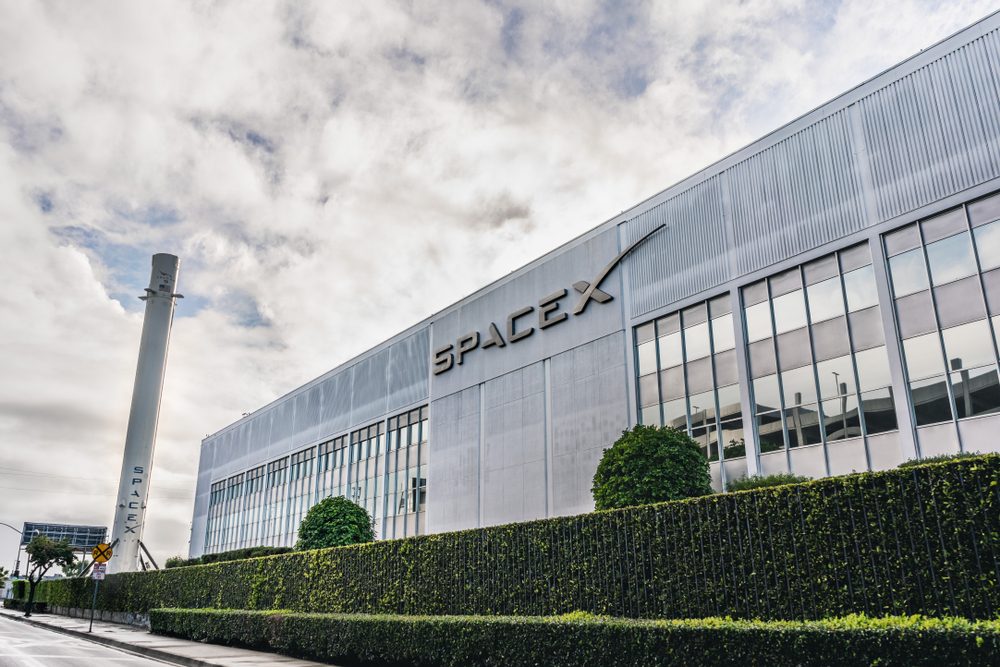
TradingKey - On October 20 ET, SpaceX (SPCX) announced its third-quarter financial results for fiscal 2026. Revenue for the period reached $14.575 billion, up 161% year-over-year and roughly 14.6% higher than market expectations of $12.72 billion prior to the report. The company achieved a net profit of $4.404 billion, turning profitable year-over-year, with GAAP diluted earnings per share of $0.35.
Overall, this earnings report provides evidence that AI investments are beginning to generate revenue and profits. However, capital expenditures continue to significantly exceed operating cash flow, and whether the profitability improvement can be sustained remains a key criterion for evaluating the stock's potential.
Following the earnings release, SPCX shares rose over 3% in after-hours trading.
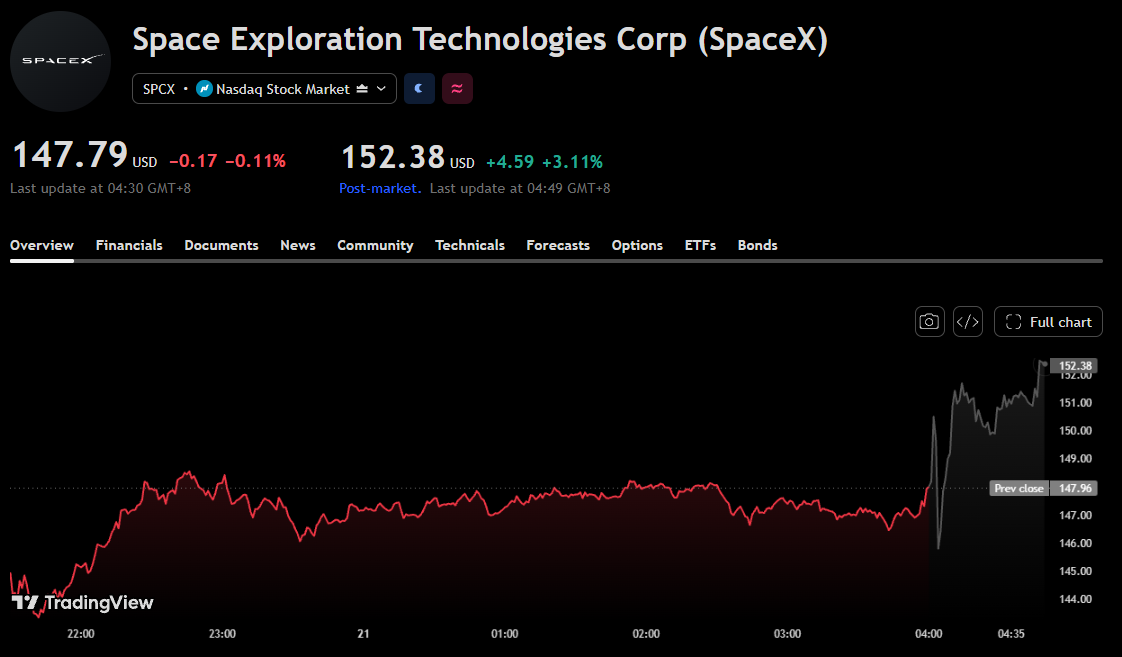
SPCX after-hours stock price chart, Source: TradingView
AI Revenue Beats Estimates by 20%, Operating Profit Swings to Profit
This quarter, the former AI division was renamed the Superintelligence (SI) division, with revenue reaching $7.56 billion, 20% higher than the market expectation of $6.3 billion; adjusted EBITDA was $4.953 billion, about 49.2% above the expected $3.32 billion.
Revenue growth was primarily driven by the entry into effect of new cloud service agreements, the consolidation of Cursor, and increased usage of Grok. Among these, Cursor contributed $608 million in revenue from the completion of its acquisition on August 14 through the end of the quarter, indicating that the growth cannot be entirely attributed to computing power leasing.
In addition, the SI division's operating profit reached $431 million, reversing an operating loss of $1.257 billion from the previous quarter. However, its operating margin was around 5.7%, leaving a noticeable gap with the adjusted EBITDA margin, which adds back expenses such as depreciation and amortization and stock-based compensation.
For the stock price, this supports the thesis that SPCX's commercialization is improving.
Starlink Profit Growth Supports Earnings Improvement
Revenue for the connectivity business reached $5.248 billion this quarter, with operating profit reaching $2.367 billion, up 99% year-over-year. Starlink consumer subscribers grew to 13.6 million, while monthly average revenue per user rose from $66 in the previous quarter to $69, indicating simultaneous improvements in user expansion and revenue quality.
The turnaround in the AI business and profit growth at Starlink provided the basis for revising earnings forecasts upward. SpaceX has already proven that capital expenditure can generate revenue; now, it needs to prove that this revenue is sufficient to support continued expansion.
CapEx Nears $19.6 Billion as Cash Gap Still Needs Filling After Turning Profitable
Of particular note, SpaceX's third-quarter capital expenditures reached $19.593 billion. Looking at the first three quarters, the company's operating cash flow was $13.097 billion, lower than the $48.069 billion in capital expenditures during the same period, indicating that expansion investments have not yet been fully covered by cash generated from operations.
However, as of the end of September, the company still held approximately $89.855 billion in cash, cash equivalents, and marketable securities, which can provide a cushion for subsequent investments.
Therefore, this financial report is not yet sufficient to indicate that the company urgently needs new financing; what is more worth watching is whether future operating cash flow can accelerate growth, thereby reducing the consumption of existing cash reserves by ongoing investments.
However, if this shortfall persists, financing costs and related repayment obligations will become important variables affecting shareholder returns. According to Reuters, Mark Habib, head of digital infrastructure at S&P Global, warned that certain complex financing arrangements could lead big tech companies to assume project debt not directly reflected on their balance sheets: "It's fair to say there's more out there that we aren't aware of yet." He also noted that there is currently no need to adjust the ratings of the relevant companies.
This content was translated using AI and reviewed for clarity. It is for informational purposes only.
Recommended Articles









Comments (0)
Click the $ button, enter the symbol, and select to link a stock, ETF, or other ticker.