


【US Pre-Market】OpenAI Delays New Model Launch as Market Awaits JOLTS and Consumer Confidence Data; Nvidia, AMD Rise



AI Podcast


On Tuesday, September 29, Eastern Time, U.S. stock index futures rose in pre-market trading amid easing inflation from falling oil prices, though high Treasury yields persisted ahead of key economic data. Gold rebounded over 1% near $4,160, while crude oil dropped on receding supply risks from U.S.-Iran negotiations. In corporate developments, Nvidia authorized an additional $150 billion share buyback, and AMD announced an $8.2 billion acquisition of spatial intelligence startup World Labs. Meanwhile, OpenAI delayed its new model release over safety concerns, and the FAA postponed Boeing 737 MAX 10 certification due to software issues.

TradingKey - On Tuesday, September 29, Eastern Time, futures on the three major U.S. stock indices rose across the board in pre-market trading. Falling oil prices eased some inflationary pressure, but U.S. Treasury yields remained high as investors awaited U.S. JOLTS job openings and consumer confidence data.
As of press time, Dow futures rose 0.16%, S&P 500 futures rose 0.18%, and Nasdaq 100 futures gained 0.32%.

Source: Investing
In commodities, gold (XAUUSD) rebounded over 1% after falling more than 3% in the previous trading session, trading near $4,160. Although buying at lower levels pushed prices higher, elevated U.S. Treasury yields and a strong dollar continued to cap gold's upside potential.
International oil prices pulled back, with WTI crude (USOIL) dropping about 1.6% to trade near $91.70, and Brent crude falling around 1.9% to trade near $96.80. As indirect negotiations between the U.S. and Iran continued, the market reassessed the likelihood of navigation resuming in the Strait of Hormuz, causing part of the supply risk premium to recede.
In cryptocurrencies, Bitcoin (BTC) gained about 0.68%, reclaiming $84,000. Lower oil prices and the pre-market stabilization of U.S. tech stocks helped marginally restore risk appetite, but a high interest rate environment continued to constrain further upside for crypto assets.
Market Moves
Nvidia (NVDA) rose about 0.8% in pre-market trading. The company's board of directors approved an additional $150 billion share buyback authorization on top of its existing plan, bringing the total remaining buybacks to $235 billion, which is expected to be executed before the end of fiscal year 2028. This is Nvidia's largest buyback plan to date.
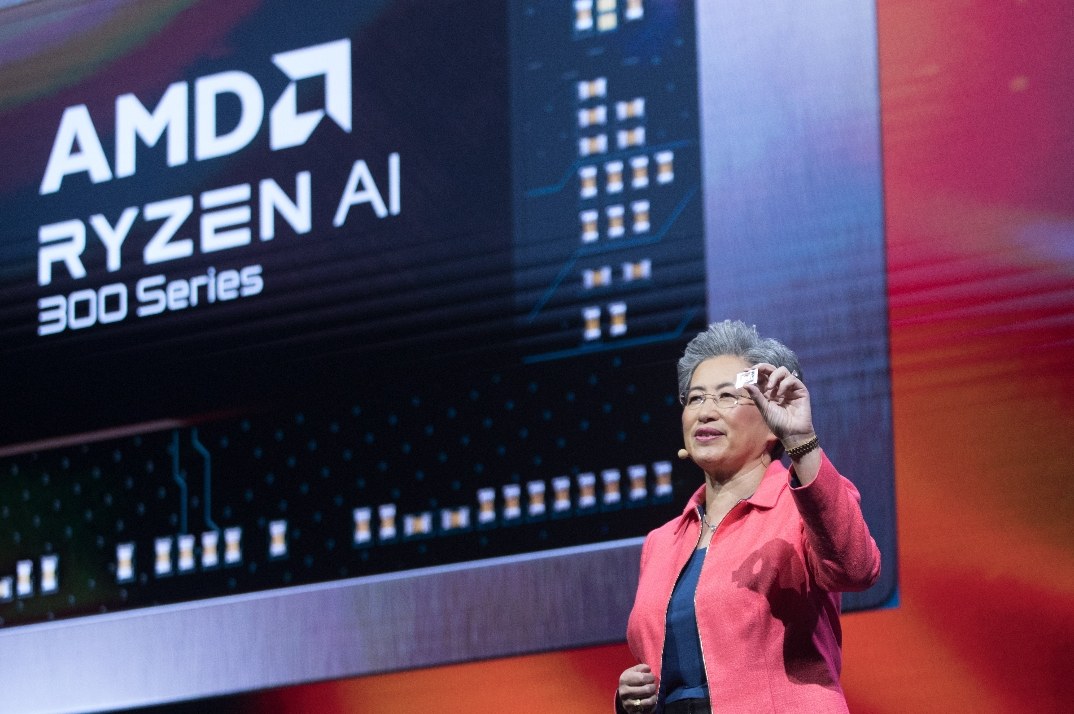
AMD (AMD) rose about 1% in pre-market trading. The company announced an all-stock acquisition of World Labs, an AI startup founded by Fei-Fei Li, in a deal valued at approximately $8.2 billion, which is expected to close by the end of 2026. World Labs focuses on spatial intelligence and physical AI technology, which can be applied to fields such as robotics, simulation, and autonomous driving.
The memory sector rebounded across the board in pre-market trading. Micron Technology (MU) rose about 1.6%, SanDisk (SNDK) gained about 1.1%, and Western Digital (WDC) rose about 0.4%. Micron will report its fourth-quarter fiscal 2026 financial results after the market close on Wednesday, with market attention focused on demand for AI servers, HBM, and data center storage.
Market News
OpenAI has delayed the release of its new model due to safety concerns. OpenAI stated that GPT-6.1 Astra failed to meet safety standards during internal testing, leading the company to pause training on its most advanced model last week, adding that training will resume only after new safeguards meet requirements.
Indirect negotiations between the US and Iran continue to advance. Regional mediators are pushing the US and Iran toward an agreement to end the conflict and reopen the Strait of Hormuz. US officials said Washington is willing to offer partial sanctions relief and unfreeze assets in exchange for concrete nuclear actions by Iran, though the two sides remain sharply divided on implementation sequence and timeline.
The US Federal Aviation Administration has delayed certification of the Boeing 737 MAX 10. Regulators stated they will not approve Boeing (BA) 737 MAX 10 for commercial service until newly discovered flight management software issues are resolved, and it remains unclear whether certification will be delayed by days, weeks, or longer.
The US has lowered automotive fuel economy standards. The US Department of Transportation issued a final rule setting the fleet-wide average fuel economy target for model year 2031 at 34.9 miles per gallon, while relaxing requirements for gas-powered passenger cars and light trucks.
Major Data/Events Preview
At 9:00 ET on September 29, the U.S. released the July S&P/Case-Shiller Home Price Index.
At 10:00 ET on September 29, the U.S. released the August JOLTS job openings and the September Conference Board Consumer Confidence Index.
At 10:30 ET on September 29, the U.S. released the Dallas Fed Retail Activity Index.
This content was translated using AI and reviewed for clarity. It is for informational purposes only.
Recommended Articles








Comments (0)
Click the $ button, enter the symbol, and select to link a stock, ETF, or other ticker.